Online games do not always need complex graphics, long tutorials, or expensive production to attract players.
Sometimes, a simple idea is enough.
A player sees a clue, makes a guess, receives feedback, and tries again. The game may take only a few minutes, but the experience can still be fun, challenging, and easy to share. This is why niche browser guessing games have become more popular across online communities.
They are quick to play, simple to understand, and often built around specific interests, fandoms, internet trends, or community knowledge.
For many users, that makes them more engaging than general trivia games.
The Appeal of Browser-Based Games
Browser games are popular because they are easy to access.
Players do not need to download an app, install software, create a large account, or learn complicated controls. They can open a link, play a round, and share it with friends.
That low-friction experience is important.
People often discover casual games while scrolling, chatting, or browsing online. If the game loads quickly and explains itself clearly, users are more likely to try it.
A simple browser game can fit into a short break, a group chat, or a daily routine.
That convenience is one reason lightweight web games continue to grow.
Why Guessing Games Work So Well
Guessing games are effective because the rules are usually easy to understand.
The player is given a clue and must identify the correct answer. That simple structure creates a satisfying loop: observe, guess, learn, and try again.
The fun comes from recognition and deduction.
Sometimes the answer feels obvious. Other times, the clue is tricky. A player may start with a wrong guess, notice a pattern, and slowly move closer to the solution. When the correct answer finally appears, it feels rewarding.
This format works especially well online because it is short, repeatable, and easy to discuss.
The Rise of Daily Challenge Games
Daily challenge games have become a strong trend.
Instead of giving players unlimited levels, many games offer one new puzzle each day. This creates habit and anticipation. Players return because they want to solve today’s challenge, compare results, and see whether they can do better than yesterday.
The daily format also makes the game social.
Players can talk about the same puzzle at the same time. They can share how many guesses it took, whether the clue was difficult, and what strategy helped them solve it.
A daily game becomes more than a game.
It becomes a small shared ritual.
Why Niche Games Build Strong Communities
Niche games often work because they are made for a specific audience.
A broad trivia game may appeal to many people, but a niche guessing game can feel more personal. It rewards knowledge that comes from being part of a certain online culture, fandom, hobby, or community.
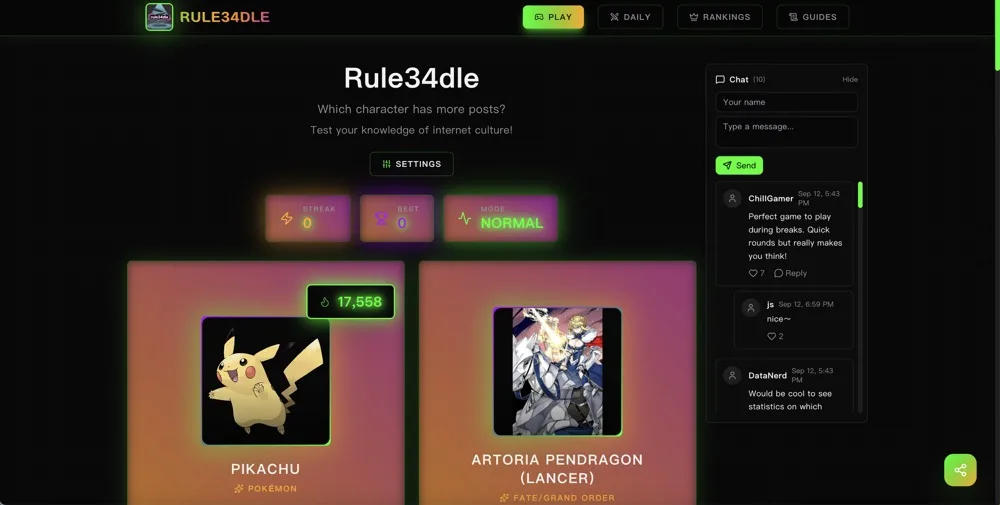
A site like rule34dle fits into this trend by offering a niche browser-based guessing experience for players who enjoy internet-culture challenges and community-driven puzzle formats.
The value of a niche game is not only in solving the puzzle. It is in recognizing the references, patterns, and clues that other players in the same community understand.
That shared context makes the experience more meaningful.
Recognition Feels Rewarding
One reason guessing games are satisfying is that recognition feels good.
When a player identifies the answer from a small clue, it feels like proof of attention and memory. It shows that they understand the theme behind the game.
Niche games make this feeling stronger.
They often reward knowledge that may not appear in ordinary quizzes. Players use familiarity with online culture, visual patterns, naming styles, common references, or community habits to make better guesses.
That kind of recognition can be surprisingly fun.
It turns casual internet knowledge into a playable skill.
Sharing Results Makes Games Grow
Many browser guessing games spread because they are easy to share.
A player may finish a round and send the result to a friend. They may post it in a group chat, mention it on social media, or challenge others to beat their score.
This sharing behavior helps games grow naturally.
People enjoy saying things like:
“I got it in two guesses.”
“This one was harder than expected.”
“You should try today’s puzzle.”
“I can’t believe I missed that answer.”
These small reactions create conversation.
For online games, conversation is often just as important as gameplay.
Simple Games Fit Modern Internet Habits
People often use the internet in short sessions.
They check messages, scroll feeds, watch clips, read comments, and open links throughout the day. A game that can be played quickly fits naturally into this behavior.
A short guessing game does not demand a full gaming session.
It gives users a quick challenge and a fast result. That makes it ideal for people who want light entertainment without a major time commitment.
This is why simple browser games can become part of everyday online life.
They are easy to start and easy to return to.
Easy to Play, Hard to Master
Good guessing games are simple at first but become deeper over time.
New players can understand the basic rules immediately. Experienced players begin to notice patterns, improve their guessing strategy, and learn which clues matter most.
This balance keeps the game interesting.
If a game is too confusing, players leave. If it is too easy, they get bored. A strong niche guessing game gives players enough challenge to stay engaged while still being accessible.
The best format makes every round feel possible, but not automatic.
Humor Helps Niche Games Stand Out
Many niche browser games succeed because they have personality.
They may be playful, strange, funny, or self-aware. This tone makes them more memorable and easier to share. Players are more likely to return when a game feels like it understands the community around it.
Humor also lowers pressure.
A wrong guess does not feel like failure. It becomes part of the experience. Players can laugh, try again, and compare results with friends.
That relaxed tone is important for casual games.
The goal is not only to win. The goal is to enjoy the challenge.
Community Knowledge Becomes Gameplay
Online communities often develop their own language and references.
Members recognize patterns that outsiders may not understand. They know common themes, repeated jokes, familiar formats, and specific ways people describe things.
A niche guessing game turns that community knowledge into gameplay.
This makes the game feel special for its target audience. It gives players a reason to use knowledge they have built naturally through time spent online.
For newcomers, the game can also be a way to learn.
Even when they miss an answer, they may discover new patterns and references.
Why Independent Creators Build Niche Games
Niche browser games are also attractive for independent creators.
They do not require the same resources as large commercial games. A clear concept, simple interface, and strong understanding of the audience can be enough to create something people enjoy.
This has opened the door for many creative web games.
Instead of trying to appeal to everyone, indie creators can build experiences for specific communities. If the game feels relevant and easy to share, it can grow through word of mouth.
That is one of the strengths of the modern web.
Small ideas can find the right audience.
Keeping Niche Games Community-Friendly
Niche games should be designed with care.
Because they often connect to specific internet cultures, tone and presentation matter. A good game should feel playful, respectful, and easy to share. It should avoid making the experience hostile or uncomfortable for the people it is meant to entertain.
Clear rules, simple navigation, and responsible content choices can make a game more approachable.
A community-friendly guessing game should invite people to play, compare, and discuss.
That makes the experience more sustainable over time.
Why These Games Will Keep Growing
Niche guessing games will likely continue to grow because online communities enjoy interactive content.
People want more than passive browsing. They want quick challenges, shareable results, and playful ways to test what they know. Guessing games provide all of that in a simple format.
As more creators build browser games around specific topics, users will see more daily challenges made for their own interests.
The future of casual gaming is not only broad and mainstream.
It is also niche, social, and community-driven.
Final Thoughts
Niche browser guessing games are becoming popular because they combine simple gameplay with specific community knowledge.
They are quick to play, easy to share, and rewarding for players who understand the theme. They turn recognition, memory, humor, and deduction into a short interactive experience.
For online communities, these games can become daily rituals, conversation starters, and playful tests of shared culture.
A browser game does not need to be complicated to be memorable. It only needs a clear idea, a smooth experience, and an audience that enjoys the challenge.