Building a Smarter Foundation for Data-Driven Growth
Data has become the driving force behind digital transformation. Organizations rely on information to improve customer experiences, optimize operations, and uncover new business opportunities. However, managing data across multiple tools and platforms often creates complexity that slows innovation.
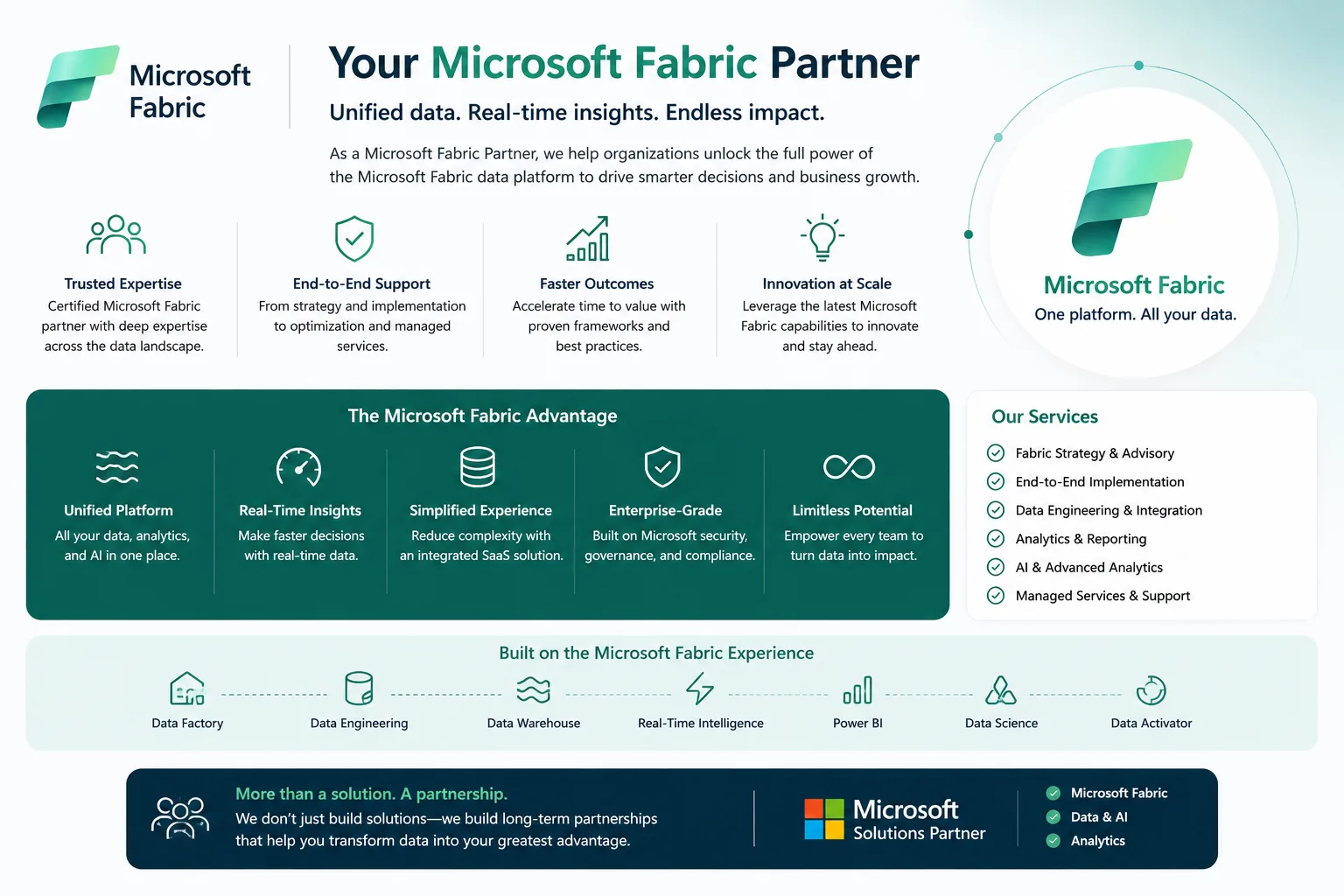
This is where Microsoft fabric services are helping businesses simplify their data ecosystems. By bringing together data integration, engineering, analytics, business intelligence, and AI capabilities in one environment, organizations can gain greater visibility into their operations while reducing administrative overhead.
A unified platform approach enables companies to focus more on innovation and less on managing disconnected technologies.
Simplifying Data Management Across Multiple Sources
Businesses typically collect information from various applications, databases, cloud platforms, and external systems. Managing these diverse data sources often requires multiple integration tools and extensive maintenance efforts.
Microsoft Fabric helps eliminate these challenges by creating a centralized environment where data can be accessed, processed, and analyzed efficiently. This reduces data movement between systems and supports seamless collaboration across departments.
A unified architecture also enhances data consistency, ensuring that employees throughout the organization are working with the same trusted information.
Accelerating Analytics and Business Intelligence
Organizations require faster access to insights to remain competitive. Traditional reporting processes often involve lengthy data preparation cycles that delay critical decisions.
By leveraging advanced analytics capabilities, businesses can gain near real-time access to performance metrics and operational data. Users can generate reports, monitor key indicators, and analyze trends without waiting for complex data processing workflows.
Interactive business intelligence tools make it easier for stakeholders to explore data and uncover valuable insights that support strategic planning and day-to-day operations.
Supporting Modern AI and Innovation Initiatives
AI is rapidly becoming a strategic priority for organizations across industries. From predictive forecasting to intelligent automation, businesses are exploring new ways to use AI to improve performance and customer engagement.
A successful Microsoft fabric implementation provides the infrastructure needed to support these initiatives. Unified data management, scalable analytics, and integrated AI capabilities allow organizations to develop and deploy intelligent solutions more efficiently.
With quality data available across the enterprise, teams can build AI-powered applications that deliver measurable business value and improve decision-making processes.
Improving Governance, Security, and Compliance
As organizations expand their data environments, maintaining governance becomes increasingly important. Regulatory requirements, security expectations, and data privacy concerns demand robust oversight and control mechanisms.
Comprehensive governance capabilities help businesses monitor data usage, track lineage, apply security policies, and maintain compliance standards. These controls ensure that sensitive information is protected while remaining accessible to authorized users.
Effective governance not only reduces risk but also increases confidence in business reporting and analytical outcomes.
Conclusion
The modern business landscape requires organizations to move beyond fragmented data management approaches. Microsoft fabric services offer a comprehensive framework for unifying data, analytics, governance, and AI across the enterprise.
Through strategic Microsoft fabric implementation, companies can simplify data operations, enhance business intelligence, strengthen governance, and accelerate innovation. By creating a connected and intelligent data ecosystem, organizations are better positioned to respond to market demands and achieve sustainable growth in an increasingly data-driven world.