
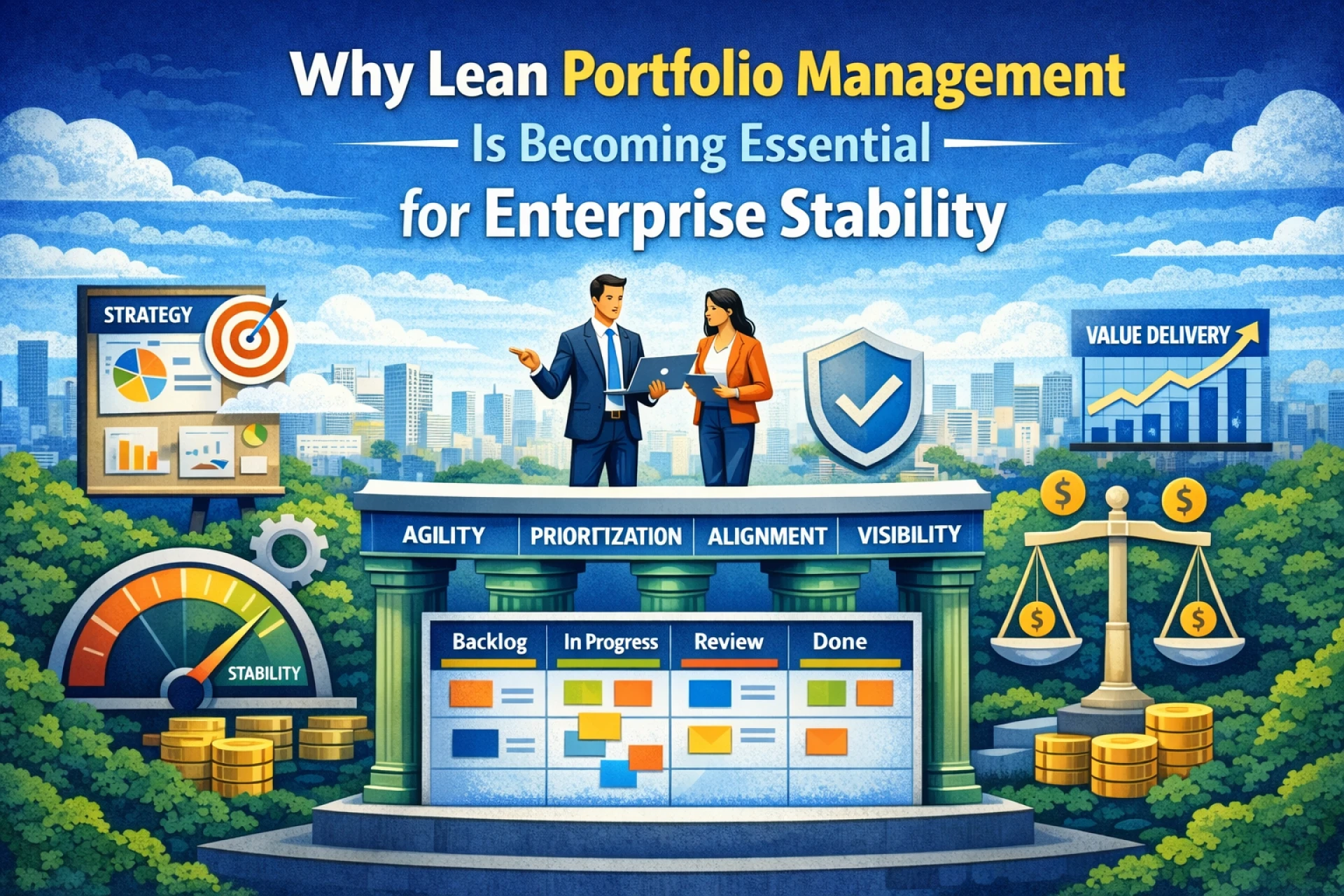
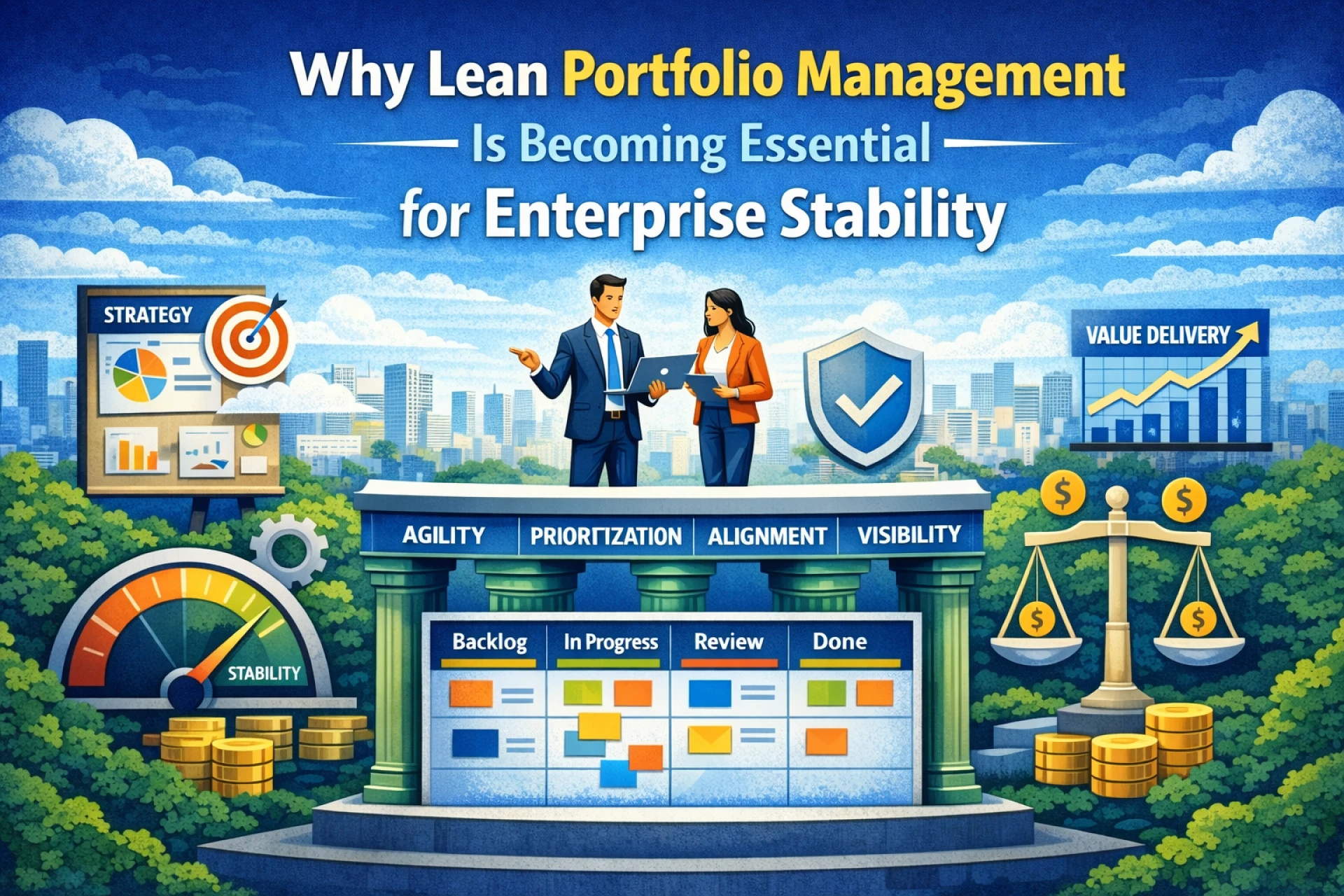
Enterprises today are under constant pressure to deliver faster while managing increasing complexity. Digital transformation, distributed teams, and rapidly changing markets have made traditional planning and governance models ineffective. Leaders want predictability and control, but rigid controls slow innovation and responsiveness.
SAFe® Lean Portfolio Management offers a modern solution. It enables organizations to maintain strategic control while empowering teams to respond to change. Rather than relying on detailed upfront plans, it establishes systems that guide decision making across the enterprise.
The Hidden Cost of Traditional Portfolio Management
Many organizations continue to manage portfolios using approaches designed for a different era. Annual planning cycles, project-based funding, and hierarchical approvals may appear to offer control, but they often produce the opposite result.
As enterprises grow, these models create:
- Slow response to market changes
- Overloaded teams with unclear priorities
- Funding tied to outdated assumptions
- Limited visibility into actual value delivery
The result is frustration at every level. Leaders struggle to redirect investments. Teams lose focus as priorities shift without clarity. Lean Portfolio Management addresses these challenges by replacing rigid controls with adaptive decision-making systems.
How SAFe® Lean Portfolio Management Reframes Control
In SAFe® 6.0, control is not achieved through detailed oversight of execution. Instead, it is achieved by aligning strategy, funding, and governance around value delivery.
Lean Portfolio Management establishes control by:
- Translating enterprise strategy into Strategic Themes
- Aligning investments to value streams rather than projects
- Limiting work in progress at the portfolio level
This approach ensures that the organization invests in the most valuable initiatives while maintaining the flexibility to adapt as conditions change.
Strategy Becomes Action Through Clear Prioritization
One of the most common enterprise problems is the gap between strategic intent and daily work. Strategy documents exist, but teams struggle to see how their efforts contribute to business outcomes.
Lean Portfolio Management closes this gap by making strategy visible and actionable. Strategic Themes guide portfolio decisions, ensuring that initiatives directly support enterprise goals. Leaders use these themes to evaluate tradeoffs, prioritize work, and align teams around shared outcomes.
When strategy influences funding and prioritization, execution becomes focused rather than fragmented.
Financial Governance That Supports Change
Traditional budgeting models assume stability. In reality, modern enterprises operate in environments of constant change. SAFe® Lean Portfolio Management replaces static budgeting with Lean Budgets that support adaptability without sacrificing financial discipline.
Lean Budgets provide:
- Funding aligned to strategic objectives
- Guardrails that define acceptable spending boundaries
- Ongoing investment reviews based on objective evidence
This model allows leaders to reallocate funding when priorities shift, reducing waste and improving return on investment.
Portfolio Visibility Enables Better Decisions
Effective decision making depends on visibility. Without a clear view of portfolio work, leaders are forced to rely on assumptions or outdated data.
Lean Portfolio Management improves visibility by creating transparency across initiatives, dependencies, and outcomes. Progress is measured using meaningful metrics rather than activity alone. This visibility enables leaders to identify bottlenecks early and intervene before issues escalate.
As a result, decisions become faster, more informed, and less reactive.
Lean Governance Without Bureaucracy
Governance is essential for enterprise stability, but excessive governance reduces speed. SAFe® Lean Portfolio Management introduces Lean Governance practices that focus on outcomes instead of approvals.
Effective Lean Governance includes:
- Clear decision-making authority
- Regular portfolio reviews based on evidence
- Risk assessment integrated into ongoing work
This ensures compliance and accountability while allowing teams to maintain momentum.
Improving Flow Across the Enterprise
SAFe® emphasizes flow as a critical measure of effectiveness. Delays are often caused by too many initiatives running simultaneously rather than insufficient capacity.
Lean Portfolio Management improves flow by limiting work in progress, aligning teams to value streams, and reducing dependencies. Improved flow leads to faster delivery, higher quality, and greater predictability across the enterprise.
Managing Risk Through Incremental Decisions
In traditional models, risk accumulates silently until major failures occur. SAFe® Lean Portfolio Management reduces risk by encouraging incremental investment decisions and frequent reviews.
Dependencies become visible, progress is evaluated continuously, and leaders can adjust direction early. This proactive approach reduces large failures and increases organizational resilience.
Alignment Between Teams and Leadership
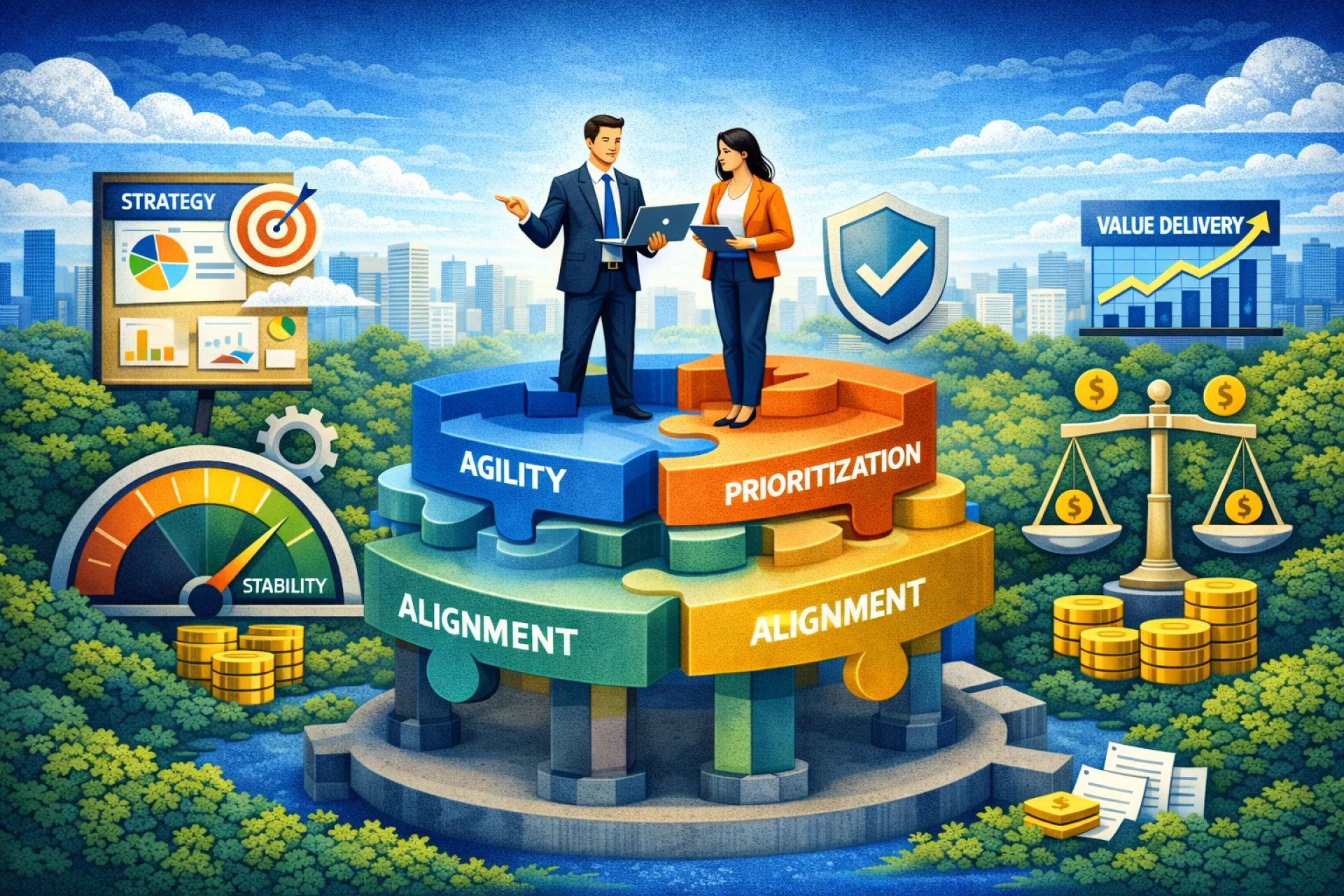
Lean Portfolio Management creates shared understanding across the organization. Teams gain clarity about priorities and purpose, reducing rework and interruptions. Leaders gain a shared view of enterprise work, enabling aligned and timely decisions.
This alignment allows the organization to function as a unified system rather than disconnected silos.
Building Sustainable Lean Portfolio Management Capability
Lean Portfolio Management is not a one-time change. It requires ongoing capability development and leadership commitment.
Skillbook Academy supports professionals and organizations in developing practical SAFe® Lean Portfolio Management capabilities aligned with SAFe® 6.0. The focus is on real-world application, strategic decision making, and portfolio-level leadership skills.
By enabling leaders to apply Lean Portfolio Management principles effectively, Skillbook Academy helps enterprises achieve stability, adaptability, and long-term success.
Skillbook Academy continues to support enterprise agility by developing professionals who can balance control and flexibility in complex environments.