
Anyone who has made serious attempts to manage one’s weight for years understands that losing weight and maintaining it are two very different things. While losing ten kilos in a few months may be feasible for many people through a strict diet, keeping that weight off for two, three, or even five years is a different problem altogether. It is not the lack of willpower or effort that causes people to gain weight after dieting; rather, it is a series of physiological mechanisms that the body employs in order to resist weight loss and promote weight gain, and these mechanisms are far more severe in people suffering from obesity than in those who are not.
Key Takeaways
- Obesity is defined as a chronic condition whose biological processes function to prevent successful weight loss.
- In response to a lower caloric intake, the body produces hormones that stimulate appetite and cause a metabolic adaptation to burn fewer calories.
- To maintain weight loss, it is necessary to address biological factors and not just rely on willpower.
- Medications affecting the hormonal pathways that trigger hunger and weight regain can help advance the weight loss process.
Why Obesity Is a Chronic Disease
The idea of dealing with obesity as a problem of improper lifestyle choices which can be solved by simply eating less has been questioned and rejected by experts in the field of medicine in the last two decades. Today, obesity is known as a chronic, relapsing condition recognised by important medical associations like the World Obesity Federation and the American Medical Association. According to the classification of obesity, extra fat cells are considered living, metabolically active tissue that affects the brain, changes metabolic signals, and influences food perception.
The classification bears great practical value. Chronic diseases need to be treated continuously. A chronic disease does not come to resolution after only a course of treatment, and the return of symptoms after it is stopped has nothing to do with the behaviour of the patient; it simply shows the ordinary course of the disease.
How the Body Fights Against Weight Loss
When an individual reduces caloric intake below energy needs, the body starts to mobilise various compensatory responses almost right away. These responses are not random. They represent preserved mechanisms through which the body tries to cope with perceived starvation, while their degree depends on the rates of weight loss and magnitude of the deficit.
The key adaptations include:
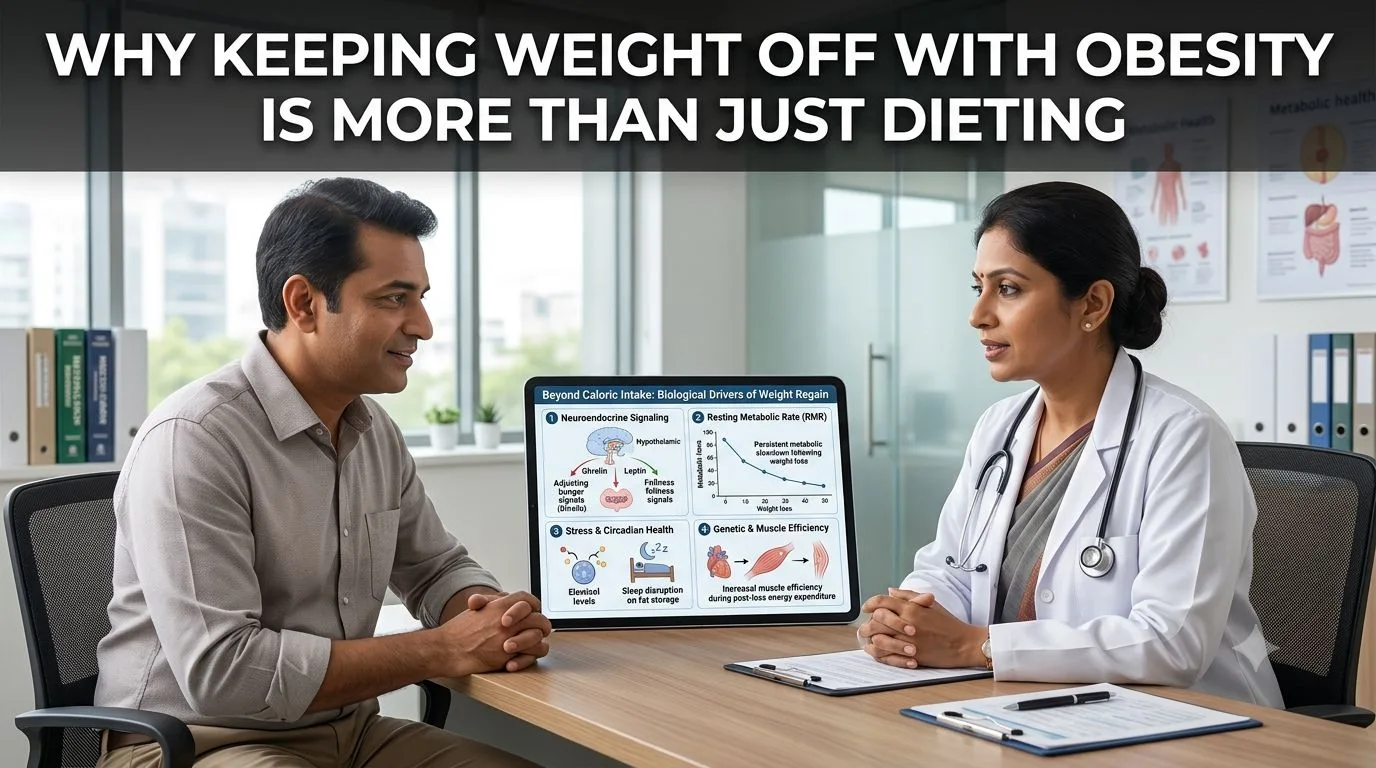
- Adaptive thermogenesis: The body reduces its resting metabolic rate compared to the reduced body mass loss alone, meaning that an individual who has lost a lot of weight ends up expending less energy at rest than someone who has the same weight and has always been that weight. This suppression lasts for several years after weight loss and makes it harder to keep weight at low levels.
- Hormonal shifts that increase hunger: Leptin, a hormone produced by fat cells that signals the brain about satiety, decreases with weight loss. At the same time, ghrelin, which is the hunger hormone, starts to rise, which leads to a state of constantly increased appetite without the need for food.
- Reduced satiety signalling: The hormones from the gut that make you feel satisfied after meals, such as PYY and GLP-1, are secreted in reduced amounts in individuals who lost weight recently, and therefore the same meal gives less satisfaction than before.
Why Dieting Alone Cannot Override These Mechanisms
Such changes in the biology of our body are beyond conscious control. It would be impossible for someone to force their body to overcome adaptive thermogenesis and feel hungry. There shouldn’t be any way to force the body to resist the inadequate secretion of hormones from the gut. The increased levels of ghrelin, which are the result of weight loss, can have nothing to do with dietary restrictions. As a result, we can see that the vast majority of people who lose weight through dieting return to their previous weight within one to five years.
How Pharmacological Support Addresses the Biology
Exploring the full category of GLP‑1 for Diabetes & Weight Loss treatment options reveals a class of medicines specifically designed to engage the hormonal pathways that regulate appetite, satiety, and metabolic rate at a sustained level that dietary change alone cannot maintain.
Semaglutide stimulates GLP-1 receptors in the gut and brain, helping the body experience fullness signalling that has been inhibited by weight loss, while also decreasing hunger through compensatory mechanisms. Since this hormone can be administered continuously throughout the treatment process, it can combat the biological resistance to fat loss experienced by the person, making their weight-loss efforts more efficient than simply following a certain diet. Clinical trial results of STEP research conducted on patients taking semaglutide show that they keep losing weight for a longer period than those taking placebo during two years of the research, which indicates the effectiveness of the hormone in maintaining their weight loss.
Noveltreat 0.25mg is the first dose of the medicine taken weekly through injection. It enables the patient to gradually adapt to the effects of the medicine before increasing the dose. The doctor is prescribing the medicine as part of a complete approach to weight loss, which includes dietary and activity recommendations, as well as periodic medical checkups and consultations.
What Sustainable Weight Management Actually Requires
For people with obesity managing long-term weight, the most realistic and evidence-based framework involves several components working together rather than any single approach used in isolation:
- Diet practices must be sustainable for a lengthy period and not restrictive enough to stimulate significant adaptive thermogenesis.
- The exercise program maintains muscle during weight loss and promotes long-term metabolism.
- Behavioral intervention providing assistance with psychological eating habits, quality of sleep, and stress management as factors in obesity control.
- Pharmaceutical support in the case of adverse biological effects on body weight regardless of adherence to a lifestyle strategy.
Managing Side Effects During Treatment
The GI side effects most often linked to GLP-1 therapy, namely nausea, diarrhoea, and decreased appetite, are greatest during the initial stages and often resolve within four to eight weeks. Eating smaller meals, avoiding high-fat foods during the first weeks, and eating slowly help manage these early side effects. In case of persistent or severe abdominal symptoms, a physician must be consulted.
Emotional and Mental Health During Long-Term Management
The minds of people who live with obesity and try to manage their weight through dieting are typically extremely complicated because of the multiple layers of previous failed attempts at weight loss, repeated regain, and the social significance that is attached to body image. Realizing that regaining weight after dieting is out of one’s control, and therefore shouldn’t be taken personally, has an important effect on emotions.
Importance of Follow-Up Care
Pharmacological assistance in weight control involves continuous supervision. This ongoing evaluation enables the prescriber to monitor the patient's progress, address adverse effects, adjust dosages if necessary, and determine whether other medications should be modified due to metabolic improvement. The fact that obesity is a chronic disease implies that the correspondence with the doctor should not be short-lived and should last beyond the first appointment.
What Is Worth Remembering
Maintaining weight as an obese person is not merely a matter of working harder at weight loss habits that have not worked in the past. It requires addressing the biological mechanisms that cause weight regain in ways that dieting cannot. These mechanisms are real, recorded, and cannot be changed just with motivation. All currently used weight-loss medicines represent the first truly pharmacological solutions for a complex problem.
Disclaimer: This article is for general informational purposes only and does not constitute medical advice. Always consult a qualified healthcare professional before starting, stopping, or modifying any weight management treatment or medication.