Your website is live, your services are valuable, and you are publishing content, but potential customers still cannot find you on Google. If your website is not generating organic traffic or enquiries, understanding why your Google ranking is low is the first step toward improvement. Whether you run an online store, a professional services company, or a local business, the right SEO services can help you reach people actively searching for what you offer.
At eLuminous Digital Marketing, we help businesses understand search performance and identify opportunities to improve their online visibility. From technical website issues to content optimization, effective SEO focuses on connecting your business with the right audience. In this guide, we explain 12 common SEO problems and practical ways to fix them.
Why Is Your Website Not Ranking on Google?
Websites may struggle to rank because Google cannot index important pages, the content does not match search intent, or competitors provide more useful information. Technical errors, poor mobile usability, weak internal linking, and limited website authority can also affect organic visibility.
Before making changes, review Google Search Console to understand which pages are indexed, which queries generate impressions, and where your website may be losing opportunities.
12 SEO Problems Your Business Should Fix
1. Your Website Is Not Indexed Properly
Google needs to discover and index your pages before they can appear in organic search results. If important pages are missing from the index, they may receive no organic visibility.
Common causes include:
- Accidental noindex tags
- Incorrect robots.txt directives
- Missing XML sitemaps
- Incorrect canonical tags
- Pages that Google has not discovered
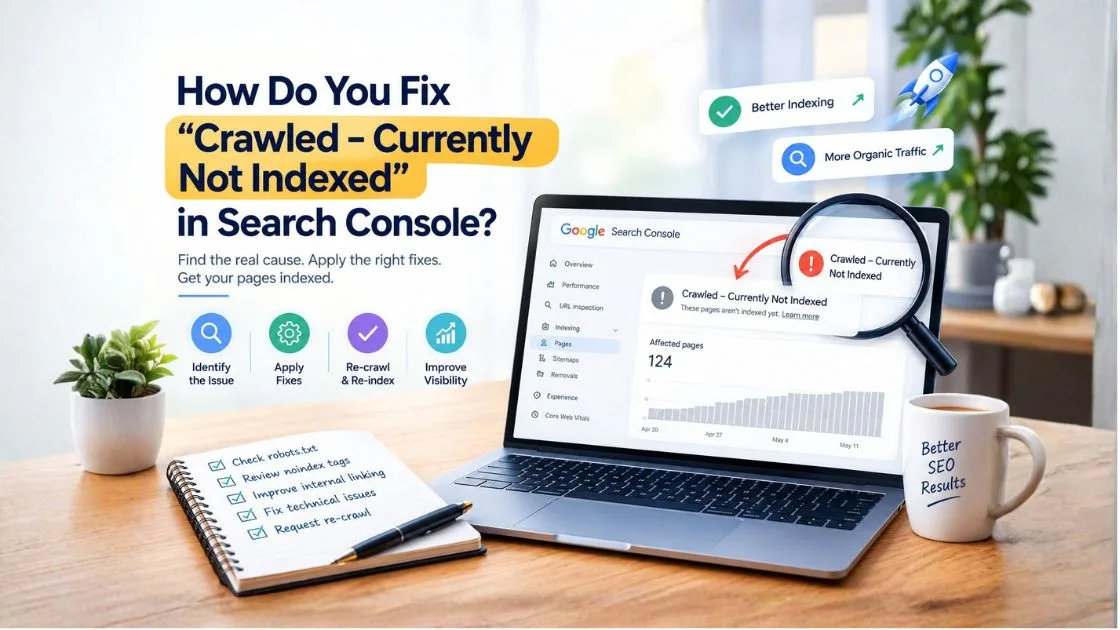
How to fix it: Use Google Search Console's URL Inspection tool to check important pages. Review your sitemap, remove unintended indexing restrictions, and ensure valuable content is accessible to search engines.
For example, an online retailer may publish a new product category but discover that a noindex tag prevents it from appearing in search results. Correcting that configuration can make the page eligible for indexing.
2. You Are Targeting the Wrong Keywords
Targeting broad or irrelevant keywords can attract visitors who are unlikely to become customers. Keyword selection should reflect what your audience wants and how they search for solutions.
How to fix it:
- Research relevant keywords using Google Search Console and Semrush.
- Identify whether users want information, products, or services.
- Consider specific long tail keywords with clear intent.
- Evaluate competition and commercial relevance.
- Assign a primary search intent to each important page.
For instance, a marketing consultancy may receive more relevant enquiries by targeting "SEO services for small businesses" than by focusing exclusively on the broad term “SEO.”
Businesses evaluating SEO Services in USA should also consider industry, service area, and customer needs when selecting keywords.
3. Your Content Does Not Match Search Intent
Search intent is the reason behind a search query. Someone searching for SEO basics expects an educational guide, while someone searching for an SEO agency usually wants to compare providers.
If your page does not meet the searcher's expectations, it may struggle to compete.
How to fix it: Review the current search results for your target query. Identify the type of content that best satisfies users, then create a page that answers their questions clearly.
For example, a software company targeting "best inventory management software" should provide meaningful comparisons and selection criteria rather than a page containing only a general product description.
4. Your Content Provides Little Original Value
Publishing numerous articles does not automatically improve rankings. Content that repeats common information without offering useful insights may struggle to stand out.
How to fix it:
- Include actionable recommendations and practical examples.
- Answer related questions that matter to your audience.
- Remove unnecessary repetition.
- Update outdated information.
- Add original research, expert insights, or screenshots where available.
A financial consulting firm, for example, can make an article about budgeting more useful by including a sample budget, common mistakes, and practical steps readers can apply.
Useful, people first content also makes it easier for readers and AI powered search experiences to identify relevant answers. However, no content format guarantees inclusion in Google AI Overviews or other AI search results.
5. Your Website Has Technical SEO Problems
Technical SEO helps search engines crawl, render, and interpret website pages. Broken links, redirect errors, duplicate URLs, and server problems can interfere with that process.
How to fix it :
- Crawl your website using Screaming Frog or a similar tool.
- Fix broken internal links and incorrect redirects.
- Review canonical tags and duplicate pages.
- Check server errors and HTTP status codes.
- Ensure important pages can be rendered correctly.
- Keep your XML sitemap accurate.
For example, a business may redesign its website but forget to redirect old service URLs. Visitors and search engines may encounter missing pages, resulting in a poor experience and lost opportunities.
A technical SEO audit can help identify and prioritize these problems.
6. Your Website Is Slow or Difficult to Use on Mobile
A slow website can frustrate visitors and make it harder for them to explore your services. Poor mobile navigation, oversized images, and unstable layouts can also reduce conversions.
Google considers page experience signals, including Core Web Vitals, within its broader ranking systems. Good performance alone, however, does not guarantee high rankings.
How to fix it:
- Test important pages with PageSpeed Insights.
- Compress large images.
- Reduce unnecessary scripts.
- Improve caching and server response times.
- Make buttons, menus, and forms mobile friendly.
- Monitor Largest Contentful Paint, Interaction to Next Paint, and Cumulative Layout Shift.
For example, a home improvement company may lose enquiries when its contact form takes too long to load on mobile devices. Improving the form experience can help visitors complete their enquiries more easily.
7. Your Website Has Weak Internal Linking
Internal links connect related pages and help users discover additional information. They also provide search engines with context about how different pages relate to one another.
How to fix it: Organize your website around related topics. Connect your main service pages with relevant educational articles, guides, and case studies. Use descriptive anchor text and link naturally where it helps readers.
For instance, an accounting firm can link its tax planning service page to articles explaining tax deadlines, deductions, and business record keeping.
A logical internal linking structure improves navigation and helps search engines discover important content.
8. Your Website Lacks Relevant Backlinks
Backlinks are links from other websites to your pages. Relevant, trustworthy backlinks can support website credibility and help search engines discover content.
However, purchasing large quantities of low quality links can create risks and does not guarantee better rankings.
How to fix it:
- Publish resources worth referencing.
- Build relationships with relevant industry publications.
- Contribute useful expert insights to appropriate websites.
- Pursue genuine digital PR opportunities.
- Review your backlink profile for suspicious patterns.
For example, a cybersecurity company could publish a practical security checklist that industry publications may reference when educating their readers.
Effective link building prioritizes relevance and editorial value rather than simply increasing backlink numbers.
9. Your Local SEO Is Incomplete
Businesses serving specific cities or regions need to make their local relevance clear. Incomplete business profiles, inconsistent contact details, and weak location pages can make local discovery more difficult.
How to fix it:
- Maintain an accurate Google Business Profile if your business is eligible.
- Select appropriate business categories.
- Keep business hours, services, and contact information updated.
- Request genuine customer reviews.
- Create useful location pages for areas you genuinely serve.
- Maintain accurate, relevant local citations.
For example, a dental clinic can improve its local online presence by keeping its business profile updated, providing clear service information, and encouraging genuine patient feedback without offering incentives for reviews
Companies seeking SEO services in Nashik can apply these principles to improve local discoverability, while businesses serving US customers should build location pages around genuine service coverage rather than creating repetitive city pages.
10. Your Title Tags and Meta Descriptions Need Improvement
Title tags help search engines understand a page's subject and influence how a result may appear in search listings. Meta descriptions are not a direct ranking factor, but useful descriptions can encourage relevant clicks.
How to fix it:
- Write unique, descriptive titles for important pages.
- Include the target keyword naturally where appropriate.
- Communicate the page's main benefit.
- Write accurate, useful meta descriptions.
- Avoid keyword stuffing and exaggerated claims.
For example, an online training provider could replace a generic title such as "Courses" with "Online Digital Marketing Courses for Beginners" if it accurately describes the page.
Review impressions and click through rates in Google Search Console to identify pages that may benefit from better search presentation.
11. Your Website Lacks Topical Authority
Publishing disconnected articles on unrelated subjects can make your content strategy less coherent. Related pages that comprehensively address a subject can help demonstrate expertise and satisfy a broader range of user needs.
Topical authority is an SEO concept, not a publicly disclosed Google score that guarantees rankings.
How to fix it: Build content clusters around your core services. For an SEO agency, useful topics include :
- Technical SEO audits and indexing
- Keyword research and search intent
- On page SEO and internal linking
- Local SEO and Google Maps visibility
- Link building and digital PR
- SEO costs and performance measurement
- AI search visibility
Link related articles to relevant service pages and update older content when necessary. Avoid creating several pages targeting the same search intent.
When comparing the Best SEO Agency in India or evaluating a Best Digital Marketing Company in India, businesses should also look for evidence of subject expertise, transparent processes, and a clear understanding of their industry.
12. You Are Not Tracking SEO Performance
SEO requires ongoing measurement. Without reliable data, you may overlook pages with strong potential or spend time on improvements that have little business impact.
How to fix it: Use Google Search Console and Google Analytics 4 to monitor:
- Organic clicks and impressions
- Search queries and landing pages
- Average search position and click through rates
- Organic engagement and conversions
- Qualified enquiries and leads
If a page receives impressions but few clicks, review its relevance and search snippet. If it attracts visitors but generates no enquiries, assess the content, audience fit, and calls to action.
The goal is not simply to achieve higher rankings. It is to attract relevant visitors and turn suitable prospects into customers.
How Long Does It Take to Improve Google Rankings?
The timeline depends on the website's condition, competition, the type of problem, and the quality of implementation.
Technical fixes may be completed quickly, but search engines need time to recrawl affected pages. Content improvements may take weeks or months to demonstrate results, while competitive keywords and authority building often require sustained effort.
There is no guaranteed timeline for reaching the first page of Google. A reliable SEO strategy sets realistic expectations and tracks progress over time.
When Should You Hire an SEO Agency?
Basic content and metadata improvements may be manageable internally. However, complex technical problems, competitive keywords, international targeting, and ongoing link building may require specialist support.
A reliable agency should provide a website audit, prioritize high impact opportunities, explain its recommendations, and report on measurable outcomes.
If you are comparing providers offering SEO Services in USA, evaluate their technical expertise, industry experience, communication, and reporting process. Businesses exploring the Best Digital Marketing Company in India should apply the same standards instead of relying solely on promotional claims or ranking guarantees.
Conclusion
If your website is not ranking on Google, start by identifying the underlying problems. Indexing errors, weak content, incorrect keywords, technical issues, limited backlinks, and poor tracking can all restrict organic performance.
Prioritize the fixes that matter most, measure the results, and improve your strategy consistently. Sustainable SEO focuses on helping users find useful information and discover relevant services.
Need help improving your website's search visibility? eLuminous Digital Marketing offers SEO and digital marketing solutions to help businesses identify website issues, strengthen organic visibility, and attract relevant audiences. Whether you need technical SEO support, local optimization, or an international search strategy, our team can help you develop a practical plan aligned with your business goals.
Contact eLuminous Digital Marketing to discuss your SEO requirements and explore opportunities for sustainable online growth.
Frequently Asked Questions
1. Why is my website not ranking on Google even after doing SEO?
Common reasons include indexing problems, poor search intent alignment, weak content, technical errors, and strong competition. Review Google Search Console and audit important pages to identify the issues affecting your website.
2. How can I improve my Google ranking?
Start by resolving critical indexing and technical issues. Improve content relevance, strengthen internal links, optimize website performance, and earn relevant backlinks. Monitor results consistently because ranking improvements are not guaranteed to happen immediately.
3. How much do SEO services cost in the USA?
Pricing depends on competition, website size, campaign scope, technical requirements, and business goals. Request a proposal that clearly explains deliverables, reporting, and priorities before selecting a provider.
4. How do I choose the best SEO agency for my business?
Look for relevant experience, transparent reporting, realistic expectations, ethical practices, and a strategy aligned with your business objectives. Avoid agencies promising guaranteed rankings within a fixed period.
5. Can a digital marketing agency help my website rank higher on Google?
Yes. A qualified agency can identify technical issues, improve content, strengthen internal linking, develop an appropriate link building strategy, and measure organic performance. Results depend on competition, implementation quality, and the website's starting point.