Your child may already know how to talk, play and explore at home, so you may wonder what preschool can really add. Preschool education gives young children regular opportunities to learn with others, follow daily routines and develop new skills through play and everyday experiences.
For many Singapore parents, choosing a Preschool in Singapore is about more than finding a place for their child during the day. It can also give children a chance to interact with peers, build confidence and learn from teachers in a structured setting.
Preschool experiences differ from what children have at home. Through group activities, creative play, conversations, and daily routines, children become more independent while developing social, emotional, and early learning skills.
Preschool Builds Social Skills
Preschool gives young children regular opportunities to spend time with other children and learn how to interact in a group. Simple activities such as sharing toys, waiting for a turn and joining group games help children practise social skills in everyday situations.
Children also begin to learn how to listen to others, ask for help and respond when small disagreements happen. These experiences can help them communicate their needs while understanding that other children may have different ideas and feelings.
Teachers play an important role by modelling polite communication, encouraging cooperation and helping children follow classroom routines. With regular practice, children can become more comfortable talking, playing and working with people outside their family.
Preschool Supports Emotional Development
Preschool gives children a safe setting to experience different feelings and learn how to respond. A child may feel excited when trying a new activity, sad when a parent leaves or frustrated when something does not go as planned.
With support from familiar teachers, children can start putting words to their feelings and learn appropriate ways to express them. Daily routines and classroom interactions give them regular chances to practise staying calm, asking for help and responding to challenging moments.
These experiences are an important part of social and emotional development in early childhood. Children gradually learn that different feelings are normal and that they can express emotions in ways that respect both themselves and others.
Children Develop Language and Communication Skills
Preschool gives children many opportunities to listen, speak and share their ideas throughout the day. Conversations with teachers and classmates can help them learn new words and become more comfortable expressing what they think, feel or need.
Children may talk about a drawing, answer questions, tell a short story, sing songs or describe something that happened at home. These everyday activities help develop vocabulary, listening skills and the ability to take part in conversations.
Language development in preschool also lays a foundation for early literacy. Through age-appropriate activities, children can become familiar with books, sounds, letters and simple storytelling. Parents in Singapore can also refer to the National Early Childhood Development Agency (ECDA) for information about early childhood development, preschool education and childcare.
Preschool Encourages Independence
Preschool gives children regular opportunities to try simple daily tasks on their own. While adults often help with routines at home, a classroom setting allows children to practise doing small things for themselves.
A child may learn to put toys away, wash their hands, carry a bag, choose an activity or tidy up after play. These routines help children become more familiar with taking responsibility for their own belongings and actions.
Teachers can step in when support is needed while still giving children time to try. Completing these small tasks can help children feel more confident and proud of what they can do independently.
Preschool Introduces Learning Through Play
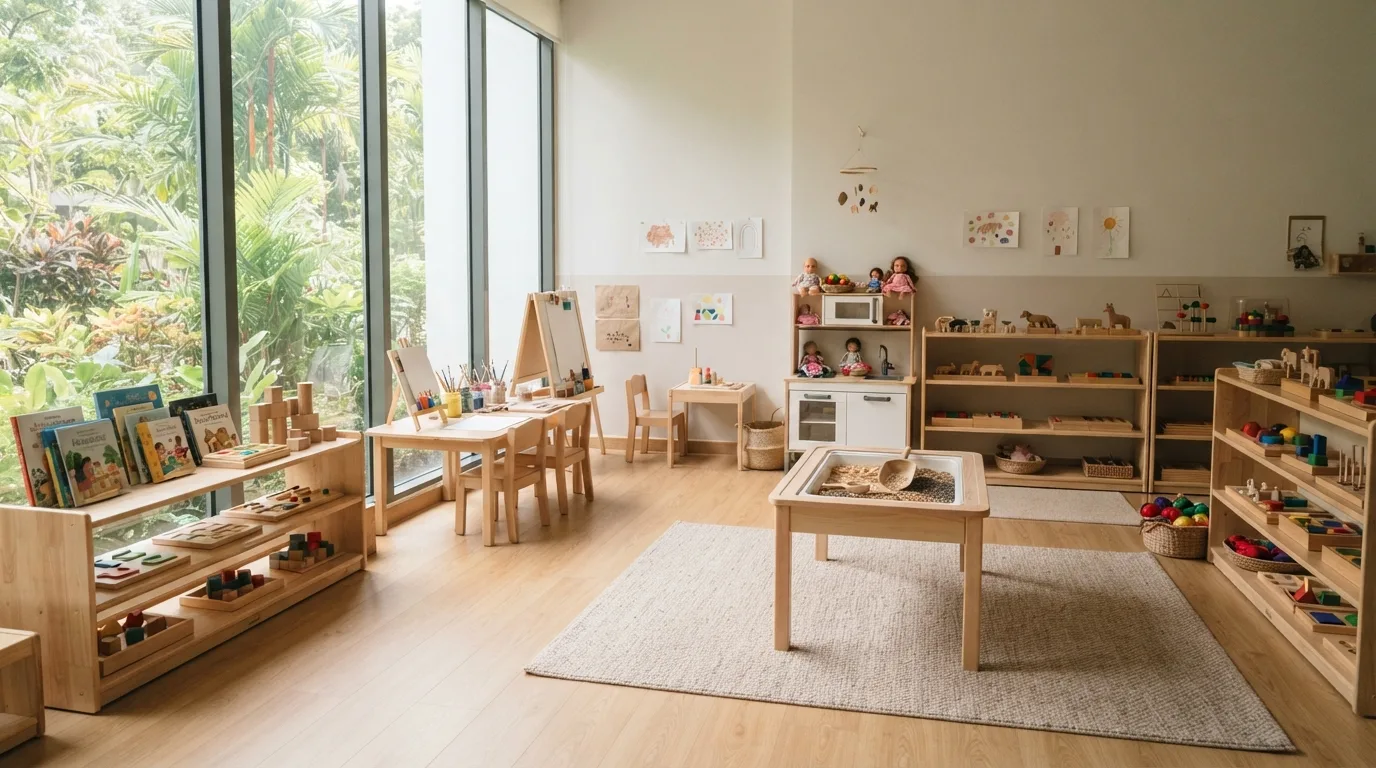
Young children can learn a lot through play, especially when activities give them space to explore and try new ideas. At preschool, play may involve movement, stories, games, art, music, building and other hands-on experiences.
For example, building with blocks can help children explore shapes, sizes and balance. Sorting objects can introduce early maths concepts, while pretend play gives children opportunities to use language, share ideas and interact with others.
Play also lets children make choices, test ideas, and learn from small mistakes. Singapore's National Early Childhood Development Agency (ECDA) and the Ministry of Education provide information on early childhood learning and development that can help parents understand how young children learn through everyday experiences.
Preschool Supports Early Thinking Skills
Young children are naturally curious and often want to know how and why things happen. Preschool gives them regular opportunities to ask questions, explore different materials, and work through simple problems through everyday activities.
A teacher might ask what happens when two objects are mixed, how to make a block tower taller, or which objects are bigger or smaller. Questions like these encourage children to think about what they see and explain their ideas.
These activities help children practise observing, comparing, remembering and making choices. When something does not work, trying a different approach can also teach them to keep exploring and learn from the experience. Such opportunities form an important part of early childhood learning and help children build curiosity about the world around them.
Children Practise Following Routines
A regular preschool routine helps children become familiar with how the day is organised. Knowing what comes next can make daily transitions easier as children move from one activity to another.
A typical day may involve greeting the teacher, joining learning activities, having meals, playing outdoors and getting ready for rest time. Repeating these routines gives children opportunities to understand when it is time to listen, play, eat, rest or move on to something new.
These experiences can also support children as they prepare for primary school in Singapore, where daily schedules may become more structured. Over time, familiar routines can help children feel more settled and confident during the school day.
Preschool Encourages Physical Development
Young children need regular opportunities to move, use their hands and develop control over their bodies. Preschool activities can support both large muscle movements and smaller hand movements through active play and creative tasks.
Running, jumping, climbing, dancing and outdoor games can help develop gross motor skills. Drawing, threading, cutting and building with small blocks give children opportunities to practise fine motor skills and hand control.
A balanced preschool curriculum can offer a mix of active and quieter activities throughout the day. These skills support everyday tasks such as holding a pencil, using scissors, putting on shoes and taking part in physical games.
Children Learn to Work With Others
Preschool gives children regular chances to take part in group activities. Working towards a shared task helps them understand that some activities are easier and more enjoyable when people contribute together.
Children may build something as a team, create an art project or join a group storytelling activity. During these tasks, they learn to listen to different ideas, share materials, take turns and contribute to a common goal.
Children can also notice that their classmates may approach the same activity in different ways. These experiences help them practise cooperation and communication while becoming more comfortable taking part in group activities before moving on to primary school.
Preschool Can Support School Readiness
School readiness is about more than recognising letters and numbers. Children also need opportunities to listen to instructions, communicate with adults, manage simple routines and take part in activities with other children.
Preschool gives children regular practice with these everyday skills in a familiar learning environment. Following routines, taking part in group activities and becoming comfortable with classroom expectations can help children adjust to the move into primary education.
Parents can also learn about preschool age in Singapore to understand how different stages of early education relate to a child's development. School readiness does not mean every child needs to reach the same skills at the same time, as children develop at different rates and may need different types of support.
Teachers Provide Structured Support
Preschool teachers spend time with children throughout the day, giving them opportunities to observe how each child learns and responds in a group setting. They can notice how a child communicates, plays, follows instructions and reacts to unfamiliar activities.
These observations can help teachers choose activities that suit the children's age and current abilities. When a child needs extra help with a particular skill, teachers can offer support and give them more opportunities to practise.
Communication between teachers and parents can also help families understand a child's progress. During a preschool visit, parents can ask about daily routines, learning activities and how teachers support children's participation throughout the day.
Preschool Gives Children New Experiences
Preschool introduces children to experiences that may not be part of their usual home routine. They can meet new people, explore different materials and take part in activities involving music, stories, art, games and outdoor play.
Trying different activities can help children discover interests they may not have noticed before. A child who enjoys painting might become interested in music, while another may enjoy building, gardening, books or exploring nature.
Regular opportunities to try something new also help children feel more comfortable with unfamiliar activities. They can explore at their own pace, develop new interests and gain experience that supports their learning as they move through different stages of education.
What Should Parents Look for in a Preschool?
Choosing a preschool depends on your child's age, personality, needs and your family's daily routine. Parents comparing childcare centres in Singapore can consider the daily programme, teacher-child interactions, the learning environment, and how the centre communicates with families.
A visit can give parents a better sense of the setting. Notice how teachers speak to children, how children take part in activities and whether the environment feels calm, welcoming and suitable for young learners.
It can also be useful to compare preschool and childcare in Singapore, as different programmes may suit different family arrangements. During a visit, parents can ask about:
- Daily routines and learning activities
- Teacher qualifications and experience
- Indoor and outdoor play
- Meals and rest arrangements
- Communication with parents
- Support for children's individual needs
Looking at these areas can help parents understand what a centre offers and decide whether it matches their child's needs and their family's routine.
How Parents Can Support Preschool Learning at Home
Children can keep practising useful skills at home through everyday conversations, play, and daily activities. Parents do not need to create formal lessons, as simple moments throughout the day can give children plenty of opportunities to explore and learn.
Reading stories together, counting objects while cooking, drawing pictures, sorting toys and helping with small household tasks can all support child development. These activities can also give children time to practise skills they have started developing at preschool.
Parents can ask children about their favourite activity or something interesting that happened during the day. Talking about these experiences encourages children to share their thoughts and helps parents understand their interests and what they enjoy doing.
Final Thought
So, why is preschool important for a child? Preschool gives children a place to grow through play, relationships, routines and everyday learning experiences. It can support language, social skills, emotional development, physical abilities, independence and early thinking skills while helping children become familiar with group learning.
For Singapore parents, choosing a suitable preschool education programme means looking beyond academic learning. The daily environment, teacher-child relationships, activities and routines all play a part in a child's early years.
A supportive preschool gives children opportunities to explore, communicate, make choices, and learn alongside others. These experiences form an important part of early childhood and can help children approach their next stage of education with greater familiarity and confidence.
FAQs
1. What age is best for a child to start preschool in Singapore?
The suitable starting age can vary depending on the child's development, family needs and the type of programme. Singapore has different early childhood programmes for children at different ages, including infant care, playgroup, nursery and kindergarten.
2. How does preschool affect a child's behaviour?
A regular preschool routine gives children opportunities to practise communication, sharing, turn-taking and following simple rules. Teachers can guide children as they learn how to respond to different social situations.
3. Can preschool help a shy child become more confident?
Regular interaction with teachers and other children can give shy children repeated opportunities to communicate and join activities. Confidence often develops gradually, so children benefit from patient support rather than pressure.
4. What is the role of parents in preschool education?
Parents can support preschool learning by talking with their child, reading together, encouraging play and keeping in touch with teachers. A strong connection between home and preschool can help parents understand their child's experiences and progress.
5. What does Singapore's preschool curriculum focus on?
Singapore's early childhood approach covers areas such as language and literacy, numeracy, discovery of the world, aesthetics and creative expression, physical development, and social and emotional development. The exact activities can vary between programmes and centres.