Nearby objects are crystal clear, but what's happening in the distance is fuzzy. If you've experienced this, you probably know how kids who are nearsighted feel. Known medically as myopia, nearsightedness is becoming increasingly common in children and teens everywhere.
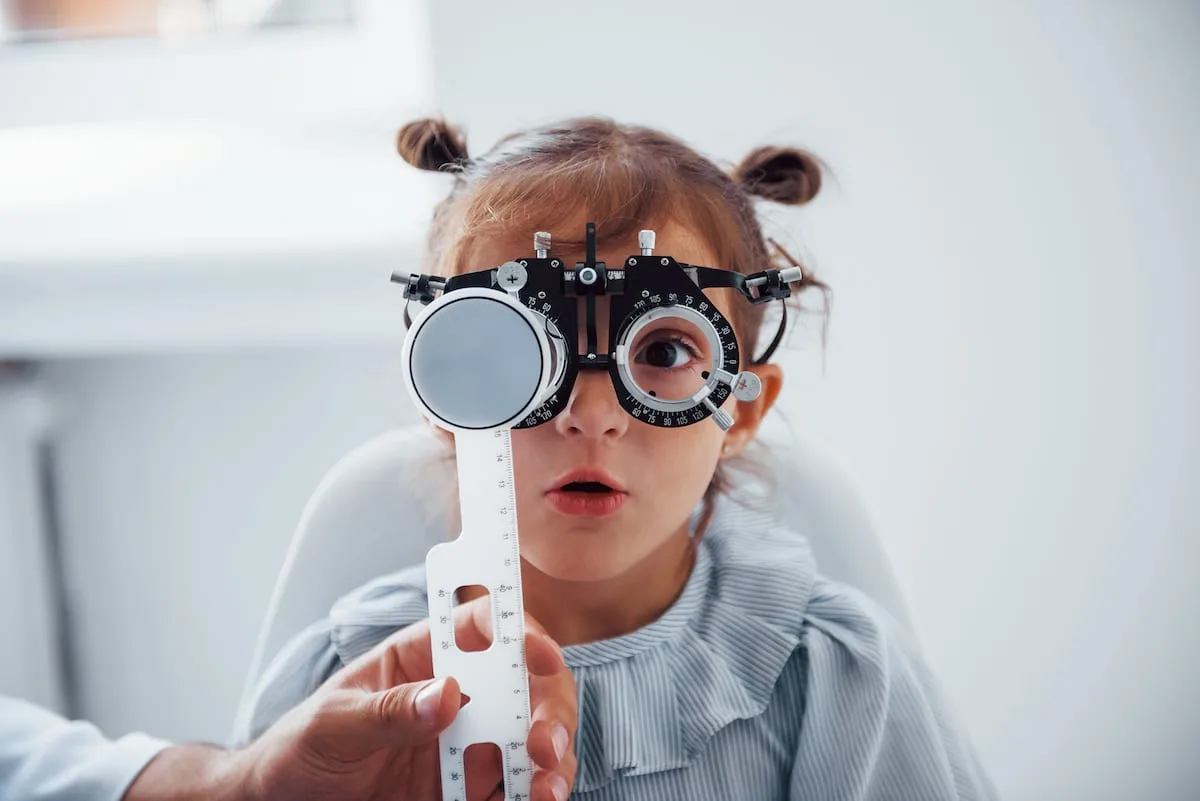
Not only are more children failing vision tests at school, but they're doing so at younger ages and requiring stronger prescriptions. Eye clinics are already seeing more of them coming in for a myopia eye test at an early age. Some are even experiencing vision problems before kindergarten.
Although genetics can be a factor, today's kids are experiencing environmental and lifestyle changes that impact when and how they need vision correction. Let's explore how these factors affect kids' vision.
Spending more time on screens
Children today are spending more time looking at screens than ever before. Phones, tablets, computers, televisions, video game consoles and virtual classrooms are becoming more common household objects. Kids are spending hours each day staring at screens up close.
Not only does this strain their eyes from being forced to focus up close for long periods, but it also makes them blink less while looking at screens. This can cause dry eyes and eye strain.
Many experts believe that when we're exposed to screens for longer periods of time indoors, our eyes begin to adapt to seeing up close. Myopia in children became especially apparent during virtual learning. They were spending more time indoors than ever before, which led to exponential increases in screen time.
Spending less time outside
Spending time outside is very important to your children's eye health. Sunlight helps our eyes grow to a normal length. Spending more time outdoors can decrease your child's risk of developing myopia and even prevent it from getting worse. Unfortunately, kids aren't spending as much time outdoors these days. Indoor recess, electronic devices, and homework keep them inside, where they used to play outside.
Many families live in cities where there isn't as much access to outdoor activities. Kids are also spending less time outdoors due to safety concerns and a jam-packed curriculum. Simple activities such as walking, riding your bike, or playing sports can help their eyes develop correctly.
Have more pressure to do well in school
Not only are children spending more time indoors, but they are also spending more time reading, writing and studying at a young age. They have more pressure to do well in school than ever before. With school becoming so competitive, they are spending more time doing close-up work.
Teenagers spend hours each night studying for exams. They're indoors for hours, focusing closely on homework and studying. School itself doesn't cause nearsightedness, but when kids aren't getting enough time outdoors while spending extra time doing close-up work, myopia can begin to worsen.
Modern indoor lifestyles
We spend so much more time indoors these days. Kids are indoors at home, at school, in shopping malls, and on electronic devices. Indoor environments limit the distance your eyes need to focus. Children who are indoors all day aren't forcing their eyes to look at distant objects. Not to mention, we are also inundated with artificial lighting. Natural lighting affects our eyes differently from artificial lighting. Indoor activities aren't bad for your eyes. The concern is that we aren't spending enough time outdoors.
Genetics always plays a role
Just like many other conditions, genetics plays a role in your child's development of myopia. If one or both parents are nearsighted, your kid is more likely to become nearsighted as well. However, genetics doesn't fully explain the rise in myopia that we're seeing. Environmental and lifestyle factors are causing myopia to become worse faster than it has ever happened in the past.
Parents, don't ignore these signs
If your child is nearsighted and you don't catch it early, it can affect more than just their vision. If they can't see the board at school, they may feel insecure or struggle to learn. Many of them don't realise their vision is blurry until they are much older. The earlier you catch vision problems, the better.
Early detection is key
Eye specialists can monitor your child’s myopia and recommend options to slow the progression. In some cases, there are things they can do to help slow the progression of myopia while they’re young. Make sure their eyes are checked regularly, especially if you notice any of the symptoms above. As our kids spend more time on screens and less time outdoors, it’s important to ensure they have their vision tested.
Prevention starts early
There are some things you can do for children’s eyes. Encourage your kids to go outside and participate in outdoor activities. If they are reading or using electronics, make sure they take a break every 20 minutes to look at something far away. Try to make sure they read and do homework in well-lit areas and encourage them to get enough sleep.
Myopia is affecting more kids each day due to large lifestyle changes. Screen time, lack of time spent outdoors, and more time indoors are some of the many reasons why so many are developing myopia. Although they are developing myopia at a young age, early detection can help. Parents who prioritise regular eye exams for their children are investing in their long-term eye health and overall development. And if vision correction is needed, today’s affordable prescription glasses make it easier than ever for children to learn confidently at school, participate comfortably in sports, and enjoy everyday activities outdoors without strain.