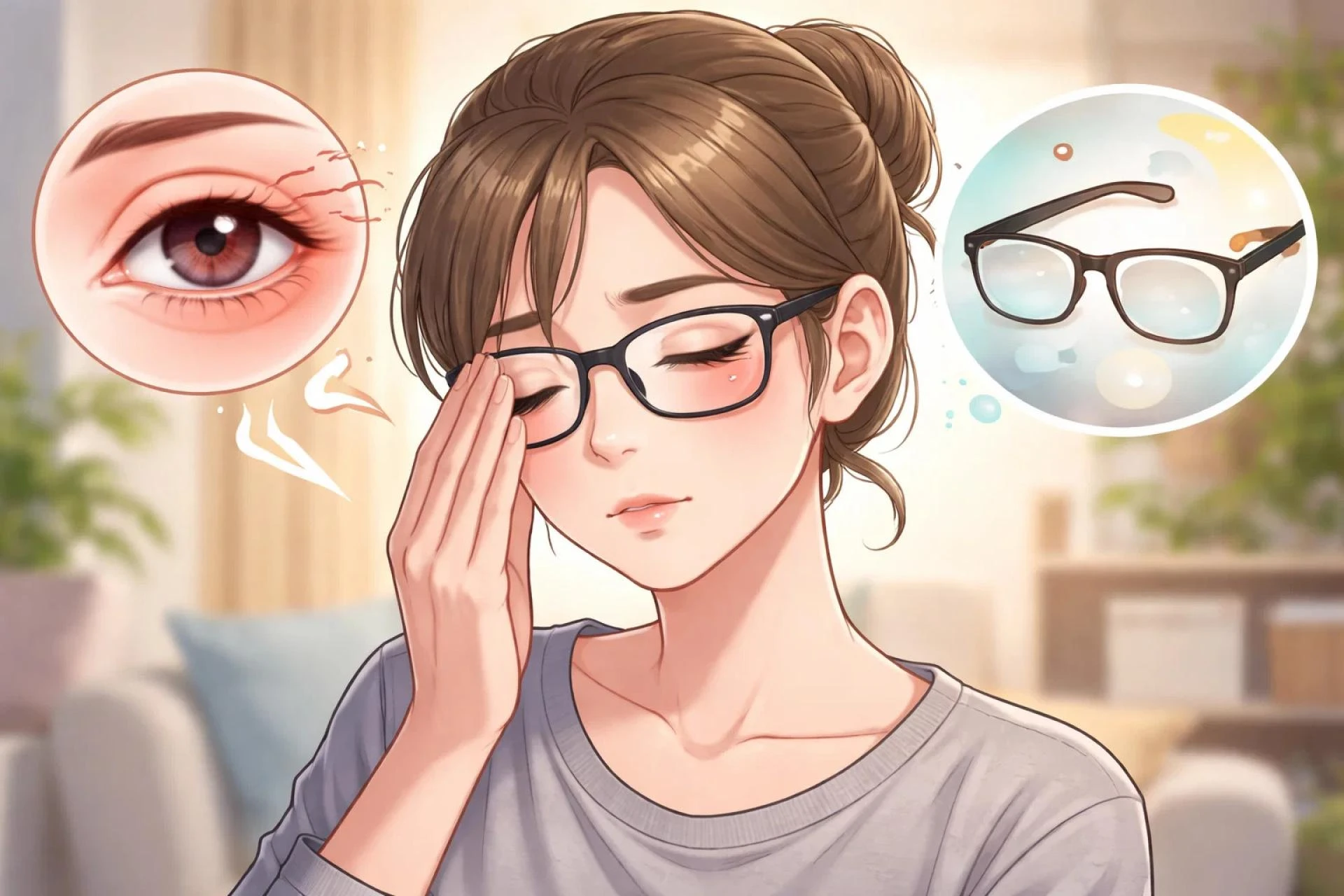
If you wear glasses, you may have noticed that one of your eyes gets tired much more quickly than the other. It can feel heavy or pressured around the eye. You may even feel a slight ache or pulling sensation from time to time. When your vision feels balanced overall, it’s easy to disregard these subtle clues. But when one eye gets tired more often than the other, there is usually a reason for it.
The dominant eye is often doing more work
Just like we all have a dominant hand, most people have a dominant eye. This means your dominant eye is naturally taking on more visual work. Your brain uses that eye for detail more than your non-dominant eye. Examples include reading, driving, or looking at digital screens.
If your prescription glasses aren’t balanced for both eyes, your dominant eye may tire more easily. This doesn’t necessarily mean your non-dominant eye is “better”. It just means your brain prefers the information from your dominant eye for detail. Your glasses may exaggerate the difference if they’re not addressing your vision properly.
One eye has a different prescription than the other
Most people’s eyes require different prescriptions (even if only slightly). This is normal and not usually noticed when corrected properly. But if one eye was over- or under-corrected during your last eye exam, it can cause problems.
Our brains like to receive equal images from both eyes to create a balanced picture. If one eye sees too much or too little correction, the other eye may tire from trying to keep up. Symptoms can include headaches, difficulty concentrating, and fatigue on one side.
Small differences in astigmatism or axis
A common condition called astigmatism causes your eyes to have multiple points of focus. It creates some distortion or blurriness around certain angles. Your brain can compensate for a bit of uneven astigmatism correction. But if the cylinder is off by even a fraction of a degree in one eye, you may notice eye fatigue. You will probably notice the symptoms more in your weaker eye.
This can be especially frustrating because the images may still appear clear. Instead of thinking there is something wrong with your glasses, you may lean your head differently, squint, or strain your eyes. When the cause is something as subtle as astigmatism strength or axis, those adjustments won’t solve the issue.
One lens is higher or closer to your eye than the other
Ideally, glasses should sit centred directly in front of both eyes. Many issues can cause one lens to sit higher than the other. Or one lens may accidentally be closer to your eye.
If your glasses aren’t aligned properly, it can force one eye to work harder. The effect might be minor, but it adds up throughout the day. As a result, you will feel more tired in that eye by the afternoon.
Screen-time can accentuate the problem
Looking at phones, tablets, and computers can make this issue much more apparent. Any activity that requires extended near vision will highlight a weaker eye. Using digital devices forces both eyes to work together continually.
You may notice symptoms only during the workday or when looking at screens for long periods. One-sided dryness, eye fatigue, or even aching can occur by the end of the day.
Lens quality can create disparity too
The quality of your lenses can also affect how balanced your vision feels. Poorly made lenses may cause more distortion around the edges. Your lenses may have uneven coatings or be lacking in optical clarity. Any of these issues can impact your dominant eye more than the other.
Depending on how you hold your head or how you naturally look through your glasses, one eye may feel more affected. The good news is, you don’t have to spend a fortune to find affordable glasses. You can get cheap eye glasses in Australia if you know where to look. But if your lenses are low-quality, they could contribute to the problem.
Should you be concerned?
As glasses wearers, it’s normal to feel some eye fatigue throughout the day. But if you consistently feel more tired in one eye than the other, take notice. Something is telling your brain that both eyes aren’t seeing equally, even if you can’t identify what it is.
Most people will ignore these signs and try to adapt. They may pinch their eyebrows together, lean closer, or incline their heads to the side. The issue will only become worse if you continue to wear improper glasses.
Eye fatigue on one side may not seem like a big deal at first. But it forces your eyes to work harder during the day. Before you know it, you may struggle to feel comfortable or relaxed without glasses on.
Get your eyes checked
If you’ve experienced any of these symptoms, it might be time to book an appointment for eye testing near me. Your optometrist will ensure you have the proper prescription to evenly distribute visual work. They can also guarantee your glasses were made correctly and test how they sit on your face.
Balanced eyes mean more comfortable eyes. By giving each eye what it needs to see clearly, you reduce unnecessary strain. Take care of your glasses and eyes by scheduling annual eye exams.