
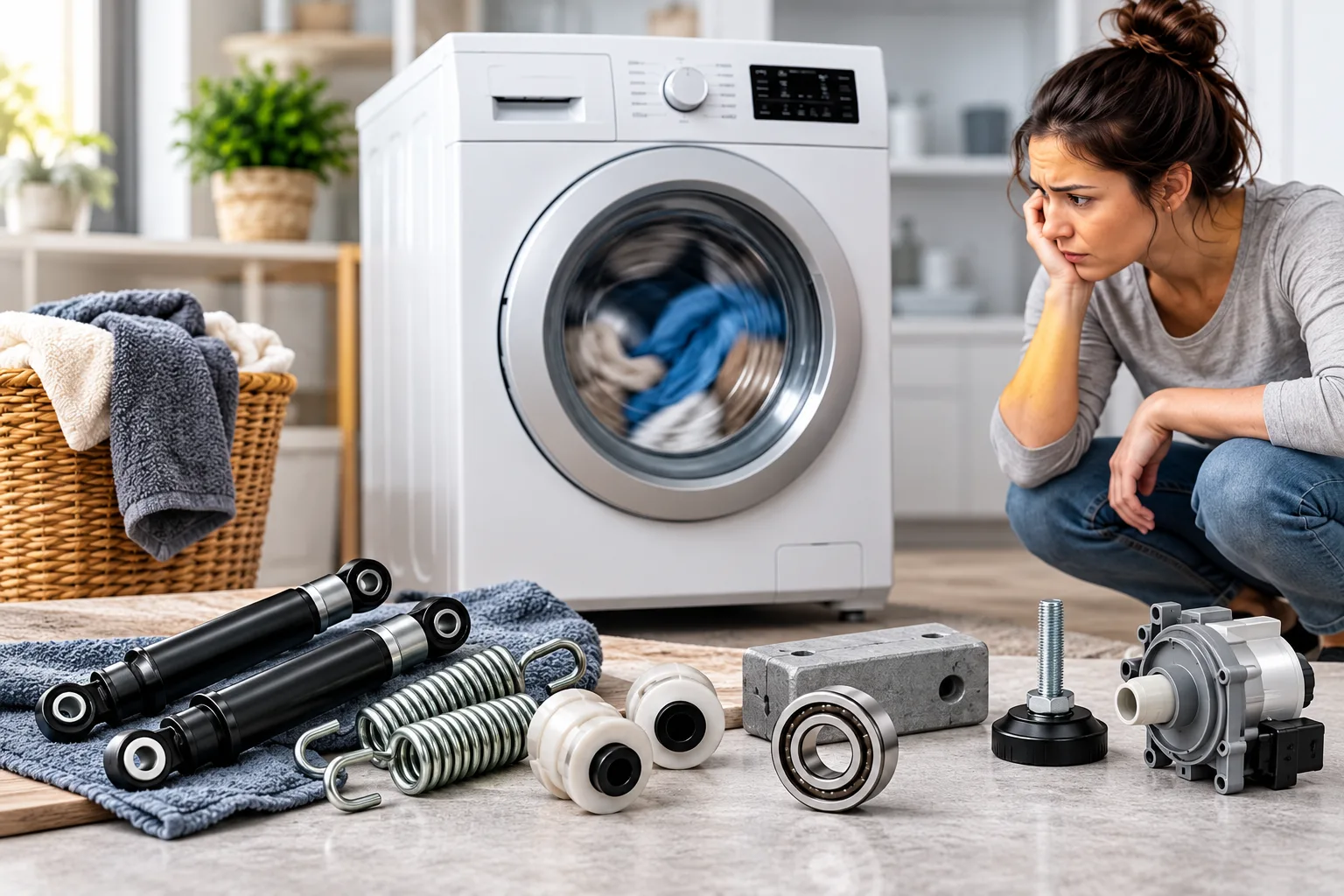
A washing machine that suddenly starts shaking, vibrating or banging during a cycle can be hard to ignore. While some movement is normal, excessive shaking may indicate anything from an uneven load to a worn internal component.
The good news is that a shaking washer does not always mean the entire appliance needs replacing. In many cases, identifying the cause and replacing the correct part can help restore normal operation.
Here are some of the most common things to check when your washing machine starts shaking.
1. Start With the Laundry Load
Before looking for a damaged part, check what is inside the washer.
Heavy items such as blankets, towels or jackets can collect on one side of the drum during the spin cycle. This creates an uneven load and may cause the washer to vibrate significantly.
Try redistributing the clothes and running the spin cycle again.
Also avoid overloading the machine. A washer packed too tightly may have difficulty balancing the drum as the spin speed increases.
If the shaking continues during normal, balanced loads, it may be time to look at the machine itself.
2. Check Whether the Washer Is Level
A washing machine needs to sit firmly and evenly on the floor.
If one adjustable foot is higher or lower than the others, the appliance may rock during operation. Even a small amount of instability can become much more noticeable during a high-speed spin cycle.
Check all four feet and make sure they are firmly touching the floor.
You should also inspect the surface underneath the washer. Flexible flooring, an unstable pedestal or an uneven surface can amplify vibration.
If the machine is properly level but still moves excessively, an internal component could be contributing to the problem.
3. Inspect the Shock Absorbers
Shock absorbers are particularly important in many front-load washing machines.
Their job is to control the tub's movement as the drum rotates. Over time, these components may become worn, loose or damaged.
Possible signs of worn washer shock absorbers include:
- Excessive vibration during spinning
- Loud banging from inside the cabinet
- The tub moving more than usual
- The washer moving across the floor
- Shaking even with a properly balanced load
If a shock absorber is cracked, detached or no longer providing sufficient resistance, replacement may be necessary.
Always choose a replacement based on the washer's complete model number and the manufacturer's part number rather than appearance alone.
4. Check the Suspension Springs or Rods
Depending on the washing machine design, springs or suspension rods may help support and centre the tub.
When one becomes stretched, damaged or disconnected, the tub may sit unevenly and move excessively during operation.
You may notice that the basket appears to lean toward one side or that the machine starts banging as soon as the spin speed increases.
Carefully compare a damaged suspension component with the original part before replacing it.
5. Look at the Shock Mounts and Bushings
Sometimes the shock absorber itself is not the only issue.
The pins, bushings and mounting points that secure the suspension components can also wear over time.
A perfectly functional shock absorber cannot control drum movement properly if its mounting hardware is damaged or loose.
During inspection, check whether each shock absorber is firmly attached at both ends.
6. Consider the Drum Bearings
A washer that shakes while also producing grinding, rumbling or roaring noises may have a problem deeper within the drum assembly.
Worn drum bearings can allow unwanted movement and may become increasingly noisy as the machine spins faster.
Bearing replacement can be considerably more involved than replacing a shock absorber or suspension spring, so professional diagnosis may be appropriate if you suspect this issue.
7. Check the Counterweights
Many washing machines use counterweights to help stabilize the tub during operation.
If a counterweight becomes loose, cracked or damaged, the washer may vibrate or create heavy knocking sounds.
Because these components can be heavy and located inside the cabinet, unplug the appliance before attempting any inspection and follow the manufacturer's service instructions.
8. Make Sure Shipping Bolts Were Removed
Is the washer newly installed?
Front-load washers are often transported with shipping bolts that hold the drum securely during delivery.
These bolts normally need to be removed before regular operation. If they remain installed, the washer may shake severely during the spin cycle.
Check your appliance installation manual before removing any unfamiliar hardware.
How Do You Know Which Washer Part You Need?
Once you identify a possibly faulty component, resist the temptation to order a replacement simply because it looks similar.
Washer components can vary between brands, models and even different versions of the same appliance.
Before ordering, record:
- Washer brand
- Complete model number
- Original part number
- Part dimensions
- Connector or mounting style
- Any compatibility information provided by the manufacturer
You can browse washer replacement parts from Quick Parts Depot to compare model-specific components such as shock absorbers, suspension parts, pumps, seals, switches and other washer parts.
Suggested link: Use “washer replacement parts from Quick Parts Depot” as the anchor text and link it to the Quick Parts Depot Washer Parts Canada category page.
When Should You Stop Using a Shaking Washer?
A little vibration during a high-speed spin cycle can be normal.
Severe banging, repeated movement across the floor, scraping noises, water leaks or a visibly unstable drum should not be ignored.
Continuing to operate a machine with excessive movement may place additional strain on surrounding components.
If simple checks such as balancing the load and levelling the washer do not solve the problem, inspect the suspension system or have the machine professionally diagnosed.