Most home maintenance lists include the roof, gutters, and air conditioning filters. Fewer include the air itself.
Yet people breathe indoor air for many hours each day. Its condition can affect comfort, odors, and how well a home holds up.
Why Florida Homes Are Often Sealed Tight
For much of the year, Florida homes stay closed with the air conditioning running. That keeps out heat and humidity, but it also limits fresh air exchange.
Energy efficient construction can make homes even tighter. Without enough ventilation, moisture and airborne particles may linger longer.
This does not mean a tight home is unhealthy. It simply means ventilation and filtration deserve regular attention.
Humidity Is the First Factor to Watch
Indoor humidity affects comfort, odors, and the chance of microbial growth. Many guidelines suggest keeping indoor relative humidity in a moderate range.
When humidity stays high, surfaces may feel damp and closets may smell musty. When it is very low, which is less common in Florida, people may notice dry skin or static.
An inexpensive hygrometer can help owners track indoor humidity over time. Readings that stay high may point to cooling or ventilation issues.
The Air Conditioning System Matters
The air conditioning system moves nearly all the air in many Florida homes. Its filter, coil, ducts, and drain all influence air quality.
A dirty filter may let more dust circulate. A clogged condensate drain can cause water to back up and create damp conditions near the air handler.
Duct leaks in an attic may pull in hot, humid air and dust. Sealing and servicing these parts can improve both comfort and air quality.
Common Sources of Indoor Pollutants
Everyday activities release particles and gases. Cooking, cleaning products, candles, and some furnishings can all contribute.
New flooring, cabinets, and paint may release volatile organic compounds for a period after installation. Ventilation often helps these levels drop over time.
Garages attached to the home can allow vehicle exhaust or stored chemicals to enter living space if doors and walls are not well sealed.
Moisture and Microbial Growth
When moisture builds up, mold and bacteria may grow on surfaces or inside ducts. This can lead to odors and may affect sensitive people.
Air quality testing sometimes includes sampling for mold spores. Results are typically compared with an outdoor sample for context.
What Air Quality Testing Can Include
Testing may involve measuring humidity, temperature, particulate levels, and carbon dioxide as an indicator of ventilation. Some services also sample for mold spores or certain chemical compounds.
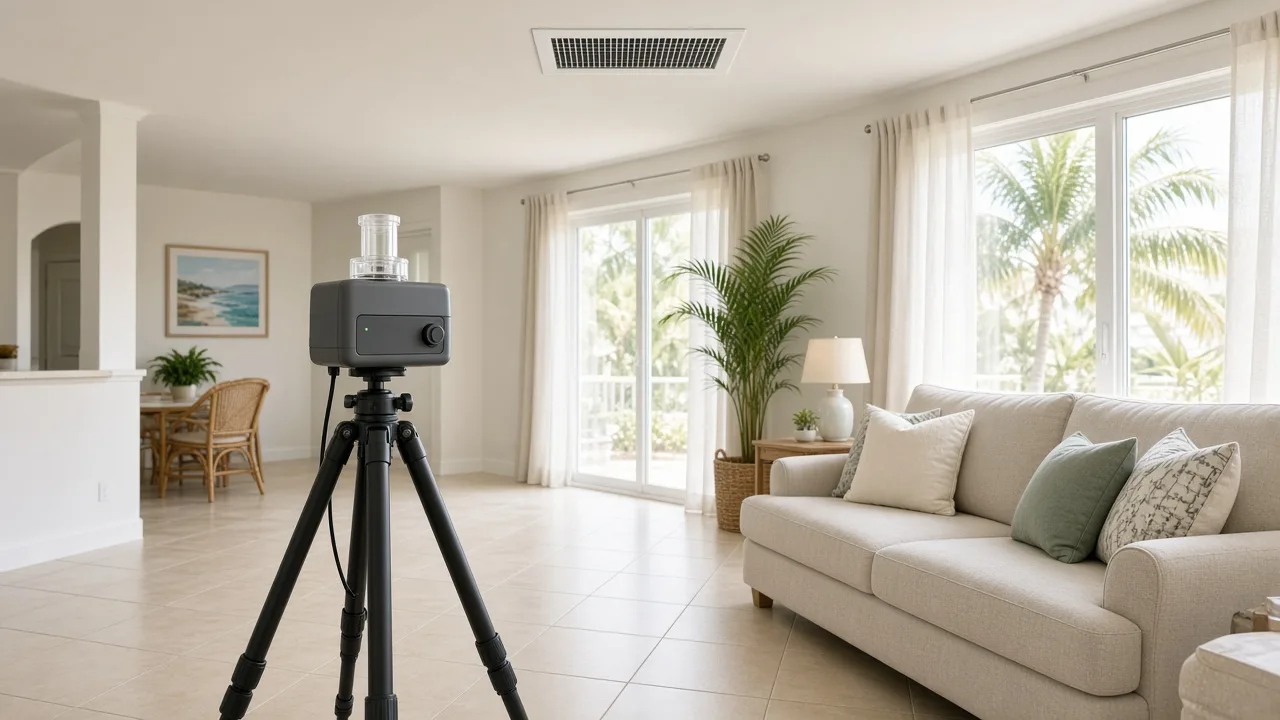
Sampling devices are usually placed in main living areas for a set period. Collected samples are then analyzed by a laboratory when required.
The specific tests chosen often depend on the owner's concerns, such as odors, recent water damage, or new renovations.
Understanding the Limits of a Test
Air conditions change throughout the day. A test shows what was present during the sampling period, not a permanent condition.
Weather, activity, and open doors can all influence results. Interpreting the data alongside a visual review of the home usually gives a clearer picture.
Testing does not diagnose health conditions. People with health concerns should speak with a qualified medical professional.
Signs That May Suggest Testing
Persistent musty odors, visible growth, recurring condensation on windows, or unexplained allergy symptoms at home may lead owners to consider testing.
Recent water damage, a long period of vacancy, or major renovation work are other common reasons. Buyers sometimes request testing when a home has been closed up for months.
Simple Habits That Support Better Air
Changing air filters on schedule is one of the easiest steps. Using kitchen and bathroom exhaust fans helps remove moisture and cooking byproducts.
Keeping the condensate drain clear and having the system serviced regularly can prevent many moisture problems. Storing chemicals outside living areas also helps.
Opening windows on mild, dry days may provide some fresh air exchange, though Florida weather does not always allow it.
Ventilation Options for Tight Homes
Some homes benefit from mechanical ventilation systems that bring in filtered outdoor air. Others may need dehumidifiers to manage moisture.
A qualified heating and cooling contractor can explain which options suit a particular house. Decisions often balance comfort, energy use, and cost.
Seasonal Shifts in Florida Air
Pollen seasons, wildfire smoke from distant fires, and Saharan dust events can all affect outdoor air at different times of year. Some of these particles can find their way indoors.
Higher efficiency filters, when compatible with the cooling system, may help capture more fine particles. A contractor can confirm which filter ratings the system can handle.
Air Quality After Renovations
Sanding, demolition, and new finishes can release dust and chemical compounds. These may linger in ducts and on surfaces after a project ends.
Cleaning thoroughly, replacing filters, and ventilating during and after work can reduce these effects. Testing after renovation may confirm whether levels have returned to normal.
Keeping Simple Records
Writing down filter change dates, humidity readings, and service visits helps owners spot trends. A gradual rise in humidity, for example, may hint at equipment trouble before comfort suffers.
Pets, Hobbies, and Daily Life
Pets, indoor plants, hobbies, and cooking styles all influence indoor air. Pet dander and soil from plants can add particles, while some crafts release fumes.
These factors are a normal part of life. Being aware of them simply helps owners choose ventilation and cleaning habits that fit their household.
Air Quality as Part of Routine Care
Treating air quality as a regular maintenance item, rather than a one time concern, helps owners notice changes early. Small adjustments can often make a noticeable difference.
Owners who want measured information about the air in their homes can learn more about indoor air quality testing services and what each test measures.
Final Thoughts
Indoor air quality connects to moisture control, cooling performance, and daily habits. In Florida homes that stay closed much of the year, it deserves steady attention.
Testing will not answer every question, but it can provide useful data that helps owners make practical choices about comfort and care.