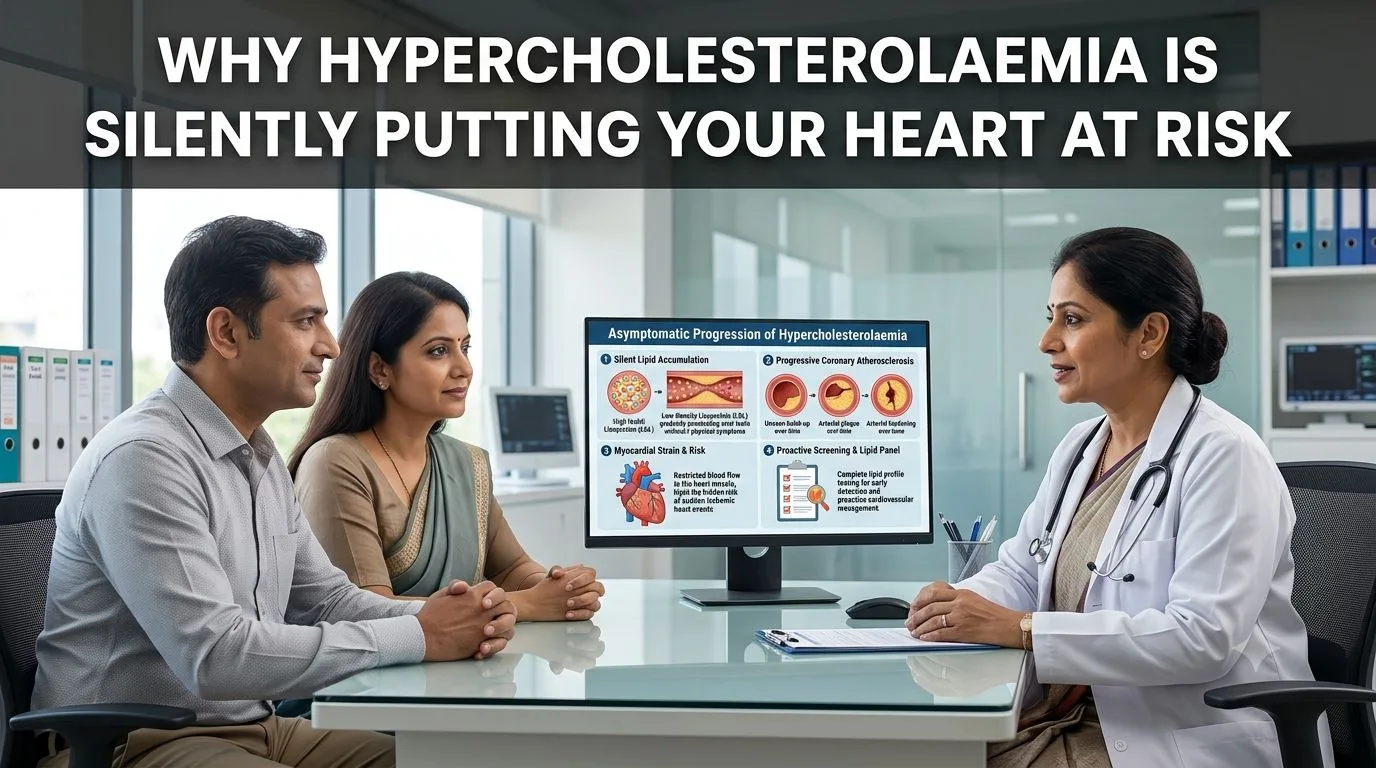
There is an inherent risk in a medical condition that causes no pain, creates no noticeable changes and brings about no impairment in function while it wreaks havoc unknowingly. Hypercholesterolemia is that condition for millions of people worldwide. Increased cholesterol levels, whether from diet and lifestyle habits or inherited genetic mutations, accumulate in arteries over the years without causing any symptoms. The first sign that an evil process has been taking place is often a heart attack or stroke. By then, years of damage have already been done to the arteries.
Key Takeaways
- Hypercholesterolaemia can remain entirely asymptomatic for twenty to thirty years while coronary artery disease develops progressively in the background.
- Familial hypercholesterolaemia, a genetic condition affecting one in two hundred to five hundred people, causes severely elevated LDL from birth and is dramatically underdiagnosed globally.
- Conventional statin therapy is effective for most patients, but a significant proportion with very high baseline LDL or statin intolerance cannot reach protective targets without additional treatment.
- PCSK9 inhibitors represent the most significant advance in lipid-lowering therapy in a generation, producing LDL reductions substantially beyond what statins alone can achieve.
What Hypercholesterolaemia Actually Is
Hypertension refers to an unreasonable increase in the concentration of LDL or total cholesterol in the human bloodstream. However, this condition is not a single ailment, but a spectrum ranging from slightly increased LDL levels caused mostly by diet and physical inactivity to excessive hypercholesterolemia caused by defects in the genes responsible for cholesterol metabolism. Primary hypercholesterolemia is caused by mutations in the APOB, LDL receptor, and PCSK9 genes that affect liver function. Mutations in these genes cause heterozygous familial hypercholesterolemia. It is the most common kind of hypercholesterolemia that affects between 1 out of 200 and 1 out of 500 individuals.
Why the Genetic Forms Are Particularly Dangerous
Familial hypercholesterolemia causes LDL cholesterol levels to be elevated from the very beginning of life. That is, when a baby is born with the heterozygous genetic disorder, its LDL cholesterol will be two to three times higher than usual from birth. The accumulation of such high levels of cholesterol for years or decades will lead to the development of coronary artery disease in adults much sooner than people without this genetic condition.
According to the data, men suffering from untreated heterozygous familial hypercholesterolemia have a fifty percent risk of getting coronary heart disease before they turn fifty. On the other hand, women with the same disease have a risk of coronary heart disease at the age of sixty.
How the Damage Accumulates Silently
The quiet nature of hypercholesterolemia is mechanical. LDL particles get into the arterial intima and build up there, depending on their amount in the blood. During this process, they are oxidized and trigger inflammation and the formation of foam cells and fibrous plaques, which slowly narrow the coronary arteries. Still, none of these processes signal pain receptors. None of them influence the function of the heart properly until there is severe arterial constriction or some threatening plaque breaks.
The plaque which ruptures and leads to a heart attack is usually not the one which causes the biggest obstruction. It is a smaller plaque with a very thin fibrous cap that becomes unstable and breaks, releasing thrombogenic material into the bloodstream. The thrombus appears immediately and blocks the vessel within a few minutes. Most patients do not experience any symptoms before the event.
Why So Many Cases Go Undetected
Familial hypercholesterolemia can cause a sign known as xanthomas, fatty deposits sometimes found on tendons and around the eyes. These signs do not occur in all patients, may go unnoticed even when present, and are seldom the reason for seeking medical assistance. If no physical signs are found, a diagnosis can be made by blood tests that reveal elevated LDL cholesterol levels.
Many adult people die without having their blood lipid profile tested. In some countries where there are no systematic programs for identifying cardiovascular risks, patients with familial hypercholesterolemia may reach their forties without being diagnosed and incurring cardiovascular damage during that period. Even when high LDL cholesterol is found, the genetic cause is not always known, and the patient receives standard lifestyle recommendations instead of the aggressive treatment needed.
How Standard Treatment Manages the Condition
In most cases of high LDL, statins are the first-line treatment and benefit most individuals. High-intensity statins, such as atorvastatin and rosuvastatin, reduce LDL by 40 to 60 percent, and many trials confirm their effectiveness in reducing cardiovascular events. Furthermore, the medicines are generally well tolerated and are considered the core of the treatment for hypercholesterolemia.
Nevertheless, in cases of familial hypercholesterolemia, high-intensity statins might not be helpful because, due to the high initial level, there is a need for severe LDL reduction. Thus, for a patient with untreated LDL of 280 mg/dL, even maximum-dose high-intensity statin therapy may only lower LDL to 140 mg/dL, which is higher than the target for patients at high risk of cardiovascular disease.
When Standard Treatment Is Not Enough
Evolocumab is a monoclonal antibody that inhibits PCSK9, a protein involved in the degradation of LDL receptors on liver cells. By blocking PCSK9, the medicine prevents receptor degradation and keeps receptors on the surface of liver cells longer, enhancing the liver's ability to remove LDL from the bloodstream. Clinical trials showed that evolocumab reduced LDL levels by about 60% when administered with statin therapy. The FOURIER trial showed that the medicine had a beneficial impact on cardiovascular events such as heart attack and stroke.
Repatha SureClick is a self-administration method for a 140mg evolocumab formulation. The SureClick device does not require reconstitution and is convenient for patients administering subcutaneous injections at home. The invention requires a training session for the patients, enabling them to use it independently. The medicine is indicated for treatment of patients with primary hypercholesterolaemia, including heterozygous familial hypercholesterolaemia, as well as patients suffering from atherosclerotic cardiovascular disease who were not able to reach the target LDL level despite the use of highly effective statin only under the supervision of a cardiologist.
Lifestyle Measures That Complement Treatment
Although diet is not the major cause of high LDL in familial hypercholesterolaemia, lifestyle changes can help reduce overall cardiovascular risk. Avoiding saturated and trans fats reduces dietary LDL intake on top of what is genetically predetermined. Regular aerobic exercise helps increase HDL cholesterol and lower triglycerides. Stopping smoking is especially crucial because smoking contributes to the atherosclerotic process already supported by hypercholesterolaemia.
Emotional and Mental Health After Diagnosis
In the case of familial hypercholesterolaemia, some consequences may be faced by the relatives as well. First-degree family members have a 50% chance of inheriting the same mutation, and cascade screening of relatives is an important clinical step, although it may raise concern. Furthermore, patients with a family history of premature cardiovascular disease should have trustworthy dialogue with their health professional about their own risk, effectiveness of treatment in terms of risk reduction, and realistic expectations about the possible outcomes.
Importance of Follow-Up Care
Regular lipid monitoring every three to six months shows whether a lipid target is being reached and maintained. Through age, cardiovascular imaging done at predetermined times can show whether coronary artery disease is progressing or getting better in these high-risk individuals. Any new signs or symptoms should prompt urgent medical assessment rather than home monitoring, as many patients with long-standing risk factors have developed underlying problems that may require action.
What Is Worth Remembering
High blood cholesterol levels can damage the heart without being noticed. The dangerous nature of the disease lies in its anonymity. It can be detected only by regular screening, taken aggressively with targeted treatment and managed gradually to stop the silent process that causes cardiovascular diseases, which everybody tries to avoid.
Disclaimer: This article is for general informational purposes only and should not be considered medical advice. Always consult a qualified cardiologist or healthcare professional for diagnosis, treatment, and guidance specific to your condition.