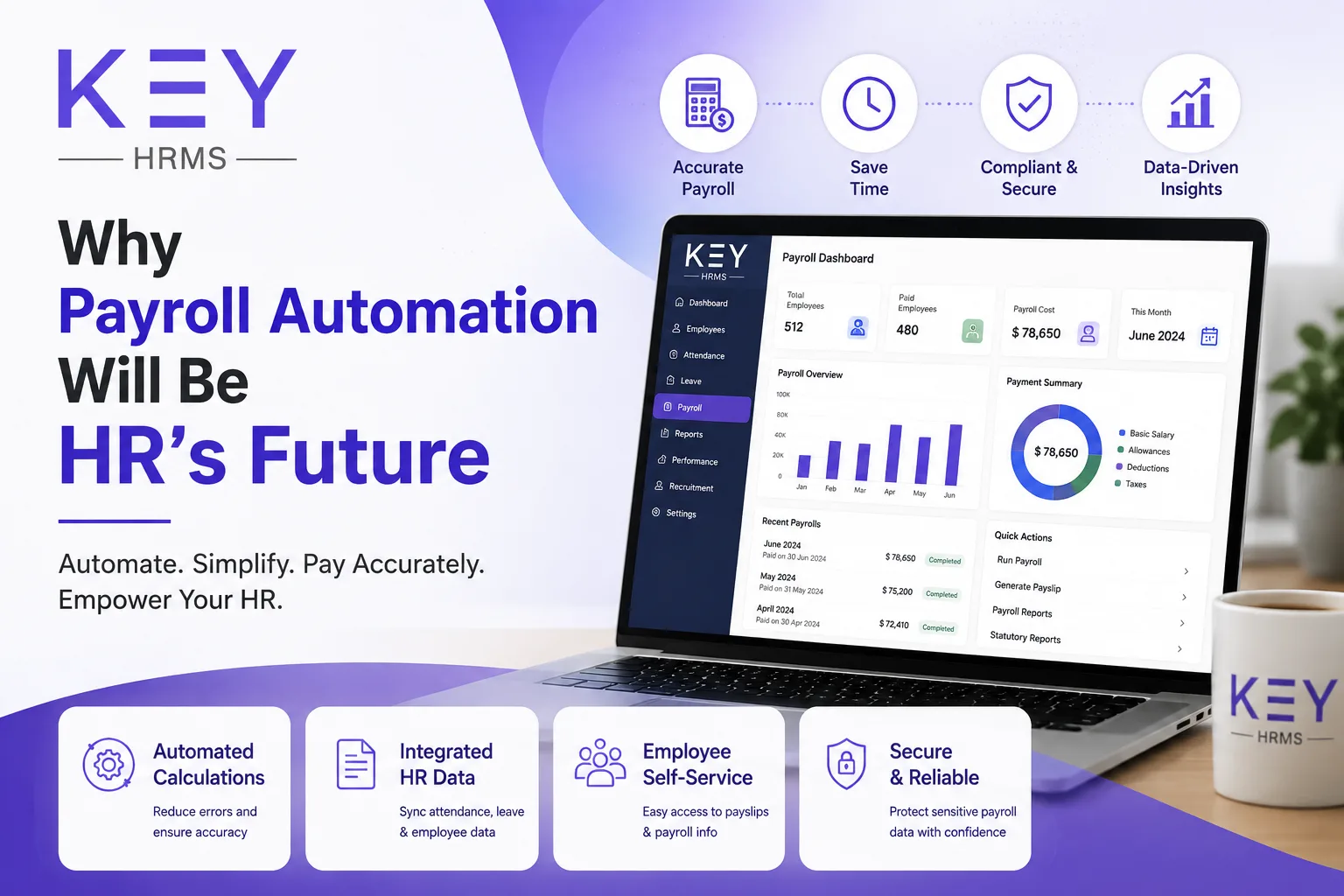
One of the most crucial duties of any HR department is payroll. Businesses must effectively manage payroll information and keep well-organized records, while employees expect their salaries to be processed accurately and on time. Manual payroll processing can take more time as businesses expand.
Payroll automation is becoming a crucial component of contemporary HR management because of this. Businesses can cut down on tedious administrative work and improve payroll processing efficiency by integrating payroll with employee data, attendance, leave, and other HR procedures.
Payroll Automation: What Is It?
Software is used in payroll automation to streamline tedious payroll tasks. An automated system can use centralized employee data and linked HR procedures in place of manually gathering information from spreadsheets and computing salary inputs.
Payroll automation can facilitate tasks like salary computations, attendance inputs, leave adjustments, overtime data, payslip generation, and payroll reports, depending on the software.
Faster payroll processing is not the only objective. Additionally, it will make the process less reliant on manual data entry and more structured.
The Reasons Behind Businesses' Transition to Payroll Automation
Payroll gets more complicated as businesses grow. There are more attendance records, leave requests, overtime computations, salary information, and employee changes to handle when there are more employees.
HR departments may need to gather and confirm data on a regular basis due to manual procedures. It may take more time to find and fix even a minor data entry error.
By integrating pertinent HR data into a single system, payroll automation helps cut down on these tedious tasks.
Reduced Manual Errors and Increased Accuracy
Accurate employee data is essential to payroll. Salary calculations may be impacted by overtime, authorized leave, attendance, and other payroll inputs.
Errors are more likely to occur when data is manually moved between spreadsheets or systems. HR teams can operate with more consistent data and cut down on pointless data entry with an integrated payroll system.
Reduces HR Time
Payroll processing can use a lot of HR resources, especially if data is gathered from various sources.
HR departments can spend less time on tedious computations and data transfers thanks to automation. This frees up more time for HR specialists to concentrate on strategic tasks like hiring, workforce planning, and employee engagement.
What Makes Key HRMS Unique in Payroll Automation
By linking payroll with crucial HR operations like employee management, attendance, leave, hiring, performance management, and employee-employee self-service, KEY HRMS adopts an integrated approach to payroll automation.
The link between payroll and attendance is one of its main advantages. During payroll processing, employee data, authorized leave, overtime, and attendance records can collaborate. This helps businesses handle salary processing more effectively by reducing repetitive manual data entry.
KEY HRMS can assist companies in transitioning from disjointed HR procedures to a more efficient method by combining these functions on a cloud-based platform.
Payroll and Employe Self-Service
The employee experience can also be enhanced by payroll automation. Paystubs, attendance records, leave balances, and other payroll-related information are often needed by employees.
Employees can obtain pertinent information without relying on HR for every routine request thanks to employee self-service functionality. This can lessen administrative inquiries and improve the convenience of HR services.
Workforce Growth and Payroll
As businesses expand, payroll requirements frequently become more complex. When staffing levels rise, a procedure that functions well for a small team may become challenging to sustain.
By organizing employee data and integrating payroll with other HR procedures, automated payroll systems can offer a more scalable solution. This makes it possible for companies to more effectively handle their expanding workforce needs.
Payroll's Future
More automation, integration, analytics, and employee self-service are probably in store for payroll in the future. Systems that do more than just compute salaries are becoming more and more sought after by HR departments. They require linked platforms that are capable of handling the data affecting payroll.
Payroll can become a more integrated component of overall workforce management through integration with leave, attendance, employee records, and other HR functions.
In conclusion
Because payroll automation can lessen repetitive tasks, enhance data organization, and facilitate more effective salary processing, it is becoming a significant component of HR's future.
Integrated solutions like KEY HRMS can assist in integrating payroll, leave, attendance, and employee management into a single platform as businesses expand. Payroll operations can be streamlined and manual data entry can be decreased with its emphasis on attendance-to-payroll automation.
Payroll automation is more than just a technological advancement for companies trying to update their HR procedures. It is a useful step in building HR operations that are more scalable, connected, and effective.