
Access to care remains one of the biggest challenges in the US healthcare system. Long wait times, staff shortages, and inefficient appointment coordination often frustrate patients and burden providers. This is why modern healthcare scheduling software has become a foundational tool for hospitals, clinics, and specialty practices seeking to improve both patient experience and operational efficiency.
At its core, effective healthcare scheduling ensures that the right patient sees the right provider at the right time. Manual scheduling methods and disconnected tools often lead to double bookings, underutilized resources, and high no-show rates. Digital scheduling platforms eliminate these inefficiencies by automating appointment management and providing real-time visibility across departments.
Advanced healthcare staff scheduling software plays a critical role in workforce optimization. By balancing clinician availability, skill sets, and patient demand, healthcare organizations can reduce burnout while maintaining consistent coverage. Intelligent scheduling tools adapt quickly to last-minute changes, helping administrators respond to cancellations or emergencies without disrupting care delivery.
Modern healthcare scheduling systems are designed to integrate seamlessly with EHRs, billing platforms, and patient engagement tools. This integration ensures appointment data flows smoothly across clinical and administrative workflows, reducing duplicate data entry and minimizing errors. As a result, care teams spend less time managing schedules and more time focusing on patients.
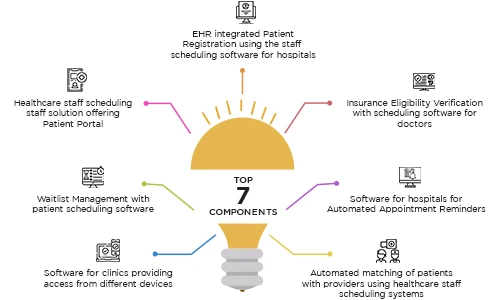
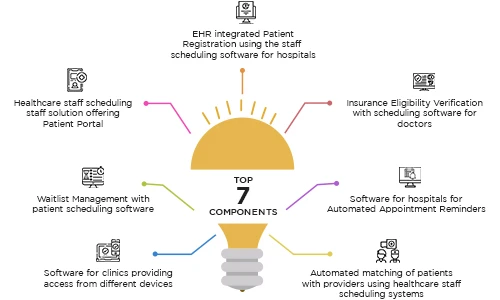
Beyond internal efficiency, digital scheduling has a direct impact on patient satisfaction. Automated reminders, self-service booking, and waitlist management reduce missed appointments and improve access to care. By implementing intelligent healthcare scheduling solutions, providers can significantly improve throughput while delivering a more convenient and transparent patient experience.
As healthcare organizations scale services and expand locations, flexible scheduling technology becomes essential. Purpose-built scheduling platforms provide the agility needed to support growth, telehealth adoption, and evolving care models across the US healthcare landscape.