
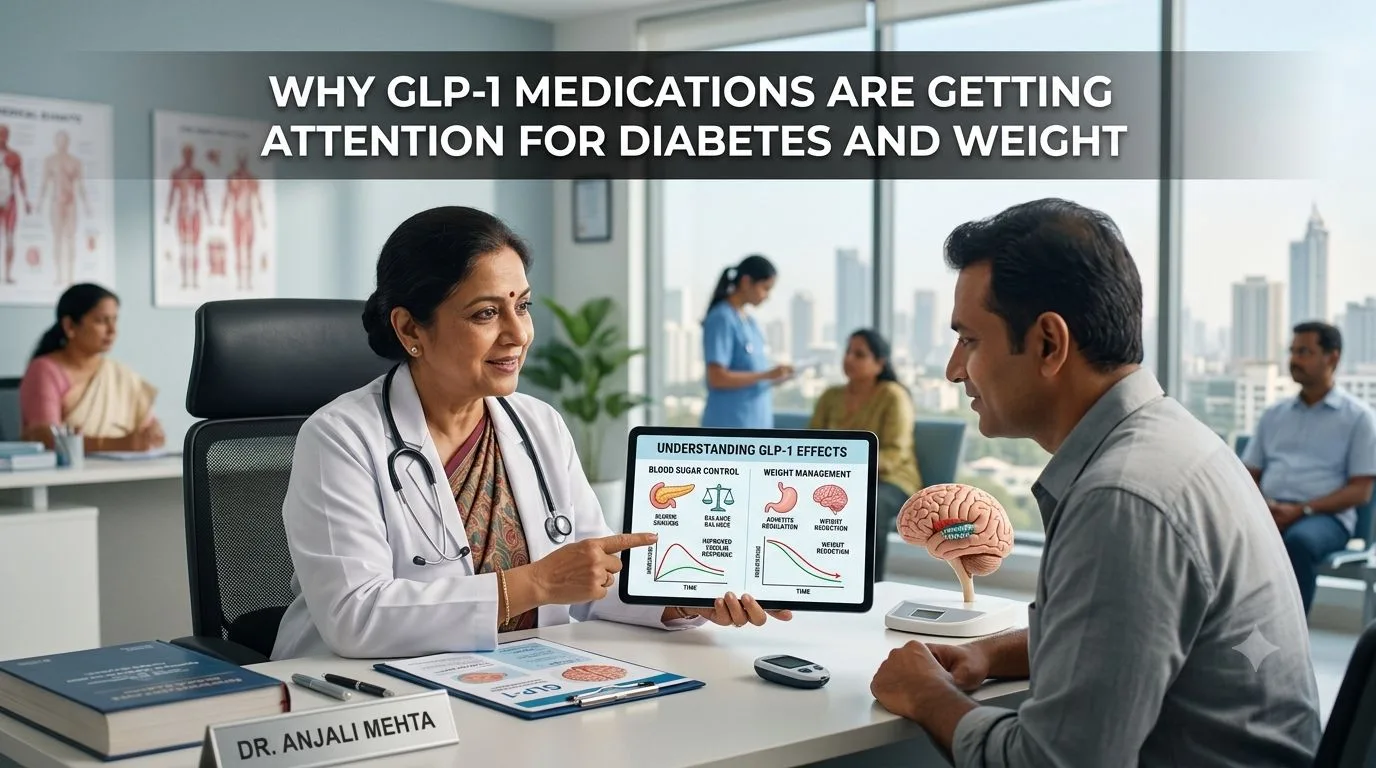
Some advances in medicine come in with a whisper and grow gradually, until eventually becoming acknowledged globally. Others emerge boasting clinical trial results that trigger debate right away. The GLP‑1 for Diabetes & Weight Loss belong to the latter category.
This new class of injectable diabetes medications, once considered fairly specific, has become one of the most talked-about medicines in medicine, public health, and even broader culture. It is worth thinking through the reasons behind this interest and identifying what deserves such attention and what people and medical professionals should focus on.
Key Takeaways
- GLP-1 receptor agonists produced clinical trial results for weight loss and cardiovascular risk reduction that significantly exceeded what the field had previously achieved with pharmacological treatment.
- The attention is not purely media-driven. The trial data genuinely supports the excitement, with outcomes that have prompted guideline updates across diabetes, obesity, and cardiology.
- Newer dual-receptor agents have pushed the outcomes further, producing weight loss in clinical trials that was previously associated only with bariatric surgery.
- The attention has also created risks around misinformation, unverified sourcing, and unrealistic expectations that patients should approach with care.
What Sets These Medications Apart From What Came Before
Pharmaceutical history has not been particularly helpful, especially with techniques such as Medicines for obesity treatment being subject to withdrawal in the past few decades due to unfavorable side effects or ineffective results. Furthermore, when evaluating type 2 diabetes medications, blood sugar control was always considered to be the main aspect, while weight loss was thought to be ancillary, or even hindering, as in the case.
However, GLP-1 receptor agonists challenged these traditional patterns of thinking. They proved effective in improving blood sugar control and promoting weight loss.
By the time outcome studies confirmed that some of them contributed to a decrease in scores and later cardiovascular deaths in high-risk patients, experts began to realize that unique things were happening in the industry.
The Clinical Trial Results That Changed the Conversation
The LEADER trial, which published its results in 2016 using liraglutide, was the first trial to confirm the efficacy of GLP-1 agents in reducing cardiovascular mortality. The SUSTAIN-6 trial using semaglutide confirmed that result with a 26 percent reduction in major adverse cardiovascular events.
These were not merely sugar trials with incidental cardiovascular data; they were designed to examine survival and clinical events in high-risk patient populations, and the consistency of results across different molecules makes it possible to conclude that there are class effects rather than molecule-specific effects.
The STEP clinical programme of semaglutide revealed average weight loss of approximately 15 percent of body mass over 68 weeks in non-diabetics. The SURMOUNT programme of tirzepatide confirmed weight loss of 15–22 percent depending on a dose.
None of these figures had been achieved using a medicine before, apart from surgery, and these results made scientists reconsider the approach to obesity, which is now regarded as a chronic disease in need of treatment rather than just a lifestyle issue.
Why the Attention Has Extended Beyond Clinicians
The magnitude of the weight loss achieved in clinical trials drew public interest beyond medical journals. The story traveled beyond the medical categories to news outlets, the general public and social media, with people starting to learn about people losing weight loss thanks to the simple procedure of one injection a week.
In addition, increased interest in the weight-loss procedure was driven by celebrity endorsements, IVIG supply chain issues, and large-scale off-label use for mass weight loss among patients who did not meet medical standards and criteria.
The Category and the Agents Within It
Getting acquainted with everything GLP-1 has in store for diabetes and weight loss will help you understand why it has sustained attention. GLP-1 medicines are distinguished by their route of administration and modes of action, including medicines that activate GLP-1 receptors and those expected to combine GLP-1 receptor activation with activation of GIP and several other receptor types.
Tirzepatide takes this class further by successfully activating both the GLP-1 and GIP receptors. The GIP pathway activates fat metabolism through adipose tissue and appears to enhance weight loss when combined with GLP-1 action.
Because of the efficacy demonstrated in clinical trials, its benefits greatly surpass those of single-receptor medicines, which explains the growing interest in this medicine throughout the medical community since its approval.
As for the mode of delivery, Mounjaro KwikPen delivers tirzepatide via subcutaneous injection once a week. The device is designed for ease of use: a prefilled pen for single injections without the need for dose reinforcement.
What the Attention Means for Patients
The volume of talk about GLP-1 pharmaceuticals has created possibilities, but also confusion. In good news, people who would normally have resigned themselves to their inability to manage their weight or diabetes through medication now find that they have evidence-backed treatment options they can discuss with doctors.
Conversations that used to be either clinically resigned or burdened with stigma have become more productive from a medical standpoint.
The confusion comes from a mix of accurate medical information and inflated media claims about what the medication does. These medications can help people achieve significant weight loss, but they have limits, and ongoing use may be necessary to maintain results.
Patients arriving at a medical consultation after hearing only the most positive reports about treatment outcomes will need solid, down-to-earth information about what these treatment methods entail.
Managing Side Effects During Treatment
The main reason some patients stop using GLP-1 treatments before reaching the dosage needed for maximum efficacy is gastrointestinal problems that start when they begin using the medicine, such as nausea, diarrhea, and loss of appetite.
Understanding that most of these symptoms are temporary, mostly occurring during the first month or two of treatment and manageable with dietary measures rather than discontinuation, will help reduce the number of patients who stop using these medications.
What Is Worth Remembering
The attention given to GLP-1 medicines aligns with the results seen when used in populations that can benefit from them. The clinical trial data is real, the guideline changes are based on real evidence, and those who benefit most are the ones who use the medications appropriately, in proper medical settings, and with the right expectations.
Disclaimer: This article is for general informational purposes only and does not constitute medical advice. Always consult a qualified healthcare professional before starting, stopping, or modifying any diabetes or weight management medication.