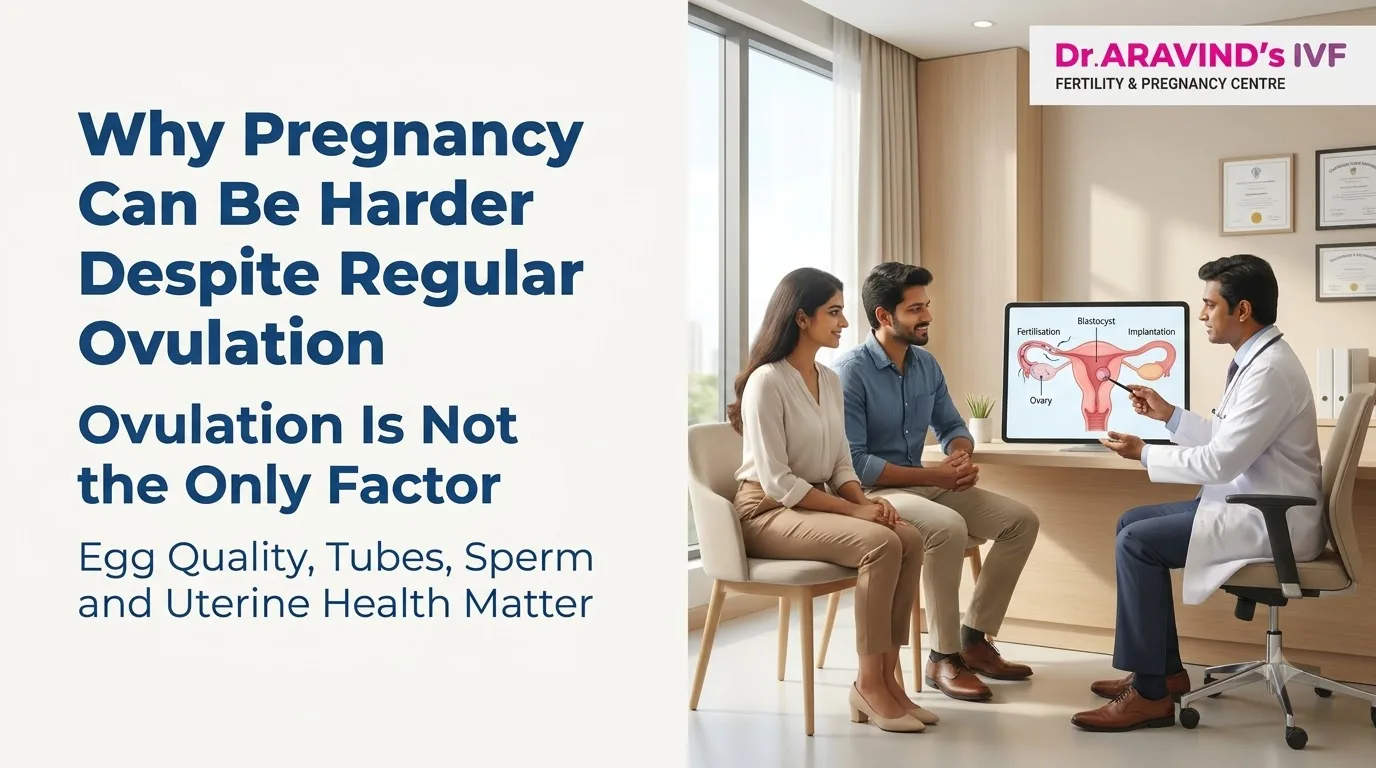
Regular periods and confirmed ovulation are encouraging signs, but they do not guarantee pregnancy. Many couples find that getting pregnant becomes harder over time even when ovulation is regular. This can happen due to age-related egg changes, subtle hormonal shifts, tubal or uterine factors, sperm quality issues, or conditions like endometriosis. A detailed evaluation with the best IVF doctor in Tanjore can help identify the real cause and plan the right treatment.
Ovulation Is Only One Part of Conception
For natural conception, several steps must work together:
- A mature, chromosomally normal egg must be released.
- Sperm must reach and fertilise the egg in the fallopian tube.
- The embryo must travel to the uterus and implant successfully.
- Hormonal support must sustain the early pregnancy.
Regular ovulation confirms that an egg is being released. It does not confirm egg quality, tubal health, sperm function, or uterine receptivity.
Age-Related Egg Quality Decline
Even with regular cycles, egg quality declines with age, especially after 35.
Key points:
- Older eggs have a higher chance of chromosomal abnormalities.
- This can lead to failed fertilisation, poor embryo development, or early miscarriage.
- AMH may be normal or only mildly reduced, yet egg quality can still be affected.
Women with low amh levels may face a shorter fertile window, but even those with normal AMH can struggle if egg quality is compromised by age.
Subtle Hormonal Imbalances
Some hormonal issues do not stop ovulation but still reduce fertility:
- Luteal phase defects — insufficient progesterone after ovulation may affect implantation.
- Thyroid disorders — even mild hypothyroidism can impact conception and early pregnancy.
- Elevated prolactin — may disrupt the hormonal environment needed for implantation.
- Insulin resistance — common in PCOS, it can affect egg quality and endometrial receptivity even when cycles are regular.
These conditions often require specific blood tests and targeted treatment.
Tubal and Uterine Factors
Blocked or damaged fallopian tubes can prevent sperm and egg from meeting, even if ovulation is normal.
Common issues include:
- Previous pelvic infections or surgeries.
- Endometriosis causing adhesions.
- Hydrosalpinx (fluid-filled tubes) that can reduce implantation rates.
Uterine factors may also play a role:
- Fibroids distorting the cavity.
- Polyps or adhesions inside the uterus.
- Congenital uterine anomalies.
- Thin or unreceptive endometrium.
These problems often require ultrasound, HSG, or hysteroscopy for diagnosis.
Sperm Quality and Male Factor Infertility
Male factors contribute to about 40–50% of infertility cases.
Even when semen analysis appears “normal,” issues may include:
- High DNA fragmentation in sperm.
- Reduced motility or morphology not captured in basic reports.
- Oxidative stress affecting sperm function.
A detailed semen analysis and, if needed, advanced sperm testing are important for couples struggling to conceive.
Endometriosis and Unexplained Infertility
Endometriosis can impair fertility through:
- Inflammation affecting egg quality and implantation.
- Adhesions altering tubal function.
- Changes in the pelvic environment.
Some couples are diagnosed with unexplained infertility — all basic tests are normal, yet pregnancy does not occur. In such cases, subtle egg, sperm, or implantation issues may be present.
At the best IVF centre in India, such cases are managed with individualised plans, which may include timed intercourse, IUI, or IVF depending on age and duration of infertility.
Lifestyle and Environmental Factors
Certain lifestyle factors may reduce fertility despite regular ovulation:
- Smoking and excessive alcohol.
- Obesity or very low body weight.
- Chronic stress and poor sleep.
- Exposure to environmental toxins.
- Poor nutrition and vitamin deficiencies.
These factors can affect egg quality, sperm health, and hormonal balance.
When to Seek Specialist Help
Consider a fertility consultation if:
- You are under 35 and have tried for 12 months without success.
- You are over 35 and have tried for 6 months.
- You have regular cycles but repeated negative pregnancy tests.
- You have a history of pelvic infection, endometriosis, or miscarriages.
- You or your partner have known health conditions affecting fertility.
Early assessment helps you avoid losing valuable time, especially if low amh levels or age-related changes are present.
Frequently Asked Questions
1. Can I have regular periods and still struggle to conceive?
Yes. Regular periods confirm ovulation but do not guarantee egg quality, open tubes, a healthy uterus, or normal sperm function. Many couples with regular cycles still need fertility evaluation.
2. Why does pregnancy become harder with age even if I ovulate?
Egg quality declines with age, increasing the chance of chromosomal abnormalities. This can lead to failed fertilisation, poor embryo development, or early miscarriage, even when cycles are regular.
3. Can low AMH cause difficulty despite regular ovulation?
Low amh levels indicate fewer remaining eggs but do not stop ovulation. They may signal a shorter fertile window and lower egg yield during treatment, making timely evaluation important.
4. What tests are needed if ovulation is regular but pregnancy is not occurring?
A complete workup may include ovarian reserve testing, thyroid and prolactin levels, pelvic ultrasound, HSG or laparoscopy for tubes, semen analysis with possible DNA fragmentation testing, and assessment for endometriosis.
5. When is IVF recommended for couples with regular ovulation?
IVF may be advised if there are tubal blocks, moderate-to-severe endometriosis, significant male factor infertility, unexplained infertility after other treatments, or reduced ovarian reserve with advancing age.
Regular ovulation is a good sign, but it is not the whole story
If pregnancy is not happening as expected, speak with the IVF doctor in Tanjore for a complete fertility assessment and personalised plan.