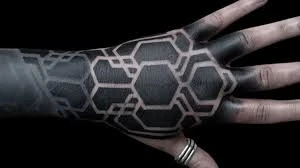
Geometry in tattooing looks simple from a distance. Clean lines, repeating patterns, shapes that sit in precise relationship to one another. The impression is of a style that should be easier to execute than portraiture or realism — after all, there are no complex textures to render, no subtle gradations of tone to manage.
This impression is wrong, and most people who have sat for a geometric tattoo that did not hold up over time understand why.
The challenge of geometric tattooing is not complexity. It is precision. In representational styles, small errors in line weight or proportion tend to disappear into the visual noise of the overall design. A portrait can absorb a slightly uneven line because the eye is drawn to the face, not the technical execution. In geometric work, there is no such forgiveness. A line that is a millimeter off center in a mandala is immediately visible because the surrounding geometry creates a reference point for everything that follows. Symmetry errors compound outward from their source.
This is why the best geometric tattoo New York artists are not simply tattooers who have learned to draw shapes. They are spatial thinkers who understand how the body's surface changes the behavior of line, how curvature affects perceived symmetry, and how to plan a design so that its most critical reference points are established before the details are added.
The skin is not a flat canvas. It stretches differently depending on location, responds to needle pressure in ways that vary across individuals, and changes slightly over the course of a long session as the body's inflammatory response begins. Geometric artists who work at a high level account for all of these variables before they start.
Finding someone who has spent years developing this specific skill set — rather than weeks practicing a style to add to a portfolio — makes a difference that is visible in the finished work and even more visible years later when the piece has aged.