
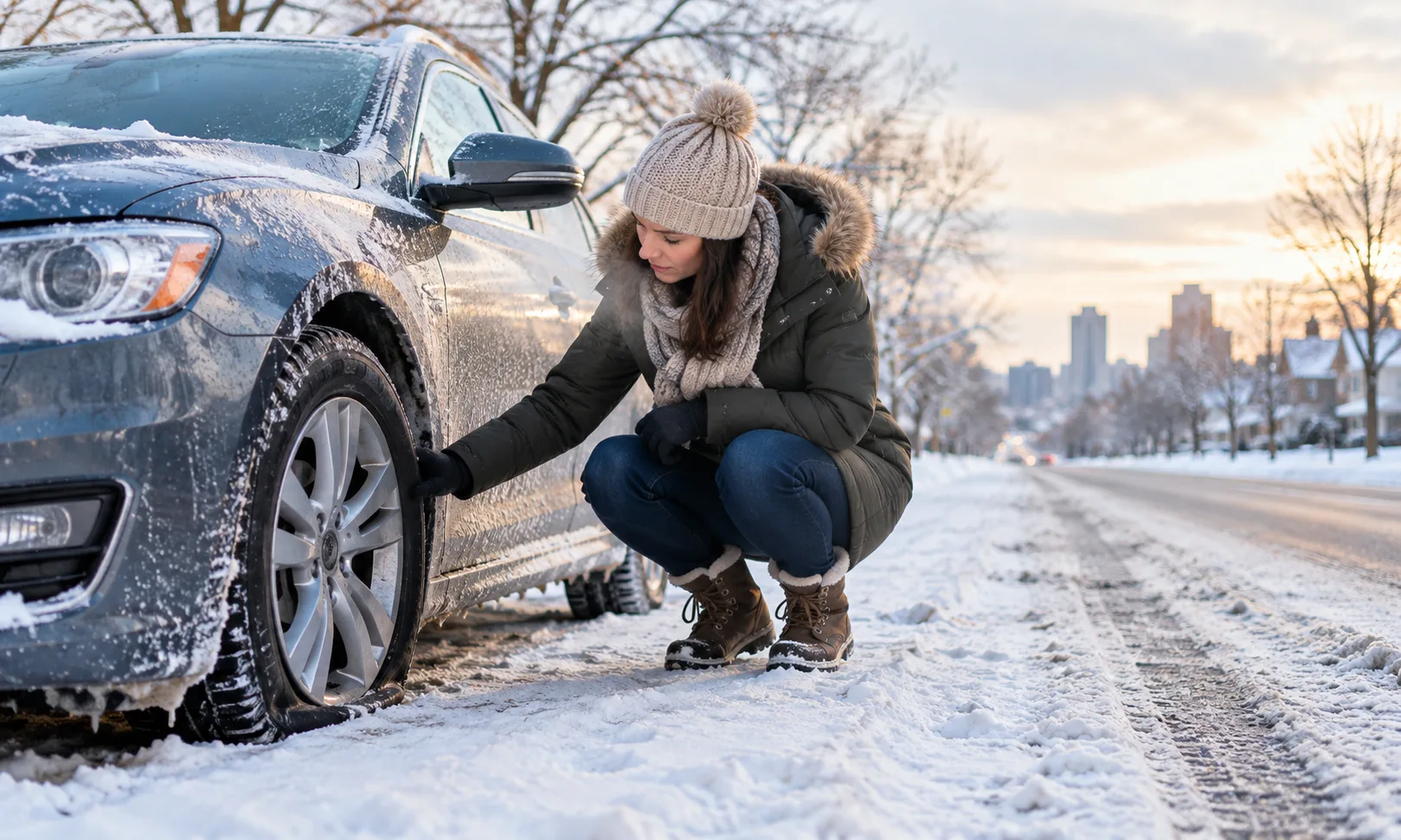
The first cold morning of the season often comes with a surprise: a glowing tire pressure light on the dashboard. Most drivers tap the gauge, shrug, and keep driving. A few weeks later, some of them are on the shoulder of a freezing road with a flat tire and numb fingers.
That is no coincidence. Winter is one of the hardest seasons on your tires. Falling temperatures, fresh potholes and stiffer rubber all work against you at the same time.
The good news is that most winter flats are predictable, and many are preventable. Here is why cold weather causes so many flat tires, the warning signs to watch for, and a simple checklist to keep your tires healthy until spring.
Why cold weather causes more flat tires
1. Cold air shrinks, and your tire pressure drops with it. Air contracts as it cools. As a general rule, a tire loses about 1 PSI for every 10°F drop in temperature. If you set your tires on a 70°F afternoon and wake up to 20°F, they may be about 5 PSI low without a single leak. An underinflated tire flexes more, builds up heat on longer drives, and is far more likely to fail.
2. Potholes multiply after the first freeze. Water seeps into cracks in the road, freezes, expands, and breaks the pavement apart. Every freeze-thaw cycle makes potholes deeper and sharper. Hitting one at speed can pinch the tire against the wheel, cut the sidewall, or bend the rim so it no longer seals.
3. Rubber gets stiffer and less forgiving. All-season and summer tires harden in low temperatures. Stiff rubber absorbs impacts poorly, so a curb or pothole that would be harmless in July can cause damage in January.
4. Valve stems and bead seals can leak. Rubber valve stems and the seal between the tire and wheel (the bead) contract in the cold. Slow leaks that went unnoticed all summer often show up in the first cold snap.
5. Hidden road debris. Snow and slush hide nails, screws, broken glass and metal from plows. You can't avoid what you can't see, and a slow puncture may take days to show.
Warning signs your tire is going flat
Most flats give you a warning before they leave you stranded. Watch for these:
- The TPMS light stays on. If it comes on in the morning and goes off after a few miles, the cold is lowering your pressure. If it stays on all day, you likely have a leak.
- The car pulls to one side. A low tire creates drag, and the steering wheel drifts toward that side.
- Vibration or a thumping sound. This can mean a bulge, a separated tread or a bent rim after a pothole hit.
- A visible bulge or cut on the sidewall. Sidewall damage can't be safely repaired, and the tire can fail without warning.
- One tire looks lower than the others. Do a quick walk-around before you drive, especially after a cold night.
- You need to add air every week. A slow, steady loss usually means a nail, a leaking valve stem or a bad bead seal.
If you notice any of these, check the pressure with a gauge as soon as possible. Do not wait for the tire to go completely flat.
A winter tire-care checklist to prevent flats
A few minutes a month can save you from a cold, stressful afternoon on the roadside.
- Check pressure every two weeks, when the tires are cold. Check in the morning before driving. Use the pressure printed on the sticker inside the driver's door, not the maximum number on the tire.
- Keep a digital tire gauge in the glove box. It costs very little and is more accurate than gas station gauges.
- Check tread depth. Put a penny into the tread with Lincoln's head upside down. If you can see the top of his head, your tread is too worn for winter roads.
- Inspect the sidewalls. Look for cracks, bulges and cuts, especially after hitting a pothole.
- Slow down near potholes, and don't brake hard on top of one. Braking shifts weight to the front tires and makes the impact worse. Brake before the hole, then roll through it.
- Avoid driving through deep puddles. In winter they often hide potholes.
- Check your spare tire too. Spares lose pressure over time, and many drivers find out theirs is flat only when they need it.
- Consider winter tires. In places with long, snowy winters, dedicated winter tires stay flexible in the cold and grip better on ice.
- Pack a small winter roadside kit. Include gloves, a flashlight, reflective triangles, a blanket and a phone charger.
What to do if you get a flat tire in winter
Even with good habits, flats still happen. If one happens in cold weather, safety comes before speed.
- Get off the road safely. Signal, slow down gradually, and pull as far onto the shoulder as you can. Avoid stopping on a curve or a hill. If you're on a highway, drive slowly to the next exit if it's close; a ruined rim is cheaper than an accident.
- Turn on your hazard lights. In snow or at dusk, also set out reflective triangles behind your car if it's safe to walk there.
- Stay inside the car on a busy road. Passing traffic, slush and icy shoulders make changing a tire beside a highway risky. Keep your seatbelt on.
- Decide if you can change it yourself. Only change the tire if you're on flat, solid ground, well away from traffic, and you have a working spare, jack and lug wrench. Frozen lug nuts and numb hands make the job harder than it looks.
- Call for help if you're not sure. Roadside assistance from your insurer, a motor club, or a local mobile flat tire change service can bring the tools to you and change the tire in a fraction of the time, while you stay warm in the car.
- Drive carefully on the spare. Most compact spares are meant for short distances at lower speeds, often around 50 mph. Check your owner's manual and get the original tire repaired or replaced soon.
The bottom line
Cold weather doesn't just make your morning drive less comfortable. It lowers tire pressure, creates potholes and hides debris, all at the same time. The drivers who avoid winter flats aren't lucky. They check their pressure often, respect potholes, and keep their spare ready.
Take five minutes this weekend to check all four tires and your spare. It's the easiest winter safety habit you can build, and it could save you from a long wait on a frozen roadside.