
The Digital Shift Reshaping the Apparel Industry
The apparel industry is changing faster than ever. Fashion trends evolve quickly, customer expectations continue to rise, and global competition is becoming more intense. Apparel manufacturers and fashion brands are under constant pressure to reduce costs, improve efficiency, and deliver products to market faster.
Traditional systems such as spreadsheets, standalone software, and manual production tracking are no longer sufficient for managing modern apparel operations. As businesses grow, they need technology that provides real-time visibility, seamless collaboration, and scalability.
This is why many successful manufacturers and fashion brands are investing in SaaS Apparel Software. Unlike traditional software that requires expensive servers and maintenance, SaaS solutions operate in the cloud, making them more flexible, cost-effective, and easier to implement.
What Is SaaS Apparel Software?
SaaS apparel software is a cloud-based platform designed specifically for apparel manufacturers, garment factories, fashion brands, and retailers. It helps businesses manage production, planning, inventory, quality, sourcing, and operations through a centralized system that can be accessed from anywhere.
As part of modern apparel technology, SaaS solutions are helping companies accelerate digital transformation and improve operational performance.
Why Apparel Brands Are Moving Away from Traditional Software
Many apparel companies have relied on spreadsheets and locally installed software for years. While these tools may work for small operations, they create challenges as businesses expand.
Traditional systems often result in data silos, where departments work independently without sharing information efficiently. Production teams, planners, quality managers, and executives may all be working with different data sets, leading to delays and errors.
Cloud-based apparel business software solves these problems by providing a single platform where everyone can access the same information in real time. This improves communication, decision-making, and overall operational efficiency.
What Makes SaaS Apparel Software Different?
Cloud-Based Accessibility
One of the biggest advantages of cloud apparel management software is accessibility.
Factory managers can monitor production performance from the factory floor, while executives can review reports from another city or country. Buyers, suppliers, and production teams can collaborate without being physically present in the same location.
This level of connectivity is especially valuable for companies operating multiple factories or sourcing materials internationally.
Faster Implementation and Lower IT Costs
Traditional ERP projects often require significant investments in hardware, infrastructure, and IT resources.
SaaS solutions eliminate many of these costs because the software is hosted in the cloud. Businesses can start using the system faster without purchasing expensive servers or hiring large IT teams.
This makes SaaS technology particularly attractive for growing apparel companies looking to maximize return on investment.
Continuous Innovation
Unlike traditional software that may require major upgrades every few years, SaaS platforms receive regular updates automatically.
Manufacturers benefit from new features, security improvements, and performance enhancements without disrupting daily operations.
How SaaS Apparel Software Supports Digital Transformation in Apparel Manufacturing
Creating a Connected Apparel Factory
One of the key goals of digital transformation in apparel manufacturing is to create a connected factory environment.
Modern manufacturers need visibility across planning, cutting, sewing, finishing, inventory, and quality control. SaaS software helps connect these functions into a single ecosystem where information flows seamlessly.
This integration improves coordination and reduces operational inefficiencies.
Accelerating Apparel Factory Digitalization
Many apparel businesses are investing in apparel factory digitalization software to improve competitiveness.
Digital factories can:
- Monitor production in real time
- Reduce manual data entry
- Improve production accuracy
- Enhance operational transparency
- Respond faster to production issues
These capabilities are becoming increasingly important as brands demand faster lead times and higher quality standards.
Core Modules That Drive Growth in Modern Apparel Businesses
Apparel ERP and Business Management
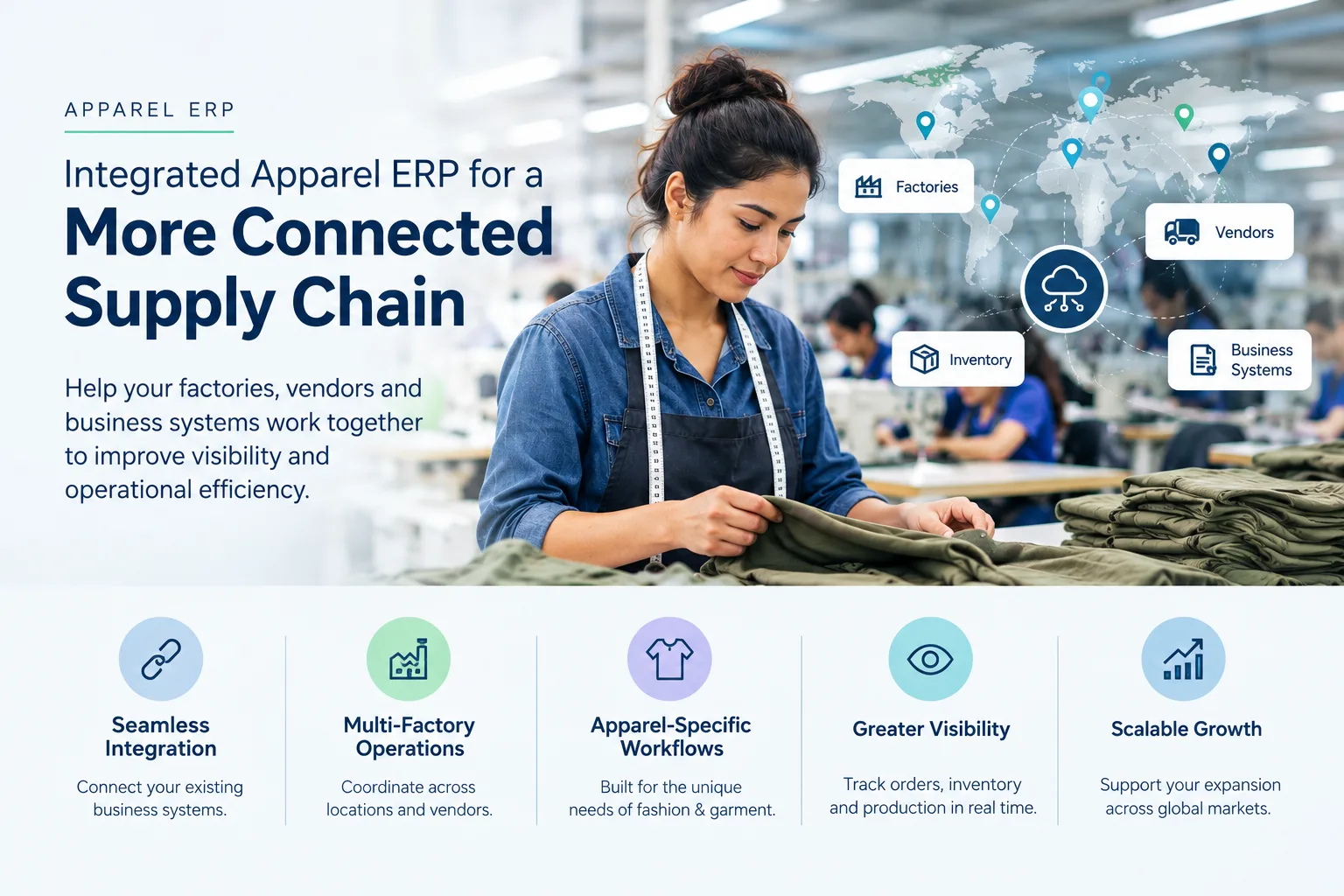
A modern Fashion ERP Software or Apparel ERP System serves as the central nervous system of an apparel business.
It helps manage:
- Orders
- Inventory
- Procurement
- Production
- Finance
- Supply chain operations
By centralizing data, businesses gain better control over operations and improve planning accuracy.
Many manufacturers also implement Garment ERP Software to streamline workflows and improve visibility across departments.
Apparel Production Management
Production management is one of the most critical areas of apparel manufacturing.
Advanced Apparel Production Software allows manufacturers to:
- Plan production schedules
- Track work-in-progress
- Monitor factory performance
- Improve delivery accuracy
Real-time visibility helps managers identify bottlenecks before they impact production timelines.
Factory Operations and Manufacturing Control
Specialized systems such as Garment Manufacturing Software, Clothing Manufacturing Software, and Fashion Manufacturing Software provide deeper operational control.
These solutions help factories improve resource utilization, increase productivity, and maintain quality standards.
Why Fabric Optimization Has Become a Strategic Priority
Fabric is the largest cost component in garment manufacturing.
In many cases, fabric represents 60–70% of the total garment cost. Even small improvements in fabric utilization can significantly improve profitability.
As a result, manufacturers are increasingly investing in fabric optimization technologies.
Fabric Consumption Software
Fabric Consumption Software helps manufacturers estimate fabric requirements more accurately.
This improves purchasing decisions and prevents both over-ordering and fabric shortages.
Better planning leads to lower inventory costs and improved operational efficiency.
Fabric Cut Plan Software
Efficient cut planning is essential for maximizing fabric utilization.
Fabric Cut Plan Software helps manufacturers generate optimized cutting plans that reduce waste and improve material usage.
This not only lowers costs but also supports sustainability initiatives.
Cut Planning Software and Fabric Optimization
Modern Cut Plan Software and Fabric Optimization Software use advanced algorithms to identify the most efficient marker layouts.
By reducing unnecessary fabric waste, manufacturers can achieve higher margins and better cost control.
Garment Cutting Software and Cut Order Planning
The cutting room plays a crucial role in apparel manufacturing efficiency.
Garment Cutting Software and Cut Order Planning Software help automate:
- Cut order generation
- Marker planning
- Roll allocation
- Bundle preparation
Automation reduces planning errors and speeds up cutting operations.
Fabric Utilization Software
Monitoring fabric utilization is essential for continuous improvement.
Fabric Utilization Software provides real-time insights into material usage, helping factories identify opportunities to improve efficiency and reduce waste.
Business Benefits of SaaS Apparel Software
Reduced Operational Costs
One of the biggest benefits of SaaS solutions is cost reduction.
Manufacturers can lower expenses related to:
- Infrastructure
- Maintenance
- Manual processes
- Production inefficiencies
At the same time, improved visibility helps reduce waste and increase profitability.
Faster Decision-Making
Real-time dashboards provide immediate access to production and business data.
Managers can make informed decisions quickly, improving responsiveness and operational agility.
Improved Collaboration
SaaS platforms create a shared environment where departments work with the same information.
This improves communication between planning, production, quality, inventory, and management teams.
Scalability for Growth
As businesses grow, SaaS solutions can scale with them.
Whether opening a new factory, expanding into new markets, or increasing production capacity, cloud-based platforms provide the flexibility needed to support growth.
Why Fast-Growing Apparel Brands Prefer Cloud Apparel Management Software
Successful apparel brands understand that speed, flexibility, and visibility are essential for growth.
Cloud apparel management software enables businesses to:
- Launch products faster
- Improve production planning
- Increase operational visibility
- Support remote teams
- Respond quickly to market changes
These advantages allow brands to remain competitive in a rapidly evolving industry.
Key Features to Look for When Choosing SaaS Apparel Software
When evaluating software solutions, manufacturers should focus on industry-specific capabilities.
Important features include:
- Apparel ERP functionality
- Production management tools
- Fabric optimization capabilities
- Real-time reporting
- Inventory management
- Cloud accessibility
- Mobile support
- Integration capabilities
- Scalability
Choosing the right platform can have a significant impact on long-term business performance.
Future of SaaS Technology in Apparel Manufacturing
The future of modern apparel technology is increasingly driven by data, automation, and intelligence.
Artificial Intelligence
AI is helping manufacturers improve forecasting, planning, and production optimization.
Predictive Fabric Consumption
Advanced analytics enable businesses to estimate fabric requirements with greater accuracy.
Smart Factory Integration
Connected machinery and IoT devices provide real-time production visibility and performance monitoring.
Industry 4.0 Manufacturing
Industry 4.0 technologies are creating fully connected manufacturing environments where data drives decision-making at every level.
Manufacturers that embrace these innovations will be better positioned to compete in global markets.
Conclusion: SaaS Apparel Software Is Becoming a Competitive Necessity
The apparel industry is becoming increasingly digital, and businesses that continue relying on outdated systems risk falling behind.
Fast-growing brands are adopting SaaS apparel software, cloud apparel management software, and apparel business software to improve efficiency, reduce costs, and gain real-time visibility into operations.
When combined with solutions such as Apparel Software, Garment Manufacturing Software, Fashion ERP Software, Apparel ERP System, Garment ERP Software, Clothing Manufacturing Software, Apparel Production Software, Fabric Consumption Software, Fabric Cut Plan Software, Cut Plan Software, Fabric Optimization Software, Garment Cutting Software, Fabric Utilization Software, and Cut Order Planning Software, manufacturers can build a more agile, efficient, and profitable business.
The future of apparel manufacturing belongs to companies that embrace digital transformation. SaaS technology is no longer just an option—it has become a strategic requirement for long-term growth and competitiveness.