A maintenance contractor may spend only a few hours on a site, yet the quality of their documentation can influence weeks of operational decisions. Across oil and gas facilities, manufacturing plants, warehouses, offshore platforms, and maritime operations, contractors are frequently responsible for identifying defects, verifying repairs, and reporting hazards in environments where flammable gases, vapours, or combustible dust may be present. In these conditions, documentation is not simply an administrative task; it is a critical part of safety and compliance. The ability to capture accurate visual evidence safely can help contractors complete work more efficiently, support asset owners more effectively, and reduce risks associated with miscommunication or incomplete reporting.

Contractor Responsibilities in Hazardous Areas
Maintenance contractors play a vital role in keeping industrial assets safe, reliable, and compliant. Whether you are inspecting equipment, conducting repairs, or performing routine maintenance, you are expected to document findings accurately and communicate them clearly.
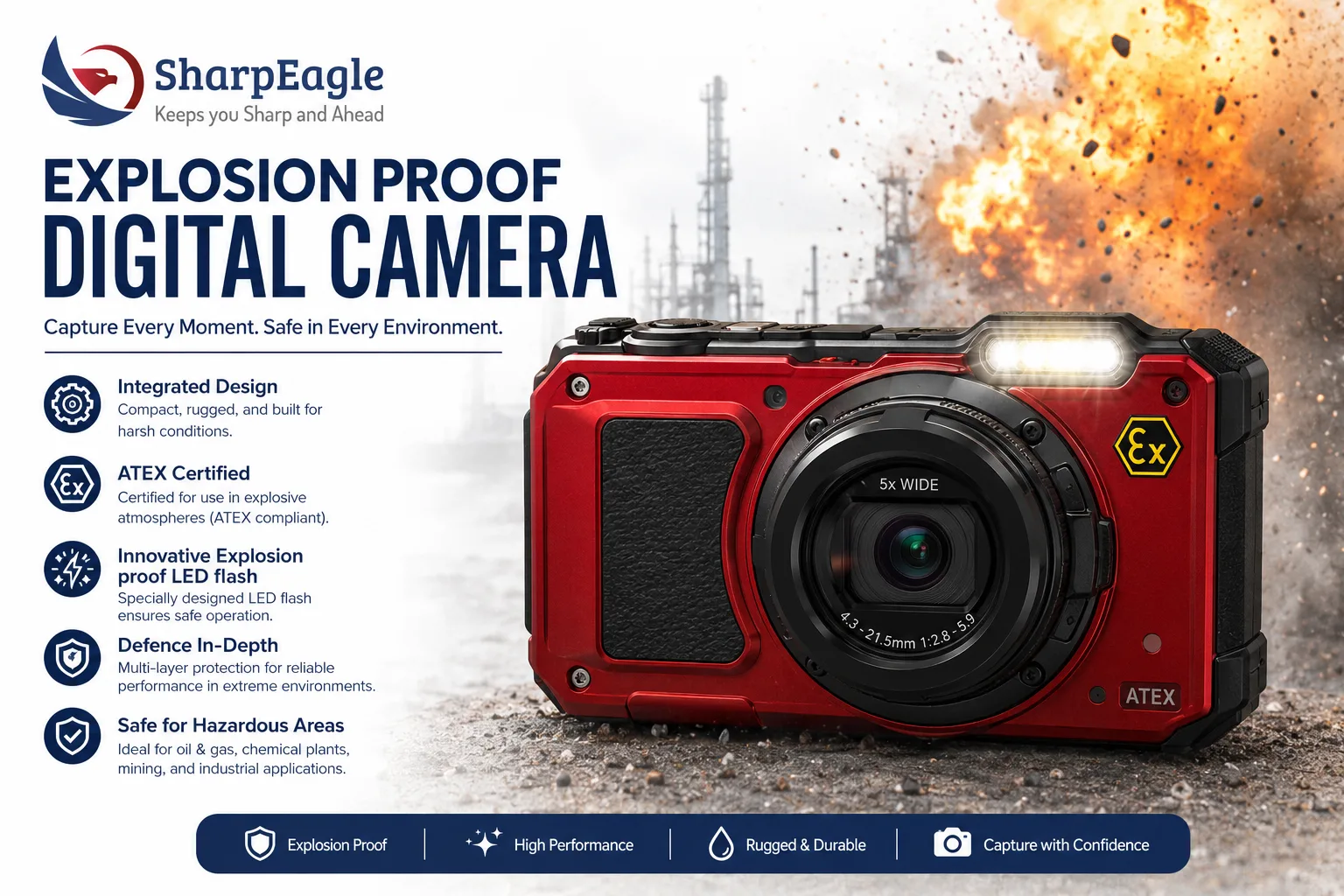
An explosion proof digital camera provides a practical solution for capturing visual evidence in hazardous environments where standard electronic devices may not be suitable. Photographs help verify equipment conditions, support maintenance recommendations, and create an objective record of completed work.
Contractors often work under strict safety requirements established by site operators. These obligations may include compliance with DSEAR, HSE workplace safety standards, PUWER requirements, and hazardous area controls associated with the ATEX framework.
Accurate documentation supports these obligations while helping you demonstrate that work has been completed safely and professionally.
Inspection Documentation Is No Longer Optional
Asset owners increasingly expect contractors to provide detailed inspection records that go beyond written observations.
An atex camera allows you to document equipment conditions directly at the point of inspection. This capability improves reporting quality and reduces the risk of important details being overlooked or misinterpreted.
Visual documentation is particularly valuable when recording:
- Equipment deterioration
- Corrosion and structural damage
- Leaks and containment issues
- Mechanical defects
- Electrical concerns
- Safety observations
Images provide context that written reports cannot always deliver. A clear photograph can often communicate a problem more effectively than several paragraphs of technical description.
For contractors working across multiple facilities, consistent photographic documentation also helps establish a professional standard of reporting that clients increasingly value.
Reducing Operational Delays Through Better Communication
One of the most common causes of maintenance delays is poor communication between contractors and asset owners.
An intrinsically safe camera helps bridge this gap by providing visual evidence that supports faster decision-making. Instead of relying solely on verbal explanations or written notes, you can show asset owners exactly what has been discovered in the field.
This approach delivers several benefits:
- Faster approval of repair work
- Improved technical discussions
- Reduced need for repeat inspections
- Better maintenance planning
Stronger confidence in contractor recommendations
When engineers, operations managers, maintenance planners, and contractors review the same images, misunderstandings become less likely.
The result is a more efficient workflow and quicker resolution of maintenance issues. For contractors operating under tight schedules, reducing delays can significantly improve productivity and project outcomes.

Compliance Reporting and Professional Accountability
Compliance requirements continue to evolve across UK industry. Organisations are expected to maintain detailed records demonstrating that inspections, maintenance activities, and corrective actions have been completed appropriately.
An atex digital camera supports compliance reporting by creating a reliable evidence trail that can be referenced during audits, inspections, and investigations.
Photographic records can help demonstrate:
- Completion of inspection activities
- Identification of hazards
- Verification of corrective actions
- Equipment condition at a specific time
- Adherence to site procedures
These records provide value not only to asset owners but also to contractors. Clear documentation helps establish accountability and protects against disputes regarding work scope, findings, or completed activities.
For contractors seeking long-term client relationships, strong documentation practices contribute to credibility and professional reputation.
Why SharpEagle Technology Is a Practical Choice for Contractors
Hazardous-area contractors need equipment that performs reliably in demanding conditions. The device must be safe, durable, easy to use, and capable of producing high-quality documentation.
SharpEagle Technology offers an ex proof digital camera designed specifically for industrial environments where hazardous conditions are present. Suitable for sectors including oil and gas, manufacturing, warehousing, offshore operations, maritime facilities, and automotive production, the solution combines safety certification with operational practicality.
Key features include high-resolution image capture, rugged construction, dependable performance, and intuitive operation. These capabilities allow contractors to document inspections, maintenance activities, repairs, safety observations, and compliance requirements efficiently.
One of the product’s strongest advantages is versatility. Rather than carrying multiple devices for different tasks, contractors can use a single solution to support a wide range of operational and reporting requirements. This simplifies workflows while improving consistency across projects.
For professionals who depend on accurate field documentation, reliability and usability are just as important as certification.
Selecting the Right Equipment for Long-Term Success
Choosing hazardous-area imaging equipment should involve more than comparing specifications. Contractors should evaluate how well a device supports real-world operational requirements.
Important considerations include certification suitability, image quality, durability, battery performance, ease of use, and long-term support availability. Equipment that is difficult to operate or unreliable in harsh environments can quickly become a liability.
As industrial facilities continue embracing digital maintenance strategies, visual documentation will play an increasingly important role in inspections, compliance programmes, and asset management initiatives. Contractors who invest in effective documentation tools today will be better positioned to meet rising client expectations, improve communication, and strengthen professional performance. For additional guidance when evaluating equipment options, Recommended read: 10 things to consider when buying an explosion-proof digital camera.