For Australian 4WD travellers, getting off the beaten track is part of the adventure. Whether you're exploring remote bush tracks, crossing sandy beaches, travelling through rocky terrain, or heading deep into the outback, your vehicle needs to be prepared for more than just everyday driving. One of the most important pieces of recovery and maintenance equipment you can carry is a reliable off road jack.
A quality jack can make a significant difference when dealing with a flat tyre, stuck vehicle, uneven ground, or unexpected mechanical issue. Unlike standard workshop jacks designed primarily for smooth, hard surfaces, an off road jack is intended to provide greater practicality and stability in challenging environments.
Why Is an Off Road Jack Important for 4WD Travel?
When you're travelling away from populated areas, access to roadside assistance may be limited or unavailable. A minor problem that would normally be easy to resolve in town can become a major inconvenience when you're several hours from the nearest service centre.
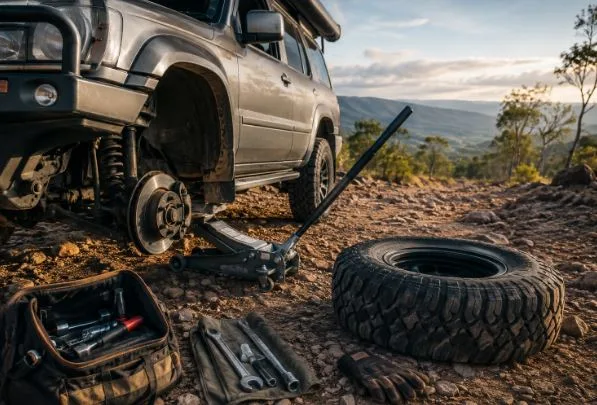
A reliable off road jack gives you the ability to lift your 4WD when you need to inspect or replace a wheel, perform basic repairs, or carry out essential maintenance. Having the right equipment means you can be better prepared to handle common problems without immediately relying on outside assistance.
For serious 4WD travellers, self-sufficiency is an important part of responsible trip preparation.
Designed for Challenging Terrain
One of the biggest advantages of an off road jack is its suitability for uneven environments. Standard trolley or floor jacks are generally designed for relatively flat workshop floors. Out on a bush track, however, you may encounter loose gravel, sand, mud, rocks and uneven ground.
These conditions can make lifting a vehicle much more difficult.
An appropriate off road jack can be used as part of a broader recovery setup, especially when combined with suitable recovery boards, jack bases or other stabilising equipment. The goal is to create a more controlled lifting environment when dealing with difficult terrain.
Always position the vehicle securely and follow the jack manufacturer's instructions before lifting.
Essential for Flat Tyre Situations
A flat tyre is one of the most common problems a 4WD traveller can encounter. Sharp rocks, sticks, corrugations and other trail hazards can all increase the risk of tyre damage.
If you experience a puncture far from a populated area, being able to change the wheel yourself can save considerable time and frustration.
A reliable jack allows you to raise the vehicle sufficiently to remove the damaged wheel and install a spare. Of course, a jack is only one part of the solution. Your recovery kit should also include a suitable spare tyre, wheel-changing tools, wheel chocks and other equipment appropriate for your vehicle and trip.
Before heading out, it's also worth practising how to safely change a tyre. Knowing where your vehicle's jacking points are can be just as important as carrying the right equipment.
Choose a Jack That Matches Your 4WD
Not every jack is suitable for every vehicle. Before purchasing an off road jack, check your 4WD's weight, manufacturer-recommended lifting points and the jack's rated capacity.
For example, a heavily equipped touring 4WD may weigh considerably more than a standard passenger vehicle. Accessories such as bull bars, roof racks, drawers, canopies, winches and camping equipment can add substantial weight.
Choosing a jack based purely on its advertised lifting capacity is therefore not enough. Consider the actual requirements of your vehicle and make sure the jack is appropriate for the job.
A 4WD trolley jack can be a practical option for travellers who want a robust solution for vehicle maintenance, while a high lift-style jack may suit particular vehicles and recovery situations. The best choice depends on your vehicle setup, travel style and the terrain you expect to encounter.
Portability Matters When Touring
4WD travellers often have to carefully manage their available storage space. Camping equipment, recovery gear, food, water, tools and spare parts can quickly fill a vehicle.
For this reason, the size and weight of your jack are important considerations.
Look for a model that offers an appropriate balance between lifting capability, durability and portability. A jack that is extremely heavy or difficult to store may become inconvenient to carry, while a lightweight model that cannot safely handle your vehicle may not provide the reliability you need.
Before buying, consider where the jack will be stored and whether it can be secured properly during travel.
Safety Should Always Come First
A jack is a lifting tool, not a replacement for proper vehicle support. One of the most important rules of using a jack is to never place yourself underneath a vehicle that is supported only by a jack.
Whenever possible, work on stable ground and engage the parking brake. Follow the vehicle manufacturer's recommendations for lifting points and use appropriate wheel chocks and approved support stands when working beneath a raised vehicle.
If the terrain is soft or unstable, take additional precautions. A suitable jack base can help distribute the load and reduce the risk of the jack sinking into soft ground.
Before using your jack on a trip, inspect it for damage, leaks, bent components or other signs of wear.
A Reliable Jack Can Save Time
When you're travelling with family or friends, an unexpected tyre problem can quickly turn into a long delay. Having dependable equipment can make the difference between spending a short time dealing with the issue and losing hours of your trip.
A quality off road jack can help you complete essential wheel changes and maintenance tasks more efficiently. This is particularly valuable when travelling through remote areas where weather conditions, daylight and road access can create additional challenges.
Being prepared doesn't mean expecting something to go wrong. It means having the right equipment available when it does.
Consider Your Complete Recovery Kit
An off road jack should be considered part of your overall 4WD recovery and touring setup rather than an isolated piece of equipment.
Depending on your vehicle and travel plans, your kit may include:
- Recovery boards
- Rated recovery points
- Recovery straps
- Shackles or appropriate recovery connectors
- Tyre repair equipment
- Portable air compressor
- Tyre pressure gauge
- Wheel chocks
- Jack base
- Spare wheel and tyre
- Basic hand tools
- Gloves and protective equipment
The exact equipment you need will depend on the vehicle, terrain and type of travel you undertake.
Check Your Equipment Before Every Trip
Simply owning an off road jack isn't enough. Before heading out, inspect your equipment and make sure everything is ready to use.
Check that the jack operates smoothly and that there are no obvious signs of damage or corrosion. Make sure the lifting mechanism functions correctly and that any accessories or handles are present.
It's also a good idea to test your equipment before a major trip. Finding out that a jack is damaged or unsuitable while you're sitting on a remote track is the worst time to discover a problem.
Final Thoughts
For anyone who regularly explores Australia's tracks, beaches, forests and remote destinations, a reliable off road jack is an important part of 4WD preparation. From handling flat tyres to supporting basic roadside maintenance, the right jack can provide valuable peace of mind when you're far from assistance.
The key is choosing equipment that matches your vehicle's weight and requirements, storing it securely and learning how to use it safely before your trip. Combined with a comprehensive recovery kit and good preparation, a quality jack can help you stay more self-reliant and confident on your next adventure.
Ready to prepare your 4WD for the next adventure? Explore quality off road jacks and 4WD recovery equipment at Ultimate Offroad and choose gear designed to help you travel with greater confidence across Australia's challenging terrain.