Reimagining Education Amidst Rapid Change
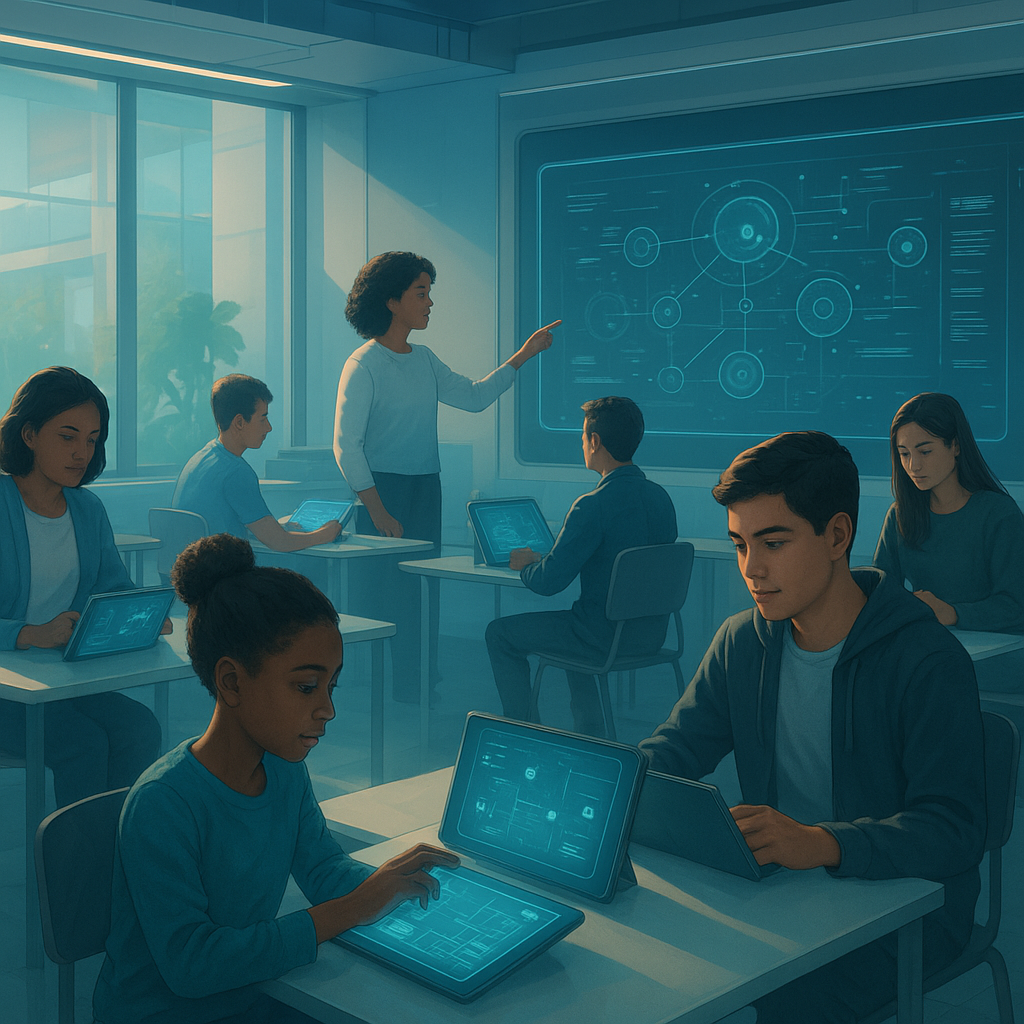
In a bustling classroom in a small town in Finland, a group of students huddle around interactive digital tables, each engaged in personalized projects tailored to their passions and learning styles. This scene, emblematic of education’s evolving reality in 2026, contrasts sharply with the traditional one-size-fits-all model. As global economies shift and technological advances accelerate, education systems worldwide are under intense pressure to adapt. According to UNESCO’s 2025 Global Education Report, over 60% of jobs today require skills that were not prioritized a decade ago, emphasizing the urgent need for educational transformation.
The traditional educational journey—from primary school through university—no longer suffices in a world where knowledge rapidly expands and labor markets demand agility. Increasingly, learners must engage in continuous, lifelong education that is customized to their individual needs and goals. This article explores the multifaceted evolution of education, analyzing current trends, challenges, and future directions with data-driven insights and expert perspectives.
“Education is no longer preparation for life; education is life itself.” – John Dewey, whose century-old wisdom resonates more than ever in 2026.
Tracing the Roots of Educational Transformation
The foundations of modern education were laid during the Industrial Revolution, designed to produce disciplined workers for factories. This model persisted for over a century, emphasizing rote learning and standardized testing. However, the digital revolution, starting in the late 20th century, began to challenge these norms. The introduction of the internet in the 1990s and the proliferation of personal computers initiated a gradual shift toward more accessible and flexible learning.
By the 2010s and 2020s, online education platforms such as Coursera, Khan Academy, and EdX demonstrated the potential to democratize knowledge globally. The COVID-19 pandemic accelerated this trend dramatically, forcing schools and universities to adopt remote learning technologies overnight. However, the pandemic also exposed deep inequalities in access and quality, sparking debates on how to rebuild educational systems that are both equitable and effective.
In parallel, cognitive science and educational psychology made strides in understanding how people learn. Concepts like growth mindset, metacognition, and differentiated instruction gained traction in classrooms. Governments and institutions began to recognize that fostering creativity, critical thinking, and socio-emotional skills was as crucial as traditional literacy and numeracy.
Data-Driven Shifts: The Rise of Personalized and Hybrid Learning
Today, personalized learning is no longer a niche concept but a mainstream imperative. Advances in artificial intelligence (AI), machine learning, and big data analytics enable adaptive learning platforms that tailor content and pacing to individual learners. The 2026 OECD Education at a Glance report highlights that 45% of schools in OECD countries have integrated AI-driven personalized learning tools, up from 18% in 2020.
These systems assess learners’ strengths, weaknesses, and preferences in real-time, offering customized exercises, feedback, and resources. Such personalization has been shown to improve engagement and outcomes significantly. For example, a 2025 study by the International Society for Technology in Education found that students using adaptive learning platforms improved math proficiency by an average of 22% compared to traditional instruction.
Hybrid learning models combining in-person and online instruction have become standard across many education levels. This blended approach offers flexibility and caters to diverse learning environments, whether urban or rural, affluent or underserved. Schools now deploy virtual reality and augmented reality tools to create immersive experiences for subjects ranging from history to STEM, further enhancing comprehension and retention.
- Key personalized learning technologies in 2026:
- AI-powered tutors and chatbots
- Learning analytics dashboards for educators
- Gamified modules enhancing motivation
- Virtual and augmented reality for experiential learning
- Micro-credentialing and digital badges recognizing skill mastery
Current Developments: Education Policy and Equity Challenges
Despite technological progress, education in 2026 faces persistent challenges related to equity and access. According to UNESCO, approximately 250 million children worldwide remain out of school or inadequately served, disproportionately from marginalized communities. The digital divide, while narrowed, still affects millions, particularly in low-income countries and underserved regions.
Governments have responded with ambitious policies aimed at inclusive education. For instance, the EU’s Digital Education Action Plan 2025–2030 allocates €15 billion to ensure universal access to digital infrastructure and training for educators. Similarly, the United States has increased funding for community broadband and educator professional development focused on digital competencies.
Moreover, curriculum reforms emphasize not only academic knowledge but also soft skills, mental health, and sustainability literacy. Countries like Singapore and Canada have introduced national frameworks integrating socio-emotional learning and climate education as core components. The trend toward competency-based education, where mastery of skills dictates progression rather than seat time, is gaining momentum globally.
“Ensuring that every child, regardless of background, receives a quality education is the defining challenge of our time.” – Education Commissioner María López, World Education Forum 2025.
However, tensions remain regarding data privacy, pedagogy, and teacher roles. The rapid adoption of AI raises ethical questions about surveillance and algorithmic bias. Educators express concerns about being sidelined by technology rather than empowered. These debates are central to shaping education’s trajectory and require inclusive dialogue among all stakeholders.
Expert Perspectives and Industry Impact
Leading education experts emphasize that technology is a facilitator, not a replacement, of effective teaching. Dr. Amina Yusuf, a prominent education futurist, argues that “technology must be thoughtfully integrated to amplify human relationships and critical thinking, not diminish them.” Her research highlights successful models where educators use AI insights to personalize support while fostering collaborative learning environments.
Industry players are also transforming. EdTech startups raised over $40 billion globally in 2025, reflecting investor confidence in scalable solutions for personalized and lifelong learning. Companies such as LearnSphere and EduNexus have pioneered platforms that blend AI analytics with human coaching, addressing both cognitive and emotional learner needs.
Higher education institutions face disruption as well. Universities are reinventing themselves as lifelong learning hubs, offering modular courses, micro-credentials, and corporate partnerships. TheOmniBuzz’s previous coverage in Rethinking University: How Institutions Are Transforming Education and Opportunity details how institutions are adapting curricula to align with evolving skills demands, including digital literacy and interdisciplinary problem-solving.
- Industry trends influencing education:
- Expansion of AI-driven personalized learning platforms
- Growth of lifelong learning marketplaces and subscription models
- Collaboration between education and corporate sectors for upskilling
- Increased focus on educator training and support in digital pedagogy
- Adoption of blockchain for secure credentialing and learner data management
Looking Ahead: What to Watch in Education’s Next Decade
As education continues its profound transformation, several critical developments warrant close attention. First, the integration of neuroscience with AI promises breakthroughs in understanding how diverse brains learn, enabling ever more refined personalization. Research initiatives funded by bodies like the National Science Foundation are already exploring neuroadaptive learning systems.
Second, the rise of decentralized education models may challenge traditional institutions. Peer-to-peer learning networks, powered by blockchain and decentralized autonomous organizations (DAOs), could enable learners to design their own curricula and validate skills through community consensus.
Third, global collaboration on education standards and data governance will be essential. International bodies are working toward interoperable credentials and ethical frameworks to ensure mobility and trust in a borderless learning ecosystem.
“The future of education lies in empowering learners to chart their own paths, supported by technology and communities that value diversity and creativity.” – Dr. Samuel Chen, Director of Global Learning Innovations.
Lastly, the emphasis on equity and inclusion must remain paramount. Innovations must be accessible and culturally relevant to avoid exacerbating existing disparities. Policymakers, educators, and technologists must co-create solutions that prioritize human dignity and opportunity.
For readers interested in a broader view of these transformations, Education in 2026: Transformations, Challenges, and the Road Ahead offers an in-depth analysis of systemic shifts and emerging best practices.
Case Studies: Real-World Successes in Education Innovation
Several pioneering initiatives illustrate the promise of education’s new paradigms. In South Korea, the Seoul Learning Hub launched in 2024 integrates AI-driven personalized curricula with community mentorship. Early evaluations show a 30% increase in student retention and a 25% improvement in critical thinking assessments.
In Kenya, the M-Pesa Foundation’s EduConnect program leverages mobile technology to provide remote learners with interactive content and peer collaboration tools. Despite infrastructural challenges, the program has engaged over 500,000 learners since 2023, demonstrating how technology can overcome access barriers.
Closer to home, the Chicago Public Schools’ hybrid learning initiative has combined virtual reality science labs with in-person coaching. According to district reports, participating students outperformed peers by 15% on state science exams and reported higher motivation levels.
- Lessons from these case studies:
- Personalization increases engagement and learning outcomes
- Technology can bridge gaps in underserved communities
- Hybrid models maximize flexibility and experiential learning
- Strong educator involvement remains critical for success
- Community and mentorship enhance socio-emotional development
These examples underscore that education’s future is not about technology alone but about integrating innovation with human-centered approaches.
As education continues to evolve, stakeholders must embrace complexity and diversity while maintaining a clear focus on equity and quality. By doing so, we can ensure that learners everywhere are equipped to thrive in a dynamic and interconnected world.