Have you ever applied a generous layer of moisturizer only to find your skin feeling tight, uncomfortable, or dry again within a few hours?
You're not alone.
Many people assume that if they're moisturizing every day, their skin should automatically feel soft, supple, and hydrated. But if your skin continues to feel tight after moisturizing, it could be a sign that your skin needs something more than just a heavier cream.
The truth is that moisturized skin and hydrated skin are not always the same thing.
Your skin may actually be dehydrated, your skin barrier could be compromised, or your skincare routine might not be delivering moisture where your skin needs it most.
Understanding the difference between dry skin and dehydrated skin, along with choosing the right Hydrating Gel for Dry Skin, can completely change how your skin looks and feels.
In this article, we'll explore why your skin still feels tight despite moisturizing, the science behind skin moisture, and how advanced hydration solutions like inskin Deep Hydration Gel, powered by nanoscience, can help support healthier, more comfortable skin.
Why Does Tight Skin Happen After Moisturizing?
A moisturizer is meant to help soften the skin and reduce moisture loss. So why does your face still feel stretched or uncomfortable shortly after applying one?
There are several possible reasons.
Your skin might not be receiving enough water.
Your moisturizer may only be sealing the surface without actually improving hydration.
Or your skin barrier could be weakened, allowing moisture to escape faster than your skin can retain it.
In other words, your skin isn't necessarily asking for more product, it may be asking for the right kind of hydration.
Dry Skin vs Dehydrated Skin: They're Not the Same
One of the biggest misconceptions in skincare is believing that dry skin and dehydrated skin are identical.
They aren't.
Understanding the difference is essential for choosing products that actually work.
What Is Dry Skin?
Dry skin is a skin type.
It naturally produces less oil (sebum), making it more likely to feel rough, flaky, or sensitive.
People with dry skin often notice:
- Rough texture
- Flaking
- Dull appearance
- Increased sensitivity
- Fine lines becoming more visible
Dry skin typically requires products that replenish lipids while helping reduce moisture loss.
What Is Dehydrated Skin?
Dehydrated skin is a condition - not a skin type.
It simply means your skin lacks water.
Even oily or combination skin can become dehydrated.
Common signs include:
- Tightness after cleansing
- Skin feeling dry despite looking oily
- Makeup appearing patchy
- Reduced radiance
- Increased appearance of fine lines
Unlike dry skin, dehydrated skin needs ingredients that attract and retain water within the skin.
Why Your Moisturizer May Not Be Enough
Many moisturizers focus primarily on creating a protective layer that helps reduce water loss.
While this is important, it doesn't necessarily replenish hydration if your skin is already dehydrated.
Think of it like watering a plant.
Covering dry soil without adding water won't help the roots.
Similarly, if your skin lacks water, simply applying heavier creams may not fully address the problem. Most of the times the hydration does not
That's why combining hydration with moisture is often the key to healthier skin.
The Importance of Your Skin Barrier
Your skin barrier is your body's natural shield.
It protects against pollution, bacteria, irritants, and moisture loss while keeping your skin balanced.
When the barrier becomes compromised, your skin can lose water more rapidly.
This often results in:
- Persistent tightness
- Dry patches
- Increased sensitivity
- Redness
- Rough texture
Supporting the skin barrier is essential for maintaining long-lasting hydration and overall skin health.
Everyday Habits That Can Damage Your Skin Barrier
Many daily habits unknowingly contribute to dehydration.
These include:
Over-cleansing
Using harsh cleansers too frequently can strip away natural oils that help protect the skin.
Hot Water
Very hot showers may feel relaxing, but they can remove essential lipids from the skin.
Over-Exfoliation
Exfoliating too often can weaken the skin barrier, leaving skin vulnerable to moisture loss.
Weather Changes
Cold winds, air conditioning, indoor heating, and prolonged sun exposure all affect skin moisture.
Skipping Sunscreen
UV exposure doesn't just cause pigmentation, it can also contribute to dehydration and barrier damage.
Why Hydration Is More Important Than You Think
Water plays an essential role in keeping skin healthy.
Well-hydrated skin appears:
- Softer
- Smoother
- More radiant
- More elastic
- Healthier overall
Hydration also helps improve the appearance of fine lines caused by dehydration.
That's why many dermatologists recommend including dedicated hydration products alongside moisturizers.
The Science Behind Hyaluronic Acid Hydration
One of the most trusted ingredients for restoring hydration is hyaluronic acid.
You may have seen it listed in countless skincare products and for good reason.
Hyaluronic acid hydration works by attracting water and helping the skin retain it, leaving skin looking plumper and feeling more comfortable.
Contrary to popular belief, hyaluronic acid isn't an exfoliating acid.
It's a naturally occurring molecule found in the skin that supports hydration.
When incorporated into skincare, it helps replenish water while improving the overall feel and appearance of the skin.
Why Molecular Weight Matters
Not all hyaluronic acid works exactly the same way.
Different molecular sizes interact with the skin differently.
Some support hydration closer to the surface.
Others help maintain hydration across multiple layers of the skin's outer structure.
Using multiple forms of hyaluronic acid allows skincare formulations to provide more comprehensive hydration than relying on just one type.
Meet inskin Deep Hydration Gel
At inskin, we believe hydration should go beyond simply making skin feel soft for a few minutes.
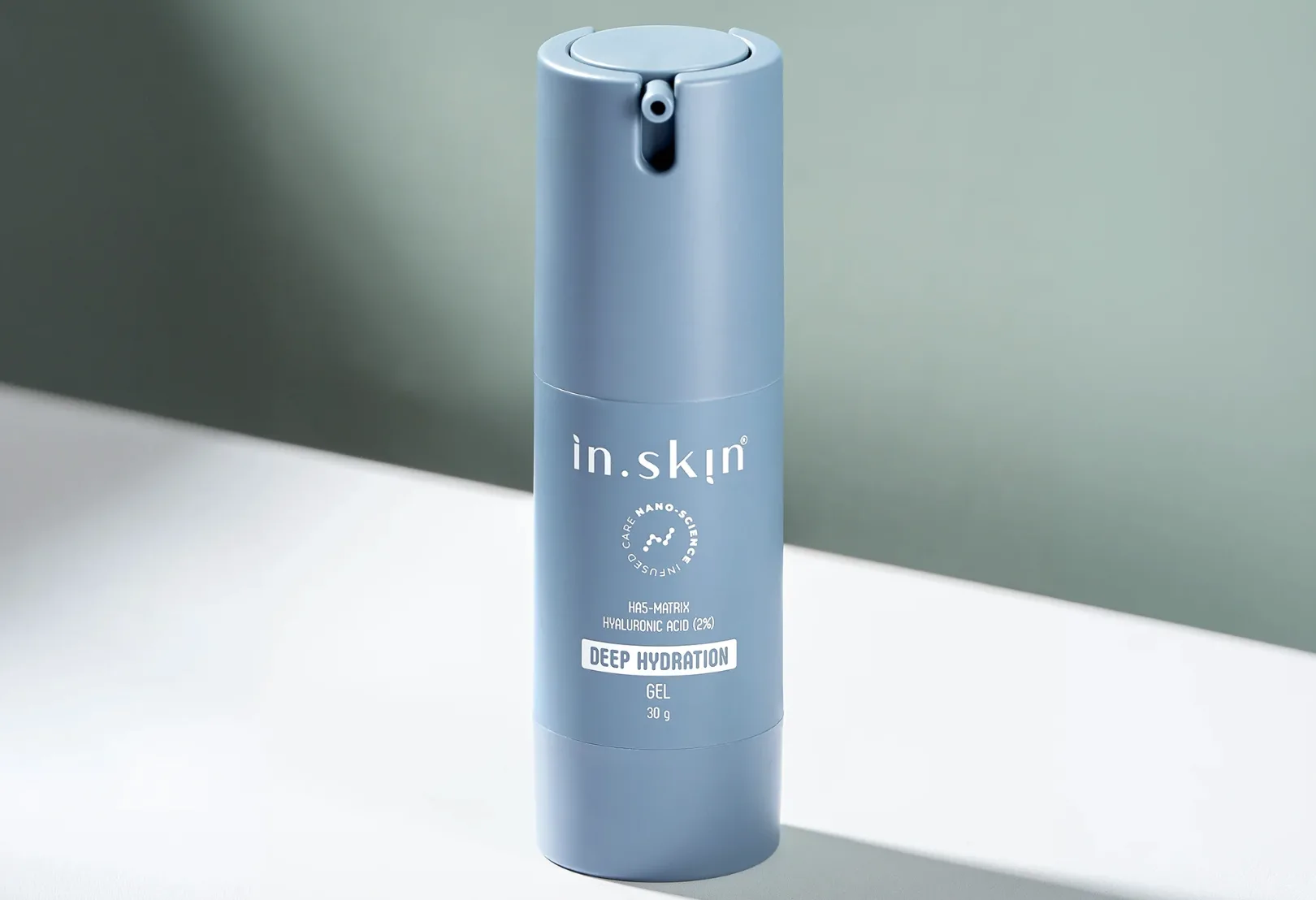
That's why we created Deep Hydration Gel a lightweight yet powerful Hydrating Gel for Dry Skin designed to deliver long-lasting hydration while supporting healthier-looking skin.
Unlike heavy creams that may leave a greasy residue, Deep Hydration Gel absorbs comfortably into the skin and provides refreshing hydration suitable for everyday use.
Powered by HA5-Matrix Hyaluronic Acid (2%)
At the heart of inskin Deep Hydration Gel is HA5-Matrix Hyaluronic Acid (2%).
This advanced hydration complex helps:
- Deliver intense hydration
- Improve the appearance of dehydrated skin
- Support smoother skin texture
- Help skin appear plumper
- Promote healthier-looking skin
Rather than simply coating the surface, the formulation is designed to support lasting hydration and improved skin comfort.
Powered by Nanoscience for Smarter Delivery
Great skincare isn't only about choosing effective ingredients.
It's also about how those ingredients are delivered.
inskin Deep Hydration Gel is powered by Nanoplex® Technology, our proprietary nanoscience-powered delivery system.
Instead of relying only on ingredient concentration, Nanoplex® Technology is designed to optimize the delivery of active ingredients, helping them interact more effectively with the skin while respecting its natural barrier.
This smarter approach supports improved ingredient performance and helps maximize the benefits of hydration without overwhelming the skin.
Because effective skincare isn't about adding more.
It's about delivering better.
Benefits of inskin Deep Hydration Gel
Daily use helps support multiple skin concerns at once.
Intense Multi-Layer Hydration
Helps replenish water for healthier-looking, hydrated skin.
Supports the Skin Barrier
Healthy hydration contributes to a stronger skin barrier.
Improves Skin Texture
Leaves skin feeling smoother, softer, and more comfortable.
Helps Even Skin Tone
Well-hydrated skin naturally appears fresher and more radiant.
Lightweight & Non-Sticky
Perfect for everyday use across different skin types, including oily and combination skin experiencing dehydrated skin.
How to Get Better Results from Your Hydrating Gel
Using the right product is only part of the equation.
Here are a few tips to maximize hydration.
Apply on Slightly Damp Skin
Applying a hydrating gel immediately after cleansing can help support better hydration.
Don't Skip Moisturizer
A hydrating gel provides water, while a moisturizer helps seal that hydration into the skin.
Together, they create a more complete routine.
Wear Sunscreen Daily
Protecting your skin barrier helps preserve hydration throughout the day.
Avoid Harsh Cleansers
Choose gentle cleansers that clean without stripping the skin.
Stay Hydrated
Drinking enough water supports overall health and complements a healthy skincare routine.
Common Myths About Hydration
Myth 1: Oily Skin Doesn't Need Hydration
False.
Oily skin can still become dehydrated skin.
Myth 2: Thick Creams Hydrate Better
Not necessarily.
Some heavy creams reduce water loss but don't provide enough hydration on their own.
Myth 3: Tight Skin Means You Need More Moisturizer
Sometimes.
But it may also indicate dehydration or a weakened skin barrier.
Myth 4: Hyaluronic Acid Is Only for Dry Skin
No.
Hyaluronic acid hydration benefits almost every skin type, including oily, combination, and acne-prone skin.
Signs Your Skin Needs More Hydration
You may benefit from a dedicated Hydrating Gel for Dry Skin if you notice:
- Tightness after cleansing
- Dull skin
- Makeup settling into fine lines
- Rough texture
- Lack of radiance
- Skin that feels dry even after moisturizing
These are often signs that your skin is lacking water - not necessarily oil.
Building a Routine for Long-Lasting Skin Moisture
Healthy, hydrated skin doesn't come from one product alone.
A balanced routine makes all the difference.
An effective routine may include:
- Gentle cleanser
- Hydrating gel
- Moisturizer
- Sunscreen (daytime)
Consistency is far more important than constantly changing products.
If your skin feels tight even after moisturizing, it may be trying to tell you something.
Instead of simply applying thicker creams, take a closer look at whether your skin is actually dehydrated, whether your skin barrier needs support, and whether your routine focuses on both hydration and moisture.
Choosing a dedicated Hydrating Gel for Dry Skin can help replenish water, improve skin comfort, and support healthier-looking skin over time.
At inskin, we've combined HA5-Matrix Hyaluronic Acid (2%) with our Nanoplex® Technology, a proprietary nanoscience-powered delivery system, to create Deep Hydration Gel a formula designed to support intense hydration, healthier skin moisture, and a stronger-looking skin barrier.
Ready to give your skin the hydration it has been missing?
Experience the difference with inskin Deep Hydration Gel and discover how science-backed hydration can leave your skin feeling softer, smoother, and healthier every day.
Shop inskin Deep Hydration Gel today and make hydrated, healthy-looking skin part of your daily routine.