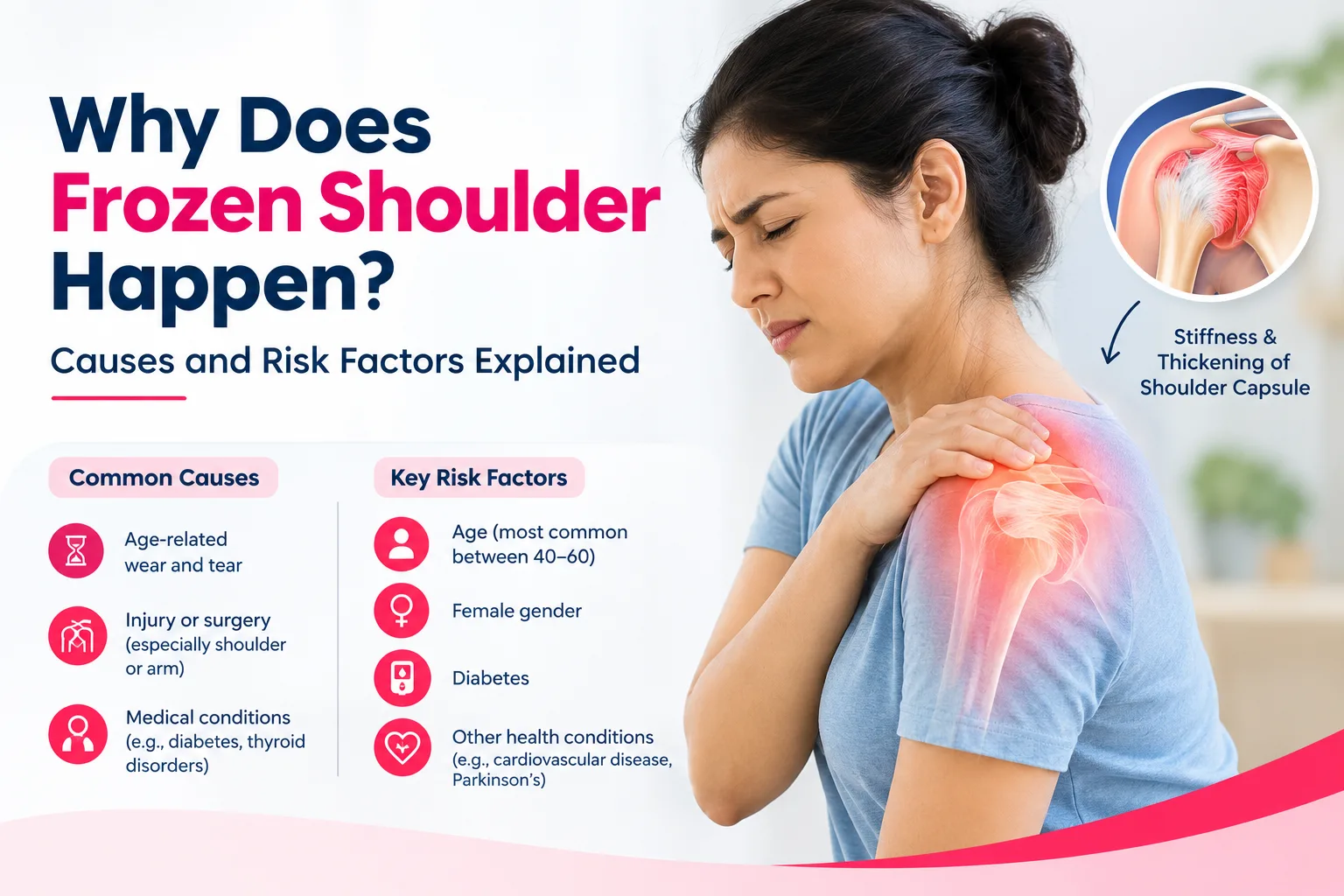
Frozen shoulder, medically known as adhesive capsulitis, is a condition that causes pain, stiffness and difficulty moving the shoulder. Simple activities such as reaching overhead, dressing, combing your hair or sleeping on the affected side can become uncomfortable.
But why does frozen shoulder happen in the first place? Understanding its causes and risk factors can help you recognize the condition early and seek appropriate treatment.
What Is Frozen Shoulder?
The shoulder joint is surrounded by a flexible capsule that helps the joint move freely. In frozen shoulder, this capsule becomes inflamed, thickened and tight. As a result, shoulder movement gradually becomes restricted.
Frozen shoulder commonly develops in three stages:
- Freezing stage: Pain increases and shoulder movement begins to decrease.
- Frozen stage: Pain may become less intense, but stiffness can make movement difficult.
- Thawing stage: Shoulder movement gradually improves.
Recovery can take several months or longer, depending on the individual and the severity of the condition.
Why Does Frozen Shoulder Happen?
In many cases, there is no single identifiable cause. This is known as primary or idiopathic frozen shoulder. However, frozen shoulder can also develop after an injury, surgery or a period of reduced shoulder movement.
Some common causes include:
1. Keeping the Shoulder Immobile
One of the most common situations associated with frozen shoulder is prolonged lack of shoulder movement. After an injury, fracture or surgery, a person may avoid moving the arm because of pain. Over time, reduced movement can contribute to tightening of the shoulder capsule.
2. Shoulder Injury or Surgery
An injury affecting the shoulder can sometimes lead to stiffness. Similarly, people recovering from shoulder or upper-limb surgery may have restricted movement during recovery. Appropriate rehabilitation and guided exercises can help restore mobility.
3. Diabetes
People with diabetes have a higher risk of developing frozen shoulder. High blood sugar levels may affect connective tissues and contribute to changes in the shoulder capsule.
If you have diabetes and notice persistent shoulder stiffness, discussing your symptoms with a healthcare professional is important.
4. Age and Gender
Frozen shoulder is more commonly seen in adults between approximately 40 and 60 years of age. Women may also be affected more frequently than men.
5. Other Medical Conditions
Certain health conditions have been associated with a higher risk of frozen shoulder, including thyroid disorders, Parkinson’s disease and some cardiovascular conditions.
Having one of these risk factors does not necessarily mean that a person will develop frozen shoulder. Several factors may contribute to its development.
What Are the Risk Factors for Frozen Shoulder?
Apart from medical conditions, several situations may increase the likelihood of developing shoulder stiffness.
These include:
- Previous shoulder injury
- Shoulder surgery
- Prolonged immobilization
- Diabetes
- Thyroid problems
- Increasing age
- Reduced shoulder movement
- Certain neurological or cardiovascular conditions
Recognizing these risk factors can encourage people to pay attention to persistent shoulder pain and stiffness rather than ignoring the symptoms.
Can Physiotherapy Help With Frozen Shoulder?
Physiotherapy is an important part of managing frozen shoulder. A physiotherapist can assess your shoulder movement, pain and stiffness and develop an exercise program according to your condition.
Treatment may include gentle range-of-motion exercises, stretching, mobility exercises and other techniques aimed at improving shoulder function.
The exercises should be performed according to professional guidance because forcing a stiff or painful shoulder can sometimes increase discomfort.
If you are looking for the best physiotherapist in Chennai, choosing a qualified professional who can assess your condition and provide an individualized rehabilitation plan is important.
A physiotherapy hospital in Chennai may also provide access to orthopedic specialists and other healthcare professionals when additional evaluation is needed.
When Should You See a Doctor or Physiotherapist?
Consider seeking professional evaluation if you experience:
- Persistent shoulder pain
- Increasing stiffness
- Difficulty raising your arm
- Trouble performing everyday activities
- Pain that interferes with sleep
- Shoulder stiffness following an injury or surgery
Early assessment can help identify the cause of your symptoms and determine an appropriate treatment approach.
Take the Next Step Toward Better Shoulder Movement
Frozen shoulder can make everyday movements difficult, but appropriate treatment and rehabilitation can help improve mobility and function. Understanding the causes and risk factors is the first step toward addressing the problem.
A top multispeciality hospital in Chennai can provide coordinated care when shoulder symptoms require evaluation by different specialists. With the right assessment, physiotherapy and medical guidance, patients can work toward reducing pain and regaining comfortable shoulder movement.
If shoulder stiffness or pain is affecting your daily life, don't ignore it. Consult a qualified healthcare professional for an appropriate diagnosis and treatment plan.