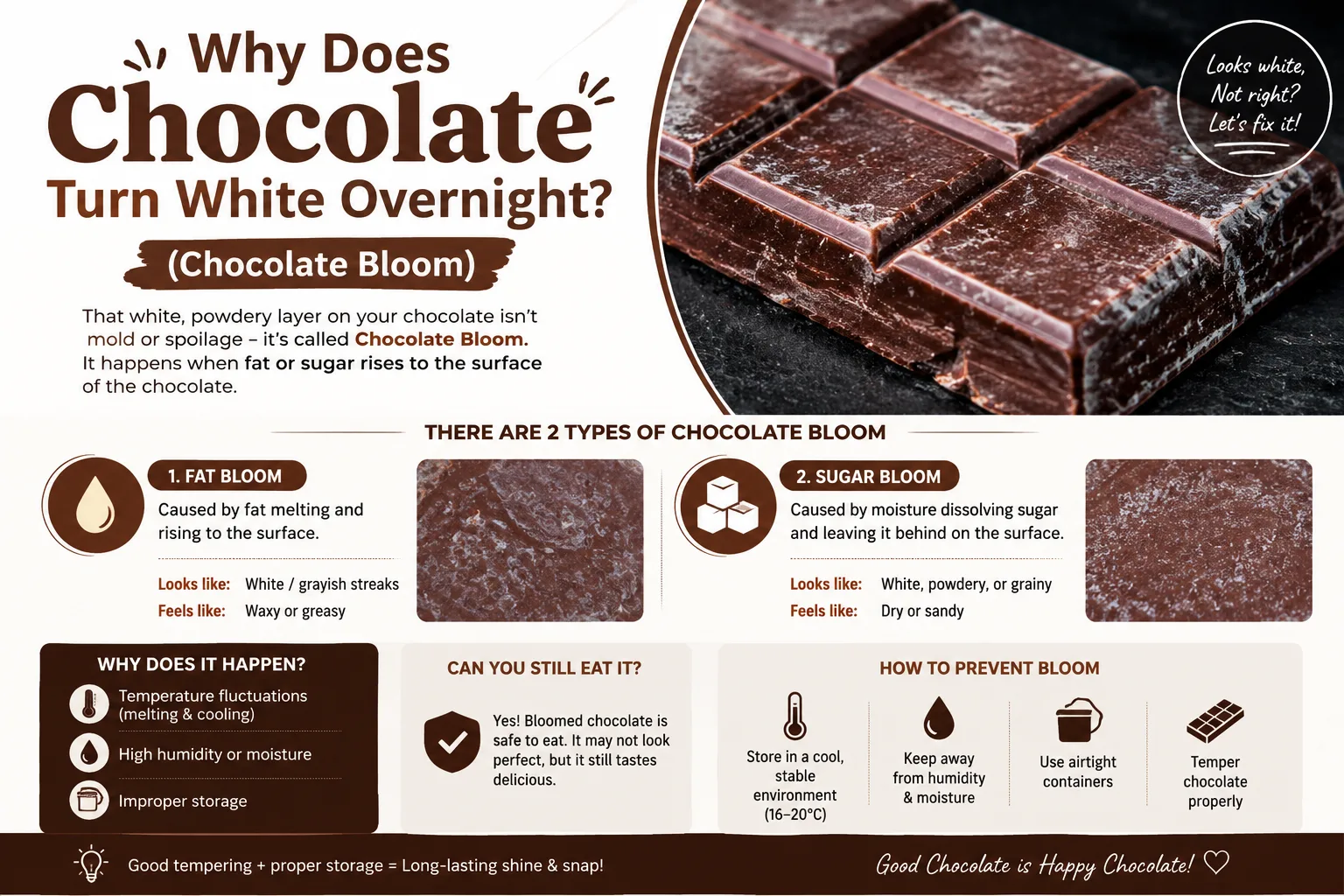
Chocolate can turn white overnight because of a harmless condition called chocolate bloom. This happens when either cocoa butter or sugar rises to the surface due to improper tempering, moisture, or temperature changes. Although the appearance changes, the chocolate is usually still safe to eat if it has been stored correctly.
The Science Behind White Chocolate Bloom
Many people think white patches on chocolate mean it has gone bad or developed mold. In most cases, that's not true.
Chocolate contains cocoa butter, which is a natural fat. When chocolate is tempered correctly, the cocoa butter forms stable crystals that keep the surface smooth and shiny. However, if these crystals become unstable or the chocolate experiences temperature fluctuations, the cocoa butter can migrate to the surface.
As it hardens, it creates a thin white or grey coating known as fat bloom.
Another type of bloom is called sugar bloom. This occurs when moisture dissolves the sugar on the chocolate's surface. After the moisture evaporates, the sugar recrystallizes, leaving behind a rough, chalky white appearance.
Although both types of bloom affect appearance and texture, they generally do not make the chocolate unsafe to consume.
Common Reasons Chocolate Turns White Overnight
Several everyday factors can cause chocolate to lose its glossy finish surprisingly quickly.
Improper Tempering
Incorrect tempering is one of the most common reasons chocolate develops fat bloom. Without stable cocoa butter crystals, the fat separates and rises to the surface over time.
Sudden Temperature Changes
Moving chocolate between warm and cool environments causes cocoa butter to melt slightly before hardening again, encouraging bloom formation.
High Humidity
Moisture in the air can settle on chocolate, dissolve surface sugar, and create sugar bloom after drying.
Refrigeration Without Protection
Placing chocolate directly into the refrigerator can expose it to condensation when removed, increasing the likelihood of sugar bloom.
Poor Storage Conditions
Chocolate stored near ovens, windows, or direct sunlight is more likely to experience repeated temperature fluctuations that damage its crystal structure.
How to Prevent Chocolate from Turning White
Fortunately, bloom can often be prevented with proper handling and storage.
Temper Chocolate Correctly
Proper tempering creates stable cocoa butter crystals that resist fat bloom and produce a smooth, glossy finish.
Store Chocolate Properly
Keep chocolate in a cool, dry place between 16°C and 20°C. Avoid frequent temperature changes.
Protect It from Moisture
Store chocolate in airtight containers away from humid environments to reduce the risk of sugar bloom.
Avoid Direct Refrigeration
If refrigeration is necessary, seal the chocolate tightly before placing it inside. Allow it to return to room temperature gradually before opening the container.
Handle Chocolate Carefully
Avoid touching finished chocolate with wet hands or placing it near steam while working.
Following these simple habits helps preserve both the appearance and texture of your chocolates.
Can Bloomed Chocolate Be Fixed?
In many cases, yes.
Chocolate affected by fat bloom can often be melted and properly tempered again. This redistributes the cocoa butter crystals and restores the chocolate's glossy finish.
Sugar bloom is more difficult to reverse because the sugar crystals have already dissolved and recrystallized on the surface. However, the chocolate can often still be used for baking, fillings, or recipes where appearance is less important.
Frequently Asked Questions
Is white chocolate bloom dangerous?
No. Bloom is a quality issue rather than a food safety problem. Properly stored chocolate with bloom is generally safe to eat.
How can I tell the difference between bloom and mold?
Bloom appears as a smooth or powdery white coating and usually wipes away or melts when touched. Mold often has fuzzy growth and may produce unpleasant odors.
Does bloom change the taste?
Bloom mainly affects texture and appearance. While the chocolate may feel slightly grainy or less smooth, its flavor usually remains similar.
Can bloom happen even after tempering?
Yes. Even well-tempered chocolate can develop bloom if exposed to heat, humidity, or repeated temperature fluctuations during storage.
Where can beginners learn proper chocolate handling?
Many workshops explain what you'll learn in a chocolate workshop, including tempering, moulding, storage techniques, and methods for preventing common issues such as chocolate bloom.
Tips for Beginners Working with Chocolate
If you're just beginning your chocolate-making journey, a few simple habits can prevent many common problems.
- Always use a digital thermometer when tempering chocolate.
- Work in a cool, dry environment.
- Avoid rushing the cooling process.
- Store finished chocolates away from sunlight and heat.
- Learn how to prepare for a chocolate workshop by bringing basic tools, wearing comfortable clothing, and being ready to practice hands-on techniques.
- A beginner chocolate workshop guide can also help you understand essential concepts like tempering, storage, hygiene, and troubleshooting before working with chocolate professionally.
Conclusion
Chocolate turning white overnight is usually caused by fat bloom or sugar bloom rather than spoilage. Understanding how cocoa butter crystals behave, controlling temperature, and storing chocolate correctly are the keys to maintaining its beautiful shine and smooth texture.
If you'd like to master tempering, storage, and professional chocolate-making techniques, consider joining a chocolate-making course or workshop. Hands-on training can help you prevent common problems, improve your skills, and consistently create chocolates with a flawless finish.