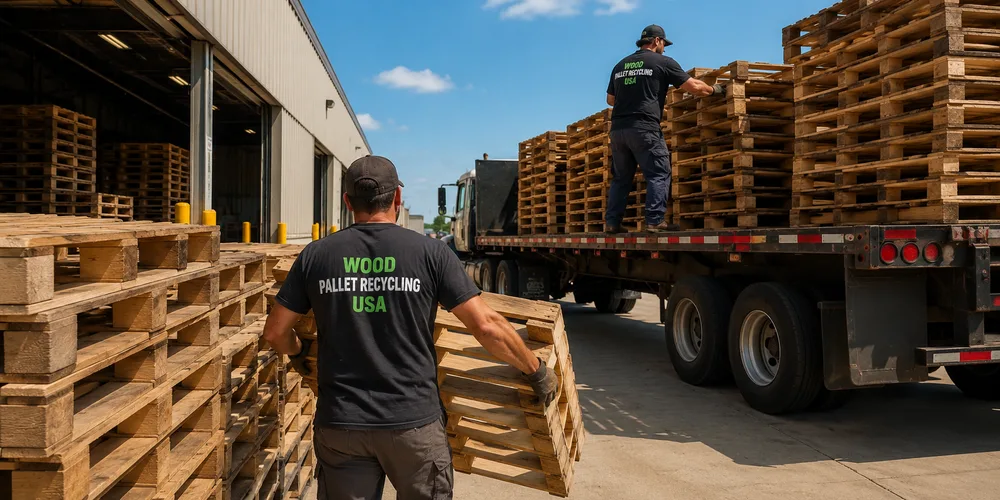
A pallet gets set aside after a delivery. Another one gets stacked beside it. Someone says they’ll move them later when things slow down. But things rarely slow down in a busy operation.
Weeks pass. Then months. And without anyone really noticing, a simple stack of used wooden pallets starts turning into a space problem that affects the entire workflow.
This is where pallet recycling, pallet removal, and organized wood pallet services start becoming more important than they first appear.
Why Wooden Pallets Never Stay “Temporary”
On paper, it seems simple. Pallets arrive with shipments, goods are unloaded, and the empty pallets are moved out of the way.
In reality, it doesn’t stay that clean.
Warehouses are fast-moving environments. There’s always something more urgent than sorting out empty pallets. So they get placed in open corners, behind racks, or near loading docks.
At first, it feels harmless.
But pallets don’t disappear on their own. They stay. And more keep arriving.
Over time, “just for now” becomes the default storage system.
When Storage Starts Turning Into Congestion
As the pile grows, the impact starts to show in subtle ways.
It’s not usually one big problem. It’s a collection of small friction points:
- Slightly tighter movement paths for equipment
- Reduced staging space for incoming shipments
- More time spent navigating around stacked pallets
- Less flexibility during peak shipping hours
- Increased visual clutter in operational zones
None of these issues shut down a warehouse, but they do slow things down in ways that build up over time.
And in logistics, small delays repeated daily can add up to real inefficiency.
The Role of Wood Pallet Recycling in Keeping Things Under Control
Wood pallet recycling isn’t just about disposal it’s about maintaining flow.
Instead of letting pallets sit unused, recycling systems help keep materials moving through a structured process.
Depending on condition, pallets can be:
- Repaired and reused in circulation
- Broken down into reusable wood components
- Collected and sorted for responsible recycling
- Removed before they accumulate in bulk
This creates a cycle instead of a pile.
And that difference matters more than most teams expect.
Because once pallets stop accumulating, space naturally stays more usable.
Why Businesses Don’t Act Sooner
If pallet buildup creates problems, why do so many warehouses delay handling it?
The answer is simple: it doesn’t feel urgent.
Unlike equipment failure or inventory shortages, pallet accumulation doesn’t immediately interrupt operations. It just slowly reduces efficiency in the background.
So it gets pushed aside.
And because it’s not a “visible emergency,” it often stays that way until the space starts feeling noticeably tighter.
By then, cleanup becomes a larger task than it needed to be.
How Pallet Removal Changes the Workflow
This is where pallet removal services make a noticeable difference.
Instead of relying on internal teams to handle disposal, businesses can offload the process entirely and keep operations focused on core tasks.
A structured pallet pick up service typically handles:
- Any quantity of pallets, large or small
- Mixed conditions (usable, broken, or scrap)
- Direct removal from docks, yards, or storage areas
- Flexible scheduling based on business activity
For busy operations in Washington DC, Maryland, and Virginia, this kind of flexibility is especially helpful. Space is often at a premium, and delays in clearing pallets can directly affect daily movement.
Weekly to On-Call: Matching Service to Real Demand
Not every facility generates pallet waste at the same rate.
Some locations need weekly pickups due to constant inbound shipments. Others may only need monthly service or occasional on-call removal during busy cycles.
That flexibility is what makes wood pallet services practical. They adapt to real operational flow instead of forcing businesses into rigid schedules.
Over time, this helps maintain a steady balance between incoming pallets and outgoing removal.
No backlog. No buildup. No unexpected clutter.
The Hidden Benefit: Space That Actually Feels Usable
One of the most underrated benefits of consistent pallet recycling and removal is how it changes the feel of a workspace.
When pallet piles are gone, areas that once felt crowded suddenly become usable again. Movement becomes easier. Staging areas open up. Equipment flows more naturally.
It’s not just about cleanliness it’s about function.
More open space means fewer obstacles and smoother day-to-day operations.
A Simpler Way to Prevent Future Build-Up
The most efficient warehouses don’t treat pallet removal as a one-time cleanup task. They build it into their regular rhythm.
Instead of waiting for stacks to form, they maintain consistent removal cycles that keep everything under control from the start.
That approach prevents the “big cleanup problem” entirely.
And it keeps operations predictable, which is often just as valuable as extra space.
Final Thoughts
Wooden pallets are essential for shipping and logistics, but they can quietly become a storage burden if not managed properly.
With consistent pallet recycling, structured pallet removal, and flexible pallet pick up service options, businesses can prevent buildup before it turns into congestion.
In busy warehouse environments, the difference between organized space and scattered clutter often comes down to one simple habit: removing what you don’t need before it starts to get in the way.