Industrial piping systems that handle corrosive chemicals, aggressive fluids, and challenging process media require careful consideration when selecting valves. The valve material must be compatible with the fluid, while the overall design needs to support the required pressure, temperature, flow, and operating conditions.
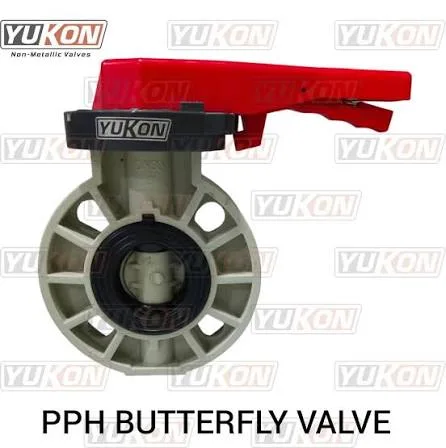
A PPH butterfly valve can be a practical solution for suitable chemical and industrial applications because polypropylene homopolymer (PPH) offers useful resistance to many corrosive substances and provides lightweight construction. Combined with the compact quarter-turn design of a butterfly valve, PPH construction can provide an effective option for certain fluid-handling systems.
For industrial users in India, selecting the right valve supplier involves more than comparing prices. Material compatibility, pressure and temperature limitations, application knowledge, valve configuration, installation requirements, and long-term maintenance should all be evaluated.
Yukon Industries provides valve solutions for industrial and fluid-handling applications, helping customers evaluate products according to their specific process requirements.
What Is a PPH Butterfly Valve?
A PPH butterfly valve uses a butterfly-style disc to regulate or isolate fluid flow, while PPH is used in suitable components of the valve construction.
The disc rotates around a shaft to change the flow passage. A quarter-turn movement can take the valve from an open to a closed position.
This design can offer several practical benefits:
- Compact construction
- Lightweight handling
- Quarter-turn operation
- Suitable corrosion resistance for compatible media
- Easy integration into piping systems
- Potential suitability for manual or automated operation
The exact performance of a valve depends on its construction, materials, pressure rating, temperature range, and application conditions.
Why Choose Yukon Industries?
1. Application-Based Valve Selection
Selecting a PPH butterfly valve should begin with understanding the process rather than simply selecting a valve according to pipeline size.
Important factors include:
- Process fluid
- Chemical concentration
- Operating pressure
- Operating temperature
- Pipeline diameter
- Required flow rate
- Installation environment
- Operating frequency
Yukon Industries focuses on practical industrial valve requirements, allowing customers to evaluate valve selection according to the actual conditions of their systems.
2. PPH for Suitable Corrosive Applications
One of the important reasons engineers consider PPH construction is its resistance to many chemicals and corrosive fluids.
Metallic valves can require specialized materials when exposed to aggressive process media. PPH can be considered for applications where its chemical resistance characteristics are compatible with the fluid.
Potential applications may include:
- Chemical processing
- Water treatment
- Industrial wastewater
- Chemical storage and transfer
- Surface treatment
- Industrial utility systems
However, no material should be assumed to be compatible with every chemical. The specific fluid, concentration, temperature, and exposure conditions should be evaluated before selection.
3. Lightweight Valve Construction
Compared with many metallic valve designs, PPH-based valve construction can provide a lightweight alternative for suitable applications.
Lower weight can simplify:
- Transportation
- Installation
- Handling
- Maintenance
- Replacement
This can be especially useful in larger pipeline systems where reducing component weight can make installation and maintenance more manageable.
The valve's pressure and temperature limitations must still be considered when evaluating lightweight construction.
4. Compact Butterfly Valve Design
Butterfly valves are known for their compact design compared with some other valve types.
The disc rotates around the shaft rather than moving linearly through the pipeline.
This quarter-turn arrangement can provide:
- Fast operation
- Compact installation
- Reduced operating space
- Simple manual control
- Suitability for automation
These characteristics can make butterfly valves useful where installation space and operating simplicity are important.
5. Chemical Compatibility Is Essential
Selecting a PPH butterfly valve for chemical service requires careful compatibility evaluation.
Engineers should consider:
- Chemical type
- Concentration
- Operating temperature
- Pressure
- Exposure duration
- Valve construction
- Seat and seal materials
The compatibility of the PPH body alone does not determine the suitability of the complete valve. Wetted components, seals, seats, and other materials should also be evaluated.
6. Pressure and Temperature Requirements
A PPH butterfly valve should always be operated within its specified pressure and temperature limits.
Before selecting a valve, engineers should identify:
- Normal operating pressure
- Maximum operating pressure
- Normal operating temperature
- Maximum temperature
- Pressure fluctuations
- Temperature cycling
Thermoplastic materials can have pressure capabilities that vary with temperature. Therefore, pressure and temperature should be considered together rather than independently.
7. Correct Valve Sizing
Valve size can directly influence flow performance.
An undersized valve may create unnecessary restriction, while an oversized valve may increase cost without providing additional benefits.
Engineers should evaluate:
- Pipeline size
- Required flow rate
- Fluid velocity
- Pressure drop
- Process requirements
The correct size should be determined based on actual operating conditions.
8. Sealing and Seat Selection
The sealing system is an important part of butterfly valve performance.
Engineers should consider whether the seat and seal materials are compatible with:
- Process fluid
- Chemical concentration
- Temperature
- Pressure
- Cleaning chemicals
In chemical applications, compatibility should be verified for the complete operating range rather than based on general material assumptions.
Proper sealing can help minimize unwanted leakage and support reliable isolation.
9. Manual and Automated Operation
A butterfly valve's quarter-turn mechanism makes it suitable for different operating arrangements.
Manual operation can be appropriate when the valve is:
- Easily accessible
- Infrequently operated
- Not part of an automated sequence
Automation can be considered when remote or frequent operation is required.
Possible automation options may include suitable pneumatic or electric actuators, depending on the valve configuration and application.
Automation can provide:
- Remote operation
- Repeatable movement
- Process sequencing
- Reduced manual intervention
- Integration with control systems
Actuator sizing should be based on the valve's operating torque and process conditions.
10. Applications of PPH Butterfly Valves
Chemical Processing
PPH butterfly valves can be considered for compatible chemical fluids where corrosion resistance is required.
Water Treatment
They may be used in suitable water and chemical-treatment systems for isolation and flow management.
Industrial Wastewater
Where the process medium is compatible with PPH, these valves can provide practical isolation in wastewater systems.
Surface Treatment
Chemical solutions used in surface-treatment processes may require corrosion-resistant valve materials.
Chemical Storage and Transfer
Suitable PPH butterfly valves can support flow isolation in compatible chemical-handling systems.
11. Installation Considerations
Proper installation is essential for reliable performance.
Installation teams should verify:
- Correct pipeline alignment.
- Suitable flange and connection compatibility.
- Adequate pipe support.
- Proper valve orientation.
- Sufficient disc clearance.
- Correct tightening procedures.
- Accessible installation for maintenance.
Excessive mechanical stress from poorly supported or misaligned piping can negatively affect valve performance.
Why Consider Yukon Industries?
When evaluating a PPH butterfly valve, industrial buyers should consider the complete technical requirements rather than focusing only on the valve's initial cost.
Important factors include:
- Material compatibility
- Valve construction
- Pressure capability
- Temperature range
- Pipeline size
- Sealing arrangement
- Automation requirements
- Installation conditions
- Maintenance needs
Yukon Industries provides valve solutions for industrial and fluid-handling applications and focuses on understanding practical process requirements.
For customers considering PPH butterfly valves, the selection process should take into account the actual fluid, chemical concentration, operating temperature, pressure, pipeline configuration, and intended valve function.
Maintenance and Inspection
Regular inspection can help maintain reliable valve operation.
Maintenance teams should check:
- Valve body condition
- Disc operation
- Shaft condition
- Seat and seal condition
- Flange connections
- External leakage
- Actuator performance where applicable
Any unusual operating resistance, leakage, cracking, or physical damage should be investigated promptly.
The valve should also be protected from operating conditions beyond its specified limits.
Best Practices for Selecting a PPH Butterfly Valve
Before purchasing a valve, provide complete technical details to the supplier:
- Process medium
- Chemical concentration
- Pipeline size
- Operating pressure
- Operating temperature
- Required flow rate
- Connection type
- Installation environment
- Operating frequency
- Manual or automated operation
Complete application information allows better evaluation of whether a PPH butterfly valve is appropriate for the intended service.
Conclusion
A PPH butterfly valve can be a useful choice for suitable industrial applications where corrosion resistance, lightweight construction, compact design, and quarter-turn operation are important. Chemical processing, water treatment, industrial wastewater, surface treatment, and compatible chemical-handling systems can benefit from thermoplastic valve solutions when the operating conditions are appropriate.
However, successful valve selection depends on more than the material name. Process chemistry, concentration, pressure, temperature, flow requirements, sealing materials, pipeline configuration, and installation conditions should all be evaluated.
For industries looking for suitable valve solutions in India, Yukon Industries provides industrial and fluid-handling products with an application-oriented approach. By evaluating the complete process before selecting a valve, users can make more informed decisions and support reliable long-term operation.
With correct selection, installation, and preventive maintenance, PPH butterfly valves can provide dependable flow isolation and contribute to efficient fluid handling in demanding but compatible industrial environments.