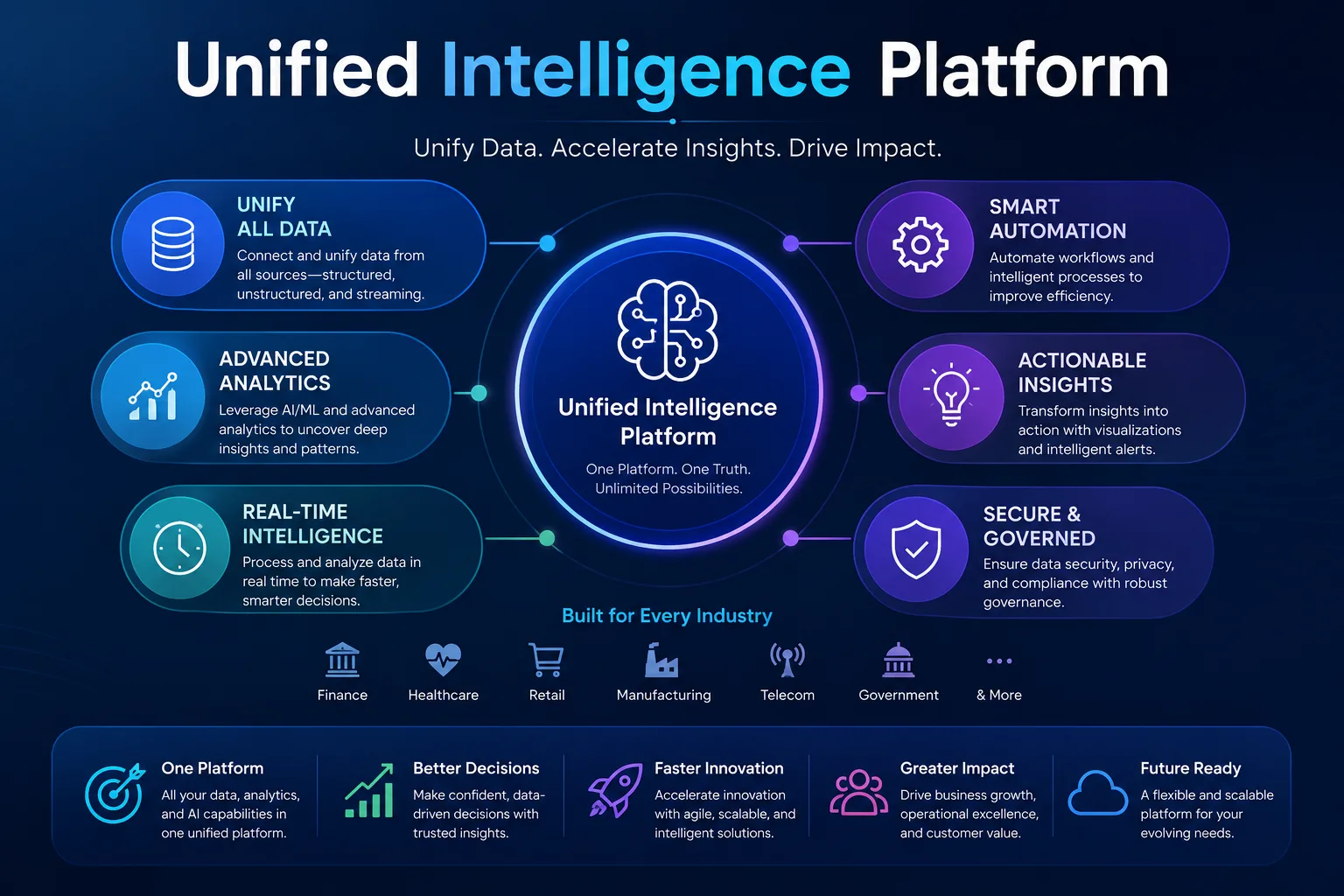
The modern business landscape demands faster decisions, greater agility, and deeper insights. Organizations are increasingly adopting advanced technologies that help them leverage data more effectively. A unified intelligence system provides a comprehensive framework that combines data management, analytics, automation, and artificial intelligence to support smarter business operations.
By centralizing information and intelligence capabilities, businesses can create a more connected and efficient digital ecosystem.
Creating a Single Source of Truth
One of the biggest challenges organizations face is managing information across multiple systems. Disconnected data often leads to inconsistencies and limited visibility into business performance. An enterprise intelligence platform helps eliminate these barriers by integrating information from various sources into a centralized environment.
This unified approach ensures that stakeholders across departments work with consistent, reliable data, enabling better collaboration and more informed decision-making.
Leveraging Advanced Analytics and AI
Organizations that successfully harness data gain a significant competitive advantage. A unified intelligence system enables businesses to utilize advanced analytics and artificial intelligence to uncover valuable insights hidden within large datasets.
AI-driven capabilities can identify patterns, forecast future outcomes, and provide intelligent recommendations that help organizations optimize performance. These insights empower leaders to make strategic decisions with greater confidence and accuracy.
Driving Operational Excellence Through Automation
Manual business processes can limit efficiency and create unnecessary bottlenecks. An enterprise intelligence platform helps organizations streamline operations through intelligent automation. By automating routine tasks and workflows, businesses can reduce administrative burdens, improve accuracy, and accelerate execution.
Automation also allows employees to focus on innovation and customer-focused activities that contribute directly to organizational growth and success.
Enabling Continuous Innovation
As business requirements evolve, technology platforms must be flexible enough to adapt. A unified intelligence system provides organizations with the scalability and adaptability needed to support ongoing innovation and digital transformation efforts.
Its ability to integrate emerging technologies, connect diverse data sources, and support intelligent decision-making makes it a valuable asset for organizations looking to remain competitive in a rapidly changing marketplace.
Supporting Scalable Digital Transformation
As organizations continue to evolve, they require flexible technology solutions that can grow alongside their business needs. An enterprise intelligence platform provides the scalability needed to support digital transformation initiatives without disrupting existing operations.
Its ability to integrate data, analytics, and AI-driven capabilities helps businesses adapt to new challenges, enhance innovation, and maintain a competitive advantage in an increasingly data-driven world.
Conclusion
Businesses seeking to maximize the value of their data need solutions that go beyond traditional reporting tools. A powerful enterprise intelligence platform enables organizations to unify information, automate processes, and leverage AI-driven insights. Combined with a robust unified intelligence system, businesses can improve efficiency,