Every year, thousands of brilliant Indian minds are stifled by the weight of a “prestige” choice made on the back of a WhatsApp forward or unverified rankings. Relying on outdated peer advice for high-stakes higher education is a recipe for a mismatched career path.
Modern education fairs, such as the exhibition in Delhi, serve as an empirical research tool, compressing a logistical nightmare of scattered digital searching into a single day of rigorous evaluation. Success in this environment is not about browsing; it is about a student’s tactical ability to extract data and verify institutional claims.
Demystifying the Modern Education Fair
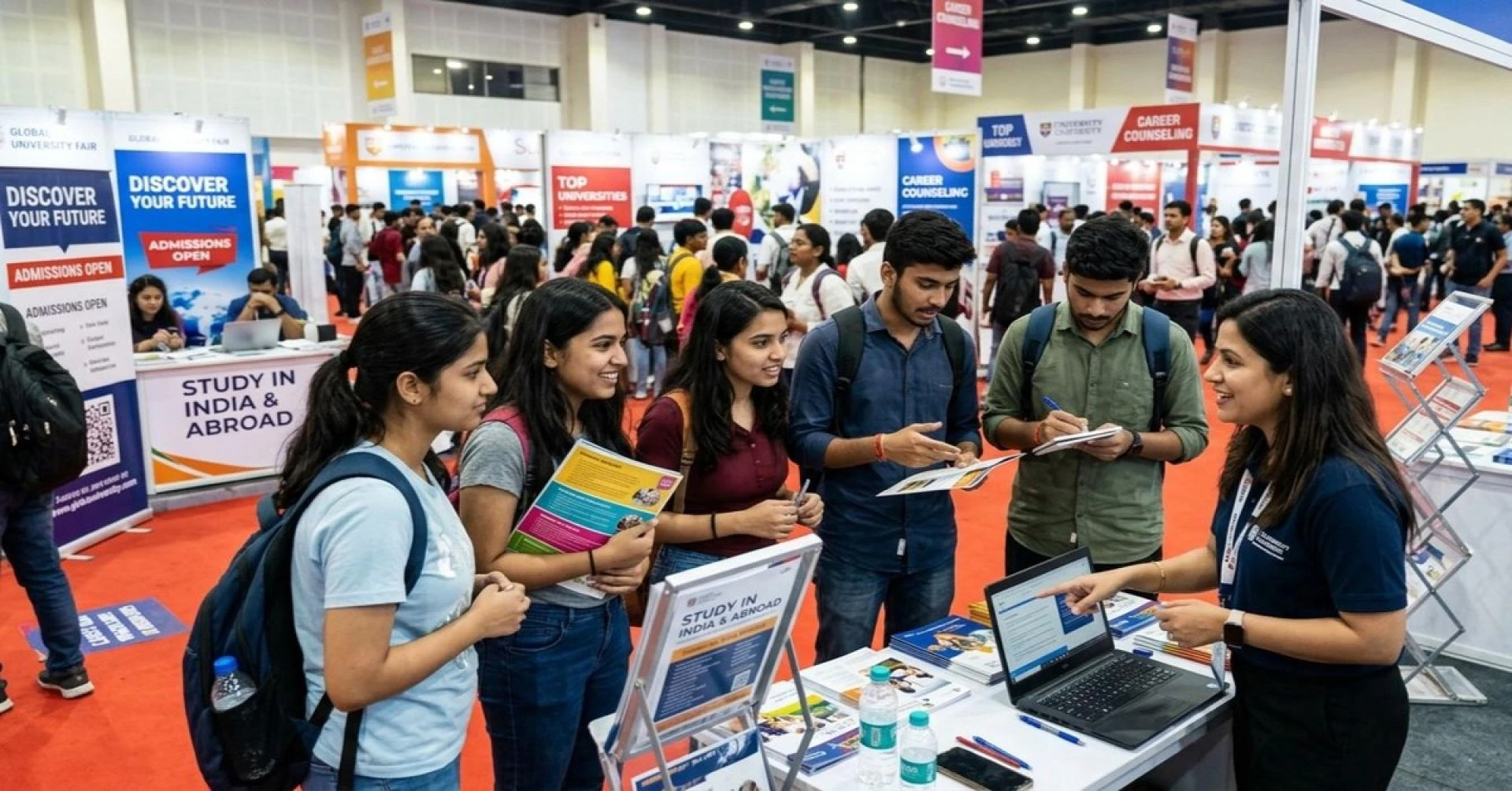
Strategic education forums are no longer mere “marketing melas” but sophisticated ecosystems of innovation. They function as a comprehensive platform where information exchange occurs in real-time, allowing students to cut through corporate rhetoric and engage with academic reality.
- What Happens- Direct interaction with university representatives, scholarship evaluations and professional guidance provided by experts from IITs, NITs and top career consultants.
- The Target Audience- Primarily Class 10 and 12 students, postgraduate aspirants and parents.
- The Timing- Scheduled to align with the declaration of CBSE/ICSE Board results and national competitive exams like JEE or NEET.
- The Scale- Major Indian expos, such as those held at Yashobhoomi (IICC) or Bharat Mandapam (Pragati Maidan), showcase over 300 exhibitors and 16+ countries under one roof.
Understanding the format is only the first step; the real value lies in the human element.
The Human Advantage- Why In-Person Exposure Outperforms Digital Research
Digital brochures are static, but a live dialogue with an admissions coordinator provides a qualitative “So What?” layer that websites cannot replicate. The "SOL Rule" dictates that you can accomplish six to eight high-value meetings in a single afternoon, a feat impossible in the real world of Indian traffic and metropolitan distances.
- Revealing Institutional Culture- Face-to-face queries reveal "hidden" traits, such as faculty accessibility and campus vibrancy, often obscured by glossy digital marketing.
- Immediate Feedback Loops- Receive real-time evaluations on your portfolio strength and eligibility for specific programmes or merit-based scholarships.
- Cohesive Decision-Making- Joint parent-student attendance allows families to resolve doubts simultaneously, facilitating faster and more unified choices.
Preparation is the differentiator between a casual visitor and a true strategist.
The Pre-Fair Blueprint- A Practical Checklist
To transform from a visitor to a strategist, you must arrive with a rigorous pre-game plan.
- Identify preferred academic streams (Engineering, Medical, Management, etc.) before arrival.
- Shortlist 8-10 priority institutions from the list of 75+ participating universities.
- Prepare a “Question Bank” covering specific parameters like faculty profiles and laboratory infrastructure.
- Organise a folder with academic documents, including mark sheets and entrance exam ranks (JEE/NEET).
- Enrol through free online pre-registration to save time at the entry centre.
- Equip yourself with digital note-taking tools or a dedicated notebook to record representative names.
Navigating the Floor- The Smart Student’s Guide
In high-traffic venues like any expo in Delhi- Yashobhoomi or Pragati Maidan, time management is your most critical strategic asset. Navigating the floor requires a disciplined balance between exploring "dream" institutions and securing reliable safety backups.
- Early Arrival- Arrive when the centre opens at 10-00 AM to secure quality time with representatives before peak afternoon crowds.
- Strategic Balancing- Distribute your energy between top-tier dream schools and safety institutions to ensure a diverse range of outcomes.
- The "Notes-After" Rule- Engage naturally in conversation, then document insights and specific programme features immediately after leaving the booth.
- Verify Infrastructure- Always enquire about follow-up physical campus visits or virtual tours to see the learning environment first-hand.
From Conversations to Decisions- The Post-Fair Engine
The 48-hour window following the fair is the critical phase for synthesis. You must transform raw notes and brochures from platforms like Educatus Expo into a strategic shortlist of final contenders.
- Filter for Fit- Review institutions based on programme alignment, faculty excellence and the "Fee-to-Placement" ratio.
- Compare VOI- Evaluate the gathered data to see which institution offers the best value relative to your career goals.
- Execute Follow-ups- Reach out to the coordinators you met to clarify remaining doubts regarding specific batches or specialisations.
- Verify at Source- Schedule a physical visit to the campus to inspect facilities before making a final admission commitment.
Conclusion
An education fair is only as effective as the student using it. Whether you are at a massive international summit or a specialised forum, an informed decision is your greatest asset. These events provide the rare honour of challenging institutional assumptions and verifying facts directly with the source.
By moving beyond digital research and engaging in strategic, face-to-face dialogue, you take control of your academic future.
If you had one day and access to 75+ universities under one roof, would you know the right questions to ask?