For many young musicians, the school year follows a familiar rhythm. Weekly lessons, occasional performances, practice schedules and, for some, preparation for graded exams.
These experiences are important, but they only tell part of the story.
A well-designed summer music programme offers something different. It creates space for young people to immerse themselves in music without the usual pressures of school timetables and academic demands. More importantly, it allows them to experience music as a shared activity rather than a solitary pursuit.
Speak to musicians about the experiences that shaped them most, and many will mention a summer ensemble, youth orchestra or music camp long before they talk about exam certificates. The memories often stay with them for years.
Why Summer Music Experiences Remain Valuable
Music education has changed considerably over the past decade. Technology has made learning more accessible, and online tuition has opened new opportunities for students regardless of location.
Yet there remains something uniquely valuable about spending time in a community built around music.
A summer programme places young musicians in an environment where creativity becomes part of daily life. Rehearsals lead to conversations. Workshops spark new interests. Informal performances encourage experimentation.
The atmosphere is often less formal than traditional education settings, which can make learning feel more natural.
Students are given room to make mistakes, take risks and discover aspects of music they may never encounter during regular lessons.
How a Summer Music Programme Differs from Regular Lessons
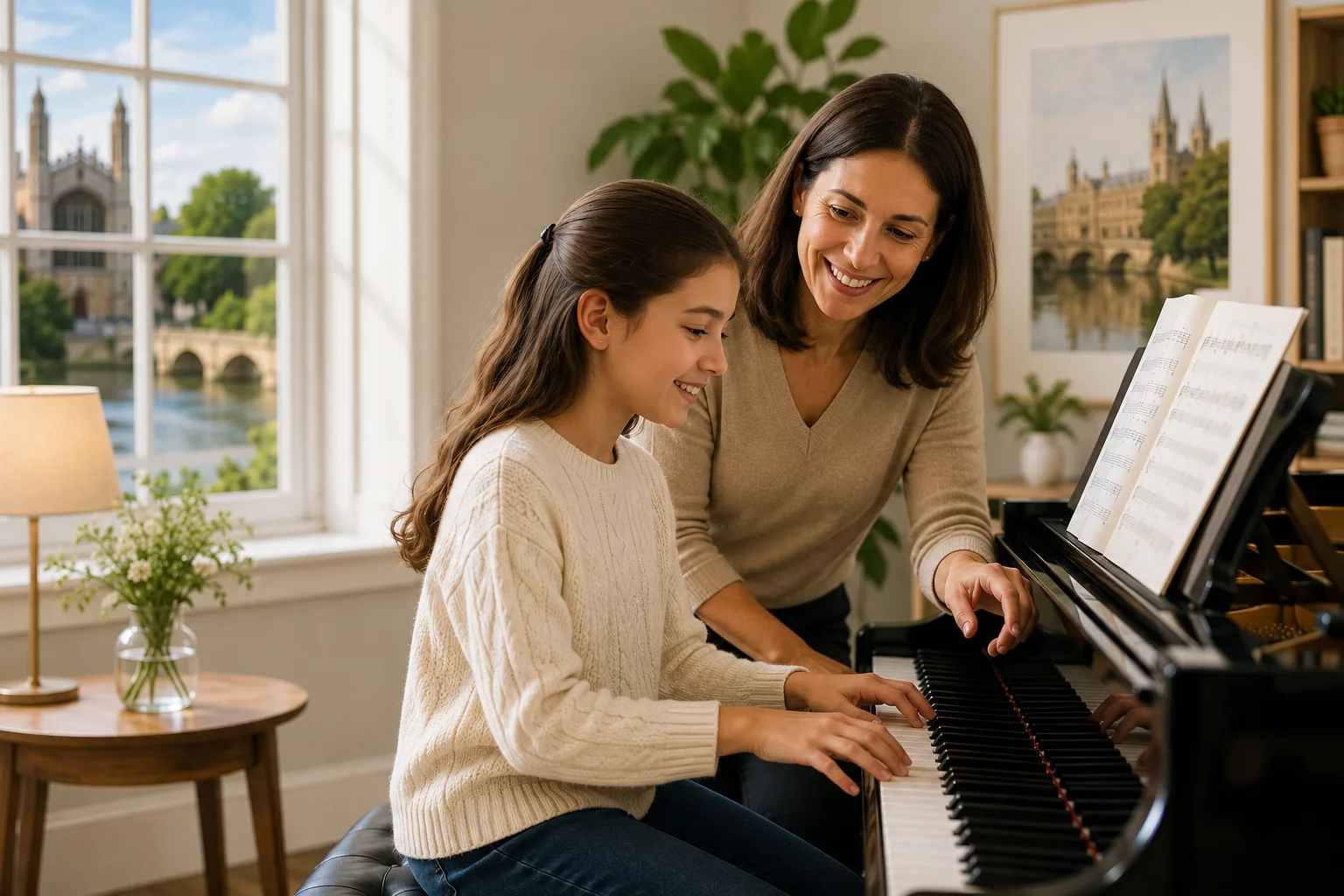
Private tuition tends to focus on individual progress. Students work through technical challenges, develop repertoire and receive personalised guidance from their teacher.
A summer music programme, by contrast, introduces a collaborative dimension.
Participants learn how their individual contribution fits within a wider musical group. They listen more closely, adapt more quickly and develop a stronger awareness of ensemble performance.
This shift can be surprisingly powerful.
A young violinist who has spent years practising alone may discover the excitement of performing in a chamber group. A singer accustomed to solo work might gain confidence through choir participation. A pianist could find new inspiration through accompanying other musicians.
These experiences often broaden a student's understanding of music itself.
They begin to appreciate not only how to perform, but how to communicate, collaborate and respond creatively to others.
The Confidence That Comes From Shared Performance
Performance can be intimidating at any age.
Even highly experienced musicians admit to feeling nervous before stepping onto a stage.
Summer music programmes provide frequent opportunities to perform in supportive settings. Rather than viewing performance as a test, students learn to see it as a shared experience.
This subtle change in perspective matters.
When young musicians perform alongside their peers, the focus shifts away from perfection. The emphasis becomes teamwork, preparation and collective achievement.
Many educators notice significant changes in students after intensive summer programmes. Children who were once reluctant to volunteer answers in class often return with greater self-assurance. Teenagers who struggled with confidence become more willing to take creative risks.
The confidence gained through music rarely stays within music.
It often influences communication skills, leadership abilities and social interactions long after the programme ends.
Creativity Flourishes in Immersive Environments
One of the challenges facing modern music education is the tendency to focus heavily on measurable outcomes.
Exams have value. Competitions can be motivating. Structured learning certainly has its place.
Creativity, however, does not always thrive under constant assessment.
Many summer programmes deliberately create opportunities for exploration. Students may experiment with songwriting, improvisation, composition, music production or collaborative projects that fall outside traditional curricula.
The results can be remarkable.
A student who has spent years mastering classical repertoire may discover a passion for jazz improvisation. Another might uncover a talent for composing original music.
These discoveries often reignite enthusiasm for learning and remind young musicians why they fell in love with music in the first place.
The Social and Emotional Benefits of Music Programmes
Parents often enrol children in music activities hoping to improve their technical ability. While that certainly happens, many are surprised by the wider benefits.
Music is inherently social.
Successful performance requires listening, empathy and cooperation. Young people learn how to contribute to a group while respecting the contributions of others.
For some participants, the friendships formed during a summer programme become just as significant as the musical development itself.
This can be especially meaningful for children who feel isolated in their musical interests. Spending time with peers who share similar passions creates a sense of belonging that is difficult to replicate elsewhere.
There is also growing recognition of music's role in supporting emotional well-being. Organisations such as Chorus Music Therapy and Education have helped highlight the ways music can encourage communication, self-expression and positive emotional development in educational settings.
The strongest programmes understand that musical growth and personal growth are often closely connected.
What Parents Should Look for in Summer Music Camp 2026
As families begin researching Summer Music Camp 2026, it is worth looking beyond promotional materials and focusing on the overall experience being offered.
A few useful questions include:
- Does the programme welcome a range of skill levels?
- Are there opportunities for collaborative performance?
- Is creativity encouraged alongside technical development?
- What level of pastoral support is available?
- Are instructors experienced educators as well as performers?
Does the programme balance challenge with enjoyment?
The best music programmes are rarely those that promise the fastest results.
Instead, they create an environment where young people feel inspired to learn, experiment and connect with others through music.
Those are often the experiences that leave the deepest impression.
A high-quality summer music programme offers far more than additional practice time during the school holidays.
It gives young musicians the chance to develop confidence, creativity, resilience and meaningful social connections while strengthening their musical skills. These experiences often become defining moments in a young person's artistic journey.
As interest in Summer Music Camp 2026 continues to grow, parents and educators may find that the most valuable outcomes are not always the ones listed on a certificate. Sometimes they are the friendships formed, the confidence gained and the lifelong enthusiasm for music that develops along the way.
FAQs
What is a summer music programme?
A summer music programme is a structured educational experience that allows young musicians to develop their skills through workshops, rehearsals, performances and collaborative learning during school holidays.
Who can attend a summer music programme?
Most programmes cater to a variety of ages and experience levels, from beginners to advanced students.
How does a summer music camp help young musicians?
Music camps support technical development while also encouraging creativity, teamwork, confidence and social growth.
Is Summer Music Camp 2026 suitable for beginners?
Many programmes welcome beginners and provide age-appropriate instruction. Entry requirements vary depending on the organiser.
What should parents consider when choosing a music programme?
Parents should consider teaching quality, programme structure, performance opportunities, student support and whether the environment encourages both learning and enjoyment.