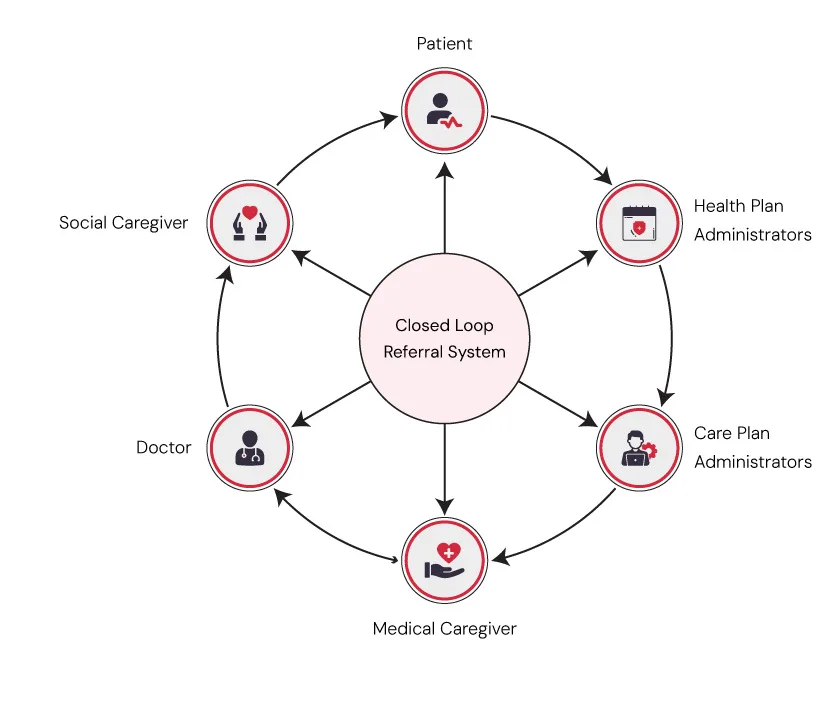
Organizations dedicated to improving community well-being often face a common challenge: knowing whether referred individuals actually receive assistance. Sending someone to another provider is only the beginning of the journey. The true measure of success lies in confirmed service delivery and documented outcomes. A Closed Loop Referral System enables organizations to move beyond referral creation and focus on referral completion. By connecting participating agencies through a centralized platform, referrals become transparent, measurable, and actionable. Instead of operating within isolated workflows, healthcare providers, nonprofits, social service agencies, and community partners gain the ability to collaborate around shared goals. This coordinated framework helps organizations improve responsiveness, increase visibility, and create stronger support pathways for individuals seeking essential resources.
The Cost of Untracked Referrals
When referrals disappear into disconnected systems, organizations lose opportunities to deliver effective support. Staff may spend considerable time making phone calls, sending emails, or searching for updates regarding client progress. Even with these efforts, obtaining accurate information can remain difficult.
Untracked referrals contribute to delayed interventions, missed appointments, duplicated efforts, and inconsistent communication among providers. These inefficiencies can affect organizational performance while also creating frustration for clients who are attempting to navigate complex service environments.
A referral process without outcome visibility limits the ability to measure success. Organizations may know how many referrals were initiated but remain uncertain about how many resulted in meaningful assistance. This information gap can hinder planning, reporting, and quality improvement efforts.
Building a Referral Ecosystem Rather Than a Referral List
Many organizations maintain extensive directories of community resources. While resource directories are valuable, they do not automatically create coordinated service delivery.
A Closed Loop Referral System establishes an active ecosystem where organizations participate in collaborative workflows rather than simply appearing in a contact database. Service providers can receive referrals, communicate updates, confirm engagement, and document outcomes within a shared environment.
This interconnected approach fosters stronger relationships among participating agencies. Every referral becomes part of a coordinated process that prioritizes accountability and communication. Instead of functioning independently, organizations become contributors to a larger support network focused on collective impact.
Creating Transparency Throughout Every Referral Stage
Transparency is essential when multiple organizations contribute to an individual's care journey. Without visibility into referral progress, stakeholders may struggle to identify delays or determine next steps.
Closed-loop workflows introduce transparency by allowing authorized participants to view referral status changes in real time. Whether a referral is pending review, accepted, scheduled, completed, or requires additional action, stakeholders remain informed throughout the process.
This visibility reduces uncertainty and enables faster responses when challenges emerge. Teams can address obstacles before they escalate, helping ensure that individuals receive services without unnecessary interruptions.
Improving Resource Utilization Across Communities
Communities often possess valuable resources that remain underutilized due to communication barriers and fragmented referral practices. Providers may be unaware of available services, resulting in missed opportunities to connect individuals with appropriate support.
A Closed Loop Referral System improves resource utilization by helping organizations discover, access, and coordinate services more effectively. Referrals can be directed toward providers with relevant expertise, capacity, and availability.
This enhanced coordination strengthens the overall efficiency of community support networks. Organizations gain greater awareness of local resources while reducing duplication of effort and improving service accessibility for clients.
Strengthening Trust Between Partner Organizations
Effective collaboration depends upon trust. Organizations are more likely to participate in referral networks when they have confidence that referrals will be managed responsibly and communication will remain consistent.
Closed-loop referral technology supports trust-building by creating clear expectations regarding referral handling and outcome reporting. Participating agencies can track progress, share updates, and maintain accountability through documented workflows.
As organizations experience successful collaboration, partnerships often become stronger and more productive. Increased trust can lead to expanded referral relationships, broader service networks, and greater community impact over time.
Delivering More Meaningful Client Experiences
Individuals seeking assistance frequently encounter challenges that require support from multiple organizations. Navigating these systems independently can be overwhelming, particularly during periods of crisis or instability.
A coordinated referral framework reduces this burden by enabling organizations to work together more effectively. Clients benefit from smoother transitions between services, fewer communication barriers, and more consistent follow-up.
When organizations remain connected throughout the referral lifecycle, clients are less likely to encounter gaps in support. This continuity contributes to better experiences and increases the likelihood that individuals will successfully access needed resources.
Generating Actionable Operational Intelligence
Modern organizations rely on data to guide decision-making and evaluate program effectiveness. Referral activity generates valuable information that can reveal strengths, weaknesses, and opportunities within service networks.
A Closed Loop Referral System captures referral metrics that support operational analysis. Organizations can evaluate referral volume, response times, service completion rates, and partnership performance using accurate, real-time information.
These insights help leaders identify trends, allocate resources strategically, and implement targeted improvements. Data-driven management supports stronger outcomes while enabling organizations to demonstrate measurable value to stakeholders and funding partners.
Supporting Community-Wide Coordination Efforts
Complex social and healthcare challenges often require coordinated responses from multiple sectors. Housing agencies, healthcare providers, educational institutions, nonprofit organizations, and government entities may all contribute to addressing community needs.
Closed-loop referral technology provides a shared infrastructure that supports community-wide coordination. Organizations can work collectively while maintaining their individual missions and operational independence.
This collaborative model encourages information sharing, strengthens referral pathways, and enhances the community's ability to respond to evolving challenges. As participation grows, networks become more resilient and capable of supporting diverse populations.
Creating Sustainable Pathways to Better Outcomes
Sustainable impact requires more than good intentions. Organizations need systems that support consistent execution, measurable accountability, and continuous improvement.
A Closed Loop Referral System delivers these capabilities by transforming referral management into a structured, outcome-focused process. Every referral becomes traceable, every interaction becomes measurable, and every partnership becomes more collaborative.
By connecting organizations through transparent workflows and shared accountability, communities can create stronger pathways to care, support, and opportunity. The result is a more responsive service ecosystem where individuals receive timely assistance and organizations gain the tools necessary to maximize their impact.
As expectations for coordination and outcome measurement continue to increase, closed-loop referral strategies will become an essential component of effective service delivery. Organizations that invest in these capabilities position themselves to build stronger partnerships, improve operational performance, and create lasting positive change throughout the communities they serve.