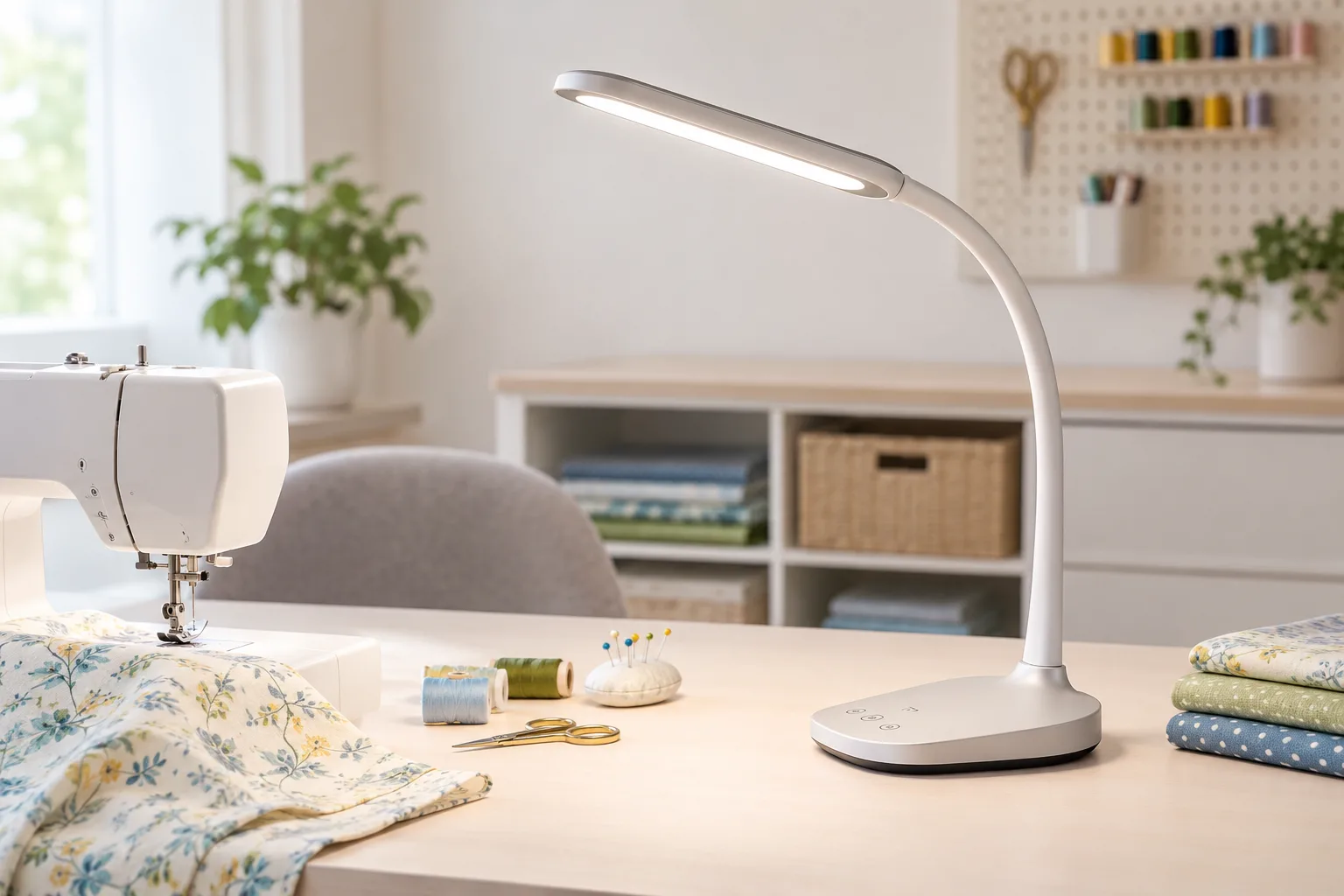
If your sewing table doubles as a dining table, or your machine shares a desk with a laptop, you know the struggle: every inch of surface counts. A bulky lamp base steals space from your fabric, your pattern and your cutting mat.
That is why more sewists are turning to the clamp on LED work light. It grips the edge of your table, lifts the lamp off your work surface and puts bright light right where you need it. Here is how to decide whether it is the best sewing light for your setup.
What Is a Clamp On LED Work Light?
A clamp on LED work light attaches to the edge of a table, desk, shelf or workbench with a built-in clamp. A flexible neck lets you aim the light at your work. Because there is no base sitting on the surface, you keep every inch for your project.
LED technology adds more benefits. LEDs use little power, produce little heat and last for years, so you are not replacing bulbs or sweating under a hot lamp.
Why Clamp Lights Suit Sewing
They free up your workspaceSewing needs room for the machine, pedal, pattern pieces, thread and notions. A clamp light takes none of it.
They stay putMachines vibrate, and tables get bumped. A firmly clamped lamp holds its position better than a lightweight lamp that slides around.
They aim preciselyA flexible neck lets you direct light at the needle plate from the side, which avoids the shadow your own hand would cast under a lamp placed in front of you.
They work on many surfacesSewing tables, cutting tables, shelves and some craft stands can all host a clamp light, as long as the edge is the right thickness.
What Makes the Best Sewing Light?
Whatever style you choose, look for these five qualities:
- Adjustable color temperature. Cool light helps with color matching and detail, while warm light is gentler in the evening.
- Dimmable brightness. Different tasks and times of day need different levels, and dimming reduces glare on glossy thread.
- A flexible neck that holds its position. It should stay where you point it.
- Low heat. Cool-running LEDs keep long sessions comfortable.
- Long-lasting LEDs. Avoid lamps that need frequent bulb changes.
Meet the Stella Edge: A Clamp On LED Work Light for Crafters
The Stella Edge from Stella Lighting is a clamp on LED work light built with these qualities in mind. According to retailer and manufacturer listings:
FeatureDetailsClamp rangeRoughly 0.5 to 2.5 inches thickLight colorsWarm, pure white and cool (Tri-Spectrum)Dimming5 levels, down to about 10% of maximum outputNeckFlexible steelRemoteWireless, magnetically attaches to the basePowerAround 10 watts, with minimal heatLEDsRated for 50,000+ hoursWarranty2 years, per one retailer listingThe remote is a handy touch for sewists. You can change brightness or color without reaching over your work, and the magnet keeps it from getting lost in a pile of fabric.
Specifications and prices vary by retailer and model year, so check the official Stella Lighting website before you buy.
When a Clamp Light Is Not the Right Choice
A clamp on LED work light is not perfect for everyone. Consider these limits:
- It needs a suitable edge. Very thick tabletops, glass or unusual surfaces may not work, so measure first.
- It is corded. Retailers describe the Stella Edge as a corded light with a cordless remote, so you need an outlet within reach.
- It is not portable. If you move your sewing between rooms, a rechargeable lamp may suit you better.
Stella Lighting’s other lamps fill those gaps. The Stella Two is a plug-in task lamp with a weighted base, three light colors and 10 dimming levels, which is a good fit for a permanent sewing station. The Stella Go is a rechargeable lamp rated for up to about 11 hours per charge and charges wirelessly on a Qi pad, which suits sewists who move around or take classes.
Which Is Best for You?
Your situationGood fitSmall table, little surface spaceStella Edge (clamp)One permanent sewing station, plenty of roomStella Two (plug-in)Move between rooms or attend classesStella Go (rechargeable)Plenty of sewists use two lamps. One reviewer on a retail listing keeps one Stella at the sewing table and another by a favorite chair.
How to Set Up a Clamp Light for Sewing
- Clamp it on the side opposite your dominant hand. If you guide fabric with your right hand, mount the lamp on the left.
- Position the head slightly above and beside the needle. This lights the needle plate without casting shadows.
- Angle the beam from the side to reduce glare on shiny thread and pale fabric.
- Pick the color for the task. Use cool white for color matching and warm white for relaxed stitching.
- Start at medium brightness and raise it only if you still squint.
- Tidy the cord. Route it along the table edge so it never tangles with your foot pedal.
- Take breaks. Look away from close work every 20 minutes or so.
Frequently Asked Questions
What is a clamp on LED work light?It is an LED lamp that attaches to a table or desk edge with a clamp, freeing up surface space while giving flexible, focused light.
Is a clamp light the best sewing light?
It can be, especially for small tables. The best sewing light depends on your space, whether you need portability and how much adjustment you want.
How thick a surface can the Stella Edge clamp onto?
Retailer listings say about 0.5 to 2.5 inches.
What color temperature is best for sewing?
Most sewists prefer neutral to cool light, around 4000K to 5500K, for accurate colors and fine detail. Warm light is more comfortable in the evening.
Do LED clamp lights get hot?
LEDs produce very little heat compared with halogen or incandescent lamps, so they stay comfortable during long sessions.
Final Thoughts
When table space is tight, a clamp on LED work light is hard to beat. It keeps your workspace clear, holds steady, aims exactly where you need it and runs cool for years. For many sewists that makes it the best sewing light for their setup.
Check your table edge, choose adjustable color and dimming, and set the lamp opposite your dominant hand. Your eyes, and your seams, will thank you.