Portable audio has changed dramatically over the years. Buyers no longer want to choose between a compact speaker that is easy to carry and a powerful system capable of delivering serious sound outdoors. Today, advances in cabinet engineering, wireless technology, battery design, and audio components are creating new possibilities for portable listening.
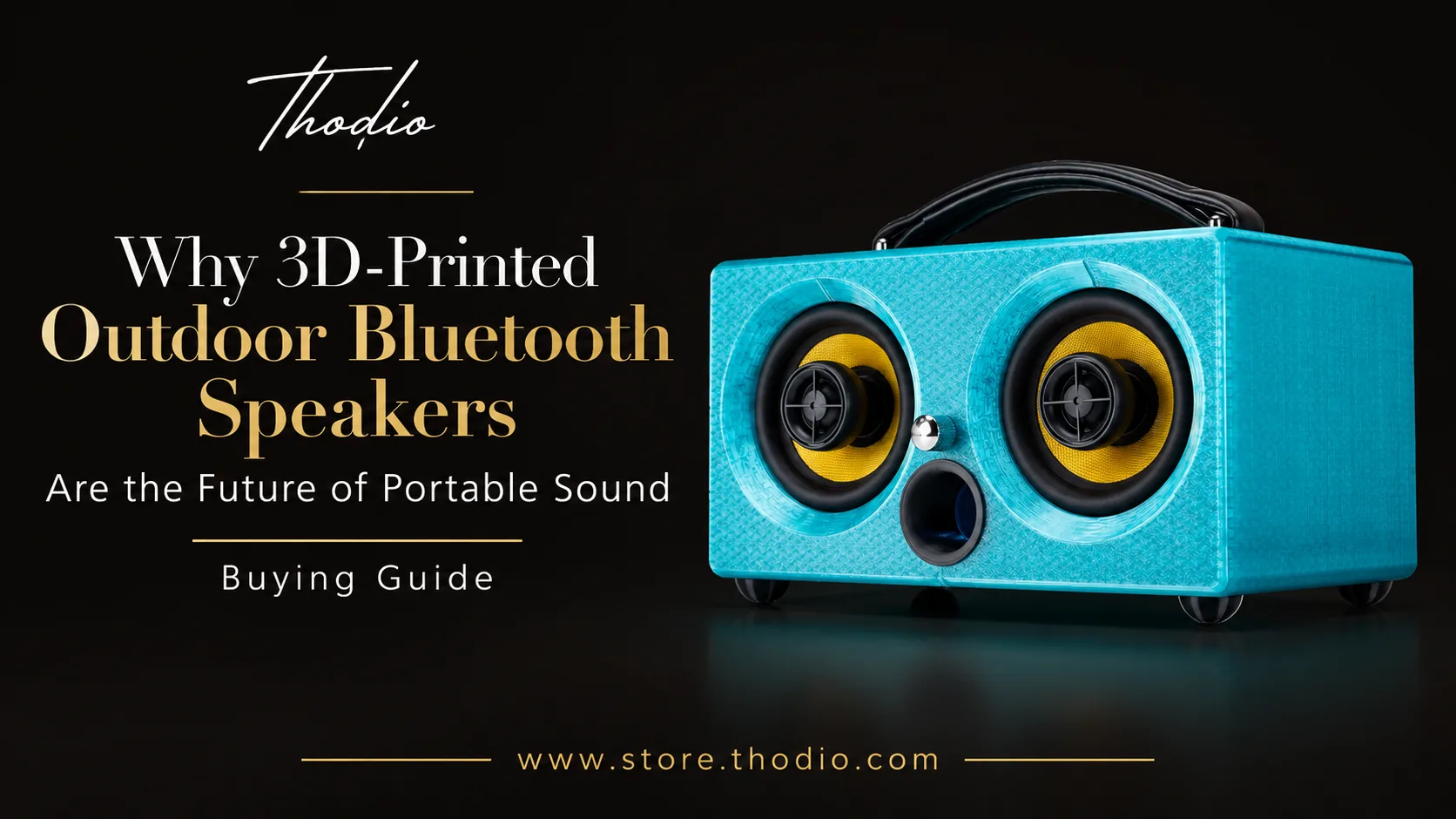
An Outdoor 3D Printed Bluetooth Speaker represents one of the more interesting developments in this space. Rather than relying entirely on conventional mass-produced enclosures, 3D printing allows manufacturers to explore more complex cabinet structures while combining portability with distinctive design.
For people who enjoy road trips, camping, workshops, off-road adventures, outdoor gatherings, or simply powerful music in the garden, understanding what makes a speaker suitable for outdoor use is essential. This buying guide explains what to look for before choosing one.
Why Are 3D Printed Speakers Changing Portable Audio?
The speaker cabinet plays an important role in overall audio performance. It is not simply a protective box around the drivers and electronics.
Cabinet size, internal structure, airflow, rigidity, and acoustic tuning can all influence how a speaker performs. Traditional manufacturing methods may limit the shapes and internal structures that can be produced efficiently.
3D printing offers more flexibility.
A carefully designed 3D-printed speaker cabinet can incorporate complex internal structures that would be difficult to create using conventional manufacturing methods. This allows manufacturers to experiment with enclosure design while keeping portability in mind.
Thodio applies this approach to its iBox Mini 3D, using its PhantomVolume™ Lattice Engineering to create micro-chambers within the cabinet structure. The goal is to increase the speaker’s effective acoustic volume beyond its external footprint and support deeper bass from a compact design.
However, 3D printing alone does not guarantee better sound. The technology becomes valuable when combined with proper acoustic engineering, quality drivers, capable amplification, and careful tuning.
What Should You Look for in an Outdoor Bluetooth Speaker?
Outdoor listening places different demands on a speaker than quiet indoor listening.
When comparing options, consider these important factors.
Sound Output and Audio Quality
Outdoor environments do not provide the natural acoustic reinforcement of a small room. Sound has more space to disperse, and background noise can compete with your music.
Look beyond marketing claims and consider:
- Amplifier capability
- Driver quality
- Bass performance
- Maximum output
- Sound clarity at higher volumes
- Available equalizer settings
Thodio’s current iBox Mini 3D range features a 320-watt audio system and multiple EQ presets, including an outdoor-focused setting.
For buyers who enjoy large outdoor spaces, workshops, campsites, or gatherings, the ability to adjust the sound for the environment can be more useful than simply choosing the smallest speaker available.
Portability Without Sacrificing Performance
A portable speaker should be practical to move, but portability does not always mean pocket-sized.
For many outdoor enthusiasts, a speaker that can travel in a vehicle, sit securely at a campsite, move around a workshop, or be carried into the garden is more useful than an ultra-small speaker with limited output.
The right balance depends on how you plan to use it.
Ask yourself:
- Will you carry it by hand regularly?
- Will it travel in a car or truck?
- Do you need sound for a small group or a larger outdoor area?
- Is battery life more important than minimum weight?
- Will you use it indoors as well as outdoors?
A larger portable speaker may provide stronger bass and greater output, while a smaller model may be easier to transport.
Battery Life for Real Outdoor Use
Battery life becomes particularly important when power outlets are not nearby.
Some premium portable speakers also offer replaceable or upgradeable battery systems. Thodio offers battery configurations ranging from 34 to 102 hours on compatible products, depending on the selected battery pack and product configuration.
A modular battery system can provide another advantage: when a battery eventually reaches the end of its usable life, replacing that component may be more practical than replacing the entire speaker.
Build Quality and Outdoor Durability
Outdoor use requires more attention to construction.
A speaker may encounter dust, accidental knocks, changing temperatures, travel, or occasional rain exposure. Buyers should carefully check the manufacturer’s specifications instead of assuming every rugged-looking speaker is fully waterproof.
For example, Thodio’s A-BOX speakers use genuine .50 CAL ammo cans and are designed for demanding environments, but the company specifically notes that they are not tested to a specific IP rating.
That distinction matters.
When comparing outdoor speakers, look for clear information about:
- Water resistance
- Dust resistance
- Impact protection
- Materials
- Handle and carry design
- Warranty
- Repair options
A good buying decision should be based on documented capabilities rather than appearance alone.
Wireless Range and Connectivity
A wireless 3D-printed speaker should provide more than basic Bluetooth convenience.
Reliable connectivity becomes particularly important outdoors, where the listener may move around more freely.
Consider whether you need:
- Bluetooth connectivity
- Extended wireless range
- AUX input
- Wi-Fi streamingStereo pairing
- Multi-speaker capability
Thodio’s current speaker technology includes Bluetooth connectivity, while selected configurations offer Wi-Fi and additional connection options. The company also offers True Wireless Stereo functionality for pairing compatible speakers.
Choose connectivity based on your actual listening habits rather than paying for features you are unlikely to use.
3D Printed Speaker vs Conventional Portable Speaker
FeatureConventional Portable Speaker3D Printed Speaker ApproachCabinet designUsually standardizedGreater design flexibilityInternal structureConventional constructionCan include complex internal geometryAppearanceOften mass-producedMore distinctive and customizablePortabilityAvailable in many sizesCan combine compact design with acoustic engineeringManufacturingOften large-scale productionSuitable for more specialized designsRepairabilityVaries significantlyDepends on manufacturer designLong-term valueOften replacement-focusedCan support modular design when engineered accordingly
The most important takeaway is that neither construction method automatically makes one speaker superior.
The quality of engineering matters more than the manufacturing technology alone.
Why Long-Term Ownership Is Becoming More Important
Many modern consumer electronics are designed to be replaced rather than repaired.
For premium audio buyers, this approach is increasingly less attractive.
A well-built speaker may remain useful for years when key components can be serviced, upgraded, or replaced. Thodio states that it services, repairs, and restores speakers it has built since 2005, supporting a longer-term ownership approach.
This can be particularly appealing to buyers who see a premium speaker as an investment rather than a short-term accessory.
Who Should Consider a 3D Printed Outdoor Speaker?
A 3D-printed portable speaker may be particularly relevant for people who value both performance and individuality.
It can suit:
- Audiophiles looking for powerful portable sound
- Off-road and vehicle enthusiasts
- Camping and outdoor adventure enthusiasts
- Entrepreneurs and professionals who enjoy premium technology
- Workshop and garage users
- Music lovers who want a distinctive alternative to generic speakers
- Buyers interested in craftsmanship and long-term ownership
For these users, the appeal extends beyond Bluetooth connectivity. It includes design, sound performance, portability, and how well the speaker fits into their lifestyle.
Why Thodio Fits This Category
Thodio combines modern speaker technology with a strong emphasis on distinctive craftsmanship.
Handbuilt in the Netherlands since 2005, the company offers portable speakers ranging from genuine ammo-can designs to bamboo and modern 3D-printed speaker cabinets. Its current range emphasizes powerful sound, modular battery options, repairability, and distinctive visual design.
The iBox Mini 3D demonstrates how 3D printing can be used as part of a broader audio design rather than simply as a decorative feature.
For outdoor users, Thodio also offers rugged A-BOX models designed around genuine .50 CAL ammo cans, providing another option for buyers who prioritize a more industrial, adventure-ready format.
Final Thoughts
The future of portable sound is not simply about making speakers smaller. It is about creating products that better balance portability, audio performance, durability, connectivity, and long-term ownership.
An Outdoor 3D Printed Bluetooth Speaker can represent an exciting step in that direction when advanced cabinet design is combined with quality audio engineering.
For buyers who want powerful sound for the garden, workshop, road, campsite, or outdoor adventure, the best choice should be based on real-world needs. Consider where you will listen, how long you need the battery to last, how much sound you require, and whether the speaker is built to remain useful for years.
Thodio’s combination of Dutch craftsmanship, modern 3D-printed engineering, rugged portable speaker designs, and repairable construction offers a distinctive alternative for listeners who want more from portable audio than another disposable Bluetooth speaker.
Frequently Asked Questions
Q: Are 3D-printed Bluetooth speakers good for outdoor use?
A: They can be, provided the speaker is properly engineered for portability and the intended environment. Buyers should check build quality, weather resistance, battery life, and manufacturer specifications before using any speaker outdoors.
Q: Does a 3D printed speaker sound better than a traditional speaker?
A: Not automatically. Sound quality depends on the complete design, including the cabinet, drivers, amplifier, tuning, and acoustic engineering. 3D printing mainly provides additional flexibility in cabinet design.
Q: What should I look for in an outdoor portable speaker?
A: Focus on sound output, battery life, portability, build quality, weather protection, connectivity, warranty, and repairability.
Q: Can a portable speaker produce powerful outdoor sound?
A: Yes. Larger drivers, capable amplification, and well-designed enclosures can help portable speakers deliver substantial sound outdoors. The appropriate size depends on the listening environment and desired volume.
Q: Why choose Thodio for portable outdoor audio?
A: Thodio combines Dutch craftsmanship with distinctive speaker designs, powerful audio systems, modular features, and a long-term approach to repair and upgrades. Its range includes both rugged ammo-can speakers and modern 3D-printed designs.