By —Riya, student
I have a cousin who wanted to fly since he was twelve. He used to track flight paths on his phone the way other kids followed cricket scores. He took his Class 12 boards with Physics and Maths because he knew he needed them. He saved. He researched flight schools. And then, for three years straight, he kept saying the same thing every time aviation came up:
“I’ll start next year. The timing isn’t right yet.”
He said it in 2022. He said it in 2023. He said it in 2024.
He finally enrolled in Aviation Institute in Jaipur, early 2025 — and he keeps telling anyone who’ll listen that he wishes he hadn’t waited. Because the aviation sector in India right now is not quietly growing. It is accelerating at a pace the industry hasn’t seen in decades. And for anyone thinking about starting an aviation career, 2026 is not just a good time. It may be the most strategically sound window in a generation.
Here’s the real picture — without the brochure language.
The Numbers That Actually Matter
India crossed a threshold in 2024 that most people didn’t notice: it became the world’s third-largest aviation market, behind only the United States and China. Approximately 174 million passengers travelled from and within India — a number that was unthinkable a decade ago.
What followed was historic. Air India ordered 570 planes, including 470 in one order in 2023 and another 100 in late 2024, split between Airbus and Boeing. IndiGo itself has nearly 1,000 aircraft on order, including both narrow- and wide-body jets.
Those aircraft need pilots. A lot of them.
Forecasts suggest India will need 35,000–40,000 new pilots in the next decade, with at least 7,000 required by 2026. IndiGo alone is adding over 1,000 new pilots by the end of 2026, with fresh hiring rounds running every month.
This is not a rumor circulating at aviation academies. This is airlines publicly announcing batch intakes.
Why the Shortage Isn’t Going Away
Here’s the part that most aspirants don’t fully understand: the pilot gap in India is structural, not temporary.
India is witnessing a steady outflow of experienced pilots due to retirements and migration to foreign airlines. This is creating a noticeable shortage of skilled cockpit crew across domestic airlines.
At the same time, the government’s UDAN scheme has operationalised 625 routes connecting 90 airports, including 2 water aerodromes and 15 heliports across India. More airports, more routes, more cities connected by air — all of which feeds a demand that domestic training output has not yet caught up with.
Industry bodies estimate demand will outpace supply for at least the next 5–7 years, making this an exceptionally strong job market for qualified candidates.
When you start your aviation training in 2026, you finish into a job market that is already stretched thin at the qualified end.
What the Career Actually Looks Like
Let’s be direct about money, because that’s a real factor.
The average salary for a first officer in India is around ₹1.5 lakh per month, while a captain can earn up to ₹5 lakh per month. Experienced captains at full-service Indian carriers earn among the highest professional salaries in the country.
And the career doesn’t stay domestic. An Indian CPL with solid ratings and hours can open doors across Asia, the Middle East, and beyond. You are not limited to Indian skies.
There’s also an angle that doesn’t get said enough: this is a career that rewards people who start early. Every hour in the air, every DGCA exam cleared, every rating added is cumulative. The pilot who starts in 2026 is building the logbook hours that matter for captain eligibility in the mid-2030s — exactly when India’s fleet expansion will have created the most acute shortage of experienced commanders.
Starting now is not just about the first job. It’s about where that first job puts you ten years from now.
The Honest Side of the Conversation
Pilot training in India is expensive. The pathway from Class 12 to a Commercial Pilot License involves flying hours, DGCA ground exams across six subjects, medical clearances, and type ratings. It takes discipline and it takes time — typically 18 to 24 months for the core training before airline applications begin.
Fresh CPL holders often start with regional or instructor roles before mainline airline placement. Building 500–1,000 hours is typically required before top-line airline opportunities open up.
None of this is discouraging if you go in with accurate expectations. The people who struggle in aviation training are rarely the ones who found it difficult. They’re the ones who didn’t expect it to be difficult. The structure, the DGCA exam preparation, the ground school hours — these are not obstacles, they’re the foundation the rest of the career is built on.
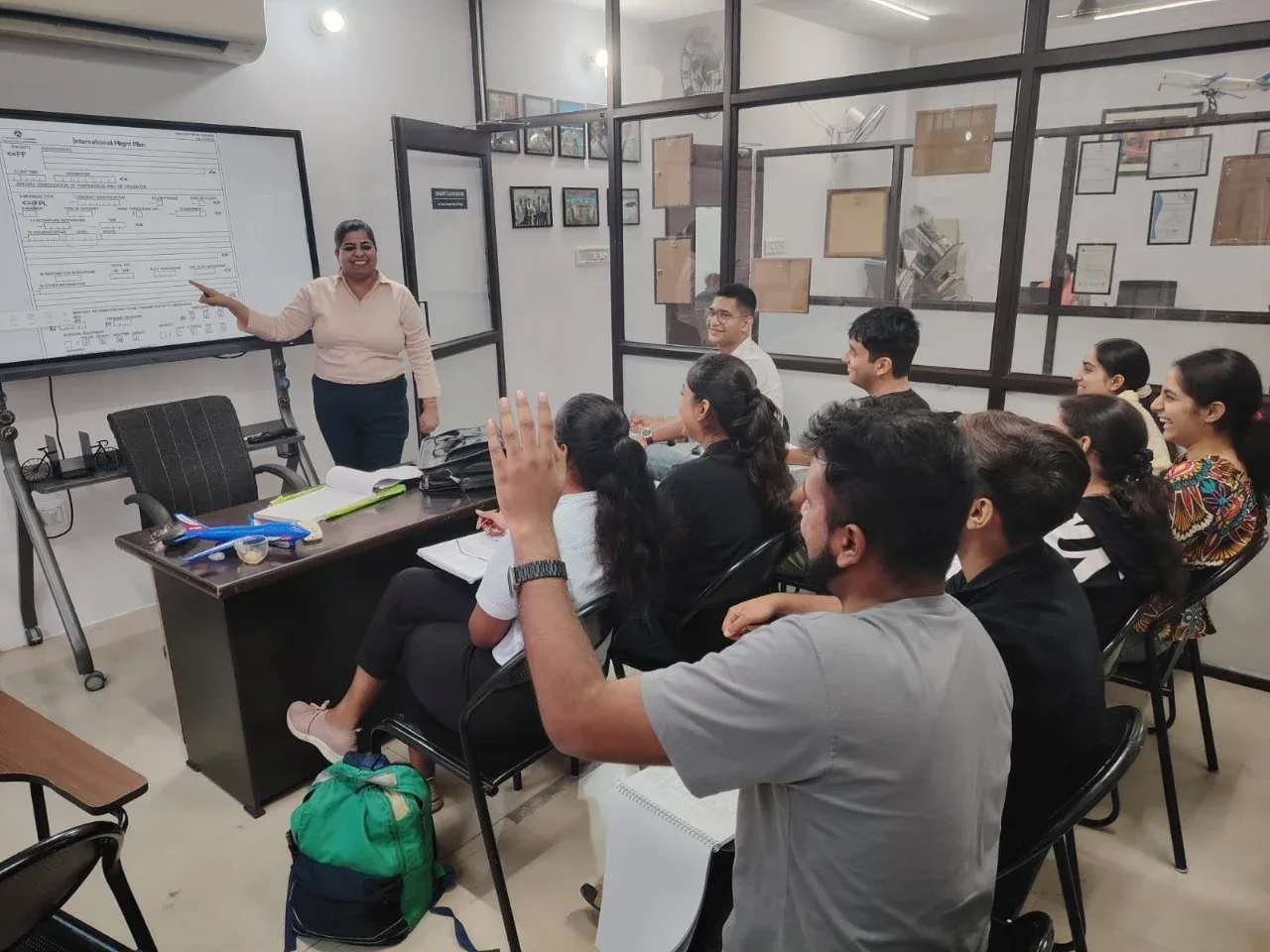
Choosing the right academy matters more than most aspirants initially realize. Faculty with actual airline experience, structured DGCA exam preparation, and transparent pathways from training to placement — these are the things worth asking hard questions about before you commit.
The Practical Starting Point
If you’re Class 12 with Physics and Maths, or you’ve already graduated and are weighing your options — the entry point to a professional aviation career in India has never been more clearly defined:
Get a DGCA Class 1 Medical done first. Before any other decision. It checks vision, cardiovascular health, and overall fitness. Do this before spending on anything else.
Research DGCA ground training seriously. The six DGCA subjects are the backbone of your CPL. How well they’re taught, and by whom, determines how smoothly the rest of the process goes.
Ask about placement outcomes, not just course offerings. Any serious aviation academy should be able to show you where its graduates are flying.
India’s aviation sector is on a trajectory that the numbers consistently describe in one direction: up. For new pilots, 2025–2035 represents a golden era — marked by high hiring, progressive opportunities, and industry transformation.
The window is genuinely open. The question is whether you step through it in 2026 or spend another year saying next year.
My cousin is flying now. He’s the first to admit the only thing he regrets is the waiting.
Learn more about DGCA ground training, CPL pathways, and aviation courses at skyreachaviation.org