
Introduction
When asking who ships embryo samples for IVF patients, the answer is usually a specialist fertility transport provider. Embryos require careful handling, suitable cryogenic equipment and detailed planning throughout their journey. Unlike ordinary parcels, they cannot simply be handed to a standard delivery company. Specialist providers work closely with fertility clinics to coordinate collection, transportation and delivery. The process may involve several teams, particularly when embryos travel between cities or countries. Understanding how the service works can help clinics and patients feel more prepared. It also explains why choosing an experienced transport provider matters when valuable reproductive material needs to be moved.
Who Ships Embryos for IVF Patients?
So, who ships embryo samples when an IVF patient needs them transferred? Specialist medical couriers and fertility transport companies commonly manage the physical journey. They work alongside the sending clinic and the receiving fertility facility to coordinate the shipment. The clinic usually prepares the embryos and confirms the information required for transportation. The courier then manages collection and delivery using equipment designed for cryogenic materials. The receiving clinic also needs to confirm that it can accept the shipment when it arrives. This shared responsibility helps keep the process organised from beginning to end. It also means patients are not expected to arrange specialist transportation themselves.
Why IVF Embryo Shipping Needs Specialist Handling
IVF embryo shipping is different from sending conventional medical materials because embryos are generally preserved under cryogenic conditions. Their transport therefore requires appropriate containers, careful handling and suitable procedures throughout the journey. The route also needs to be considered before collection, particularly if the shipment involves airports, international borders or several transport stages. A specialist provider understands the practical requirements involved and can coordinate the journey around the clinic's instructions. This can include arranging collection times, preparing transport equipment and communicating with the destination facility. Choosing a provider familiar with fertility materials can make the process more straightforward for everyone involved.
How Does Embryo Transport Work?
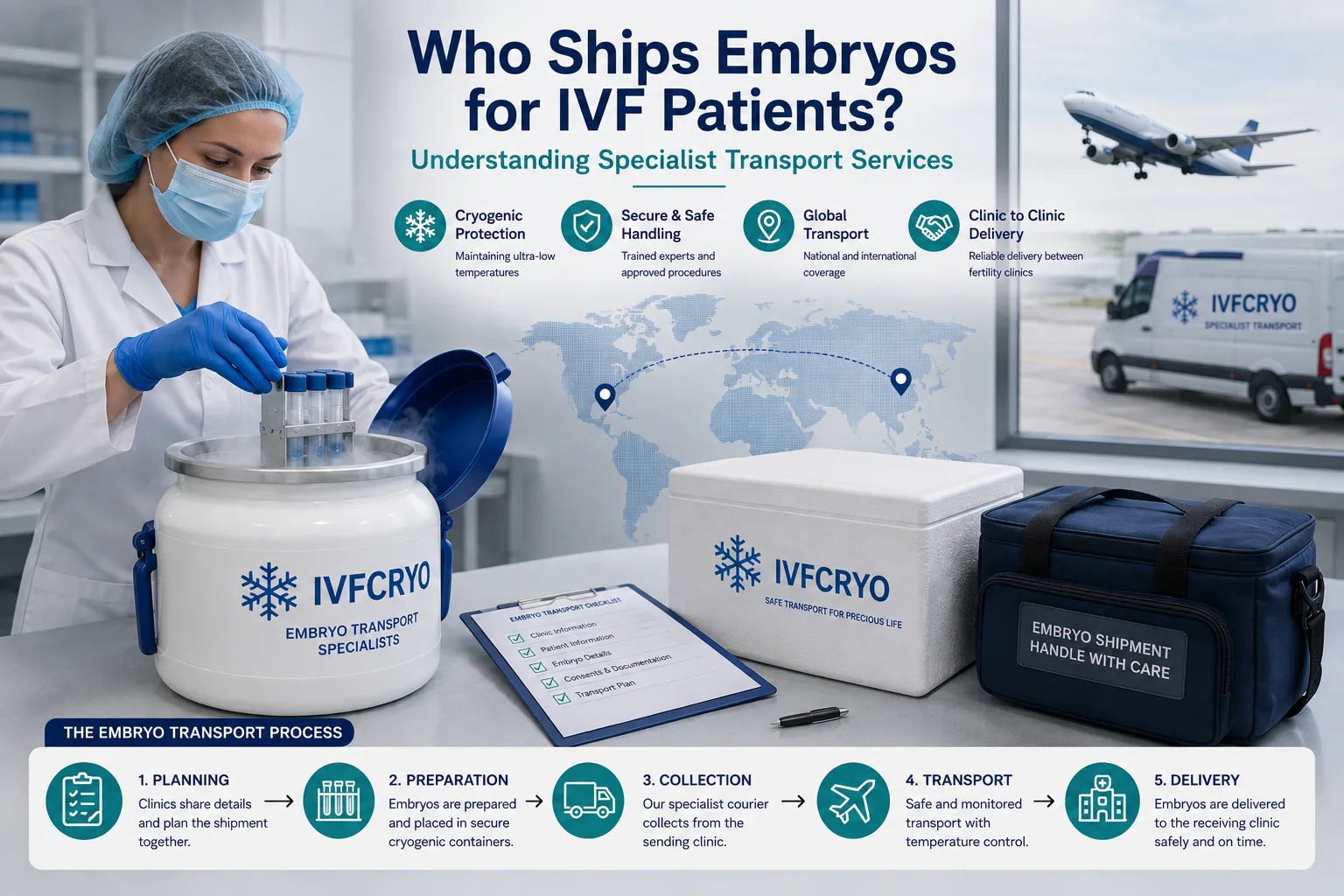
When a clinic needs to ship embryo samples, preparation normally begins before the planned collection date. The sending clinic confirms the destination, shipment details and relevant documentation with the transport provider. The embryos are then prepared according to the clinic's established procedures before being placed in suitable cryogenic shipping equipment. A trained courier collects the shipment and follows the agreed transport route. Depending on the service, tracking and monitoring systems may provide additional information during transit. The receiving clinic is informed about the planned arrival and prepares for handover. Once the shipment arrives, the embryos can be transferred into the receiving facility's appropriate storage arrangements.
What Is an Embryo Courier Service?
An embryo courier service is designed specifically to manage the transportation of reproductive material between approved facilities. The service typically involves more planning than a conventional courier journey because the material requires specialist handling. The courier needs to understand the importance of the shipment and follow procedures established for fertility-related transportation. Communication is also essential because the sending clinic, courier and receiving facility need to remain aligned. A specialist courier may coordinate road, air or international logistics depending on the destination. This makes the service particularly useful when patients need embryos transferred between different fertility clinics. Experience with reproductive materials can also help providers anticipate common logistical challenges.
Why Specialist Experience Matters
When a provider ships embryo samples, experience with fertility transportation can be an important consideration. Specialist teams understand that the shipment involves irreplaceable reproductive material and requires careful coordination. They can plan routes around collection and delivery requirements while maintaining communication with the clinics involved. Experience may become even more important for international journeys, where documentation and destination requirements can add complexity. Clinics should therefore look beyond general courier experience when choosing a provider. A company familiar with fertility logistics can explain the process clearly and answer questions before transportation begins. This can give clinics greater confidence that the practical details have been considered.
What Should You Look for in IVF Embryo Shipping?
Before arranging IVF embryo shipping, clinics should consider the provider's experience with reproductive tissue and cryogenic transportation. It is worth asking what type of shipping containers are used and how they are handled during transit. Clinics should also understand how collection and delivery are coordinated with both facilities. Monitoring capabilities may be another useful consideration, particularly for longer journeys. If embryos are travelling internationally, documentation, customs and destination requirements should be discussed before the shipment is booked. Clear communication should also be available if the journey changes unexpectedly. These questions can help clinics understand whether the provider offers a genuinely specialist service rather than a general courier solution.
Domestic and International Embryo Transport
The requirements for IVF embryo shipping can vary depending on the destination. A domestic transfer between two fertility clinics may involve a relatively straightforward route, while international transportation can require additional planning. Different countries may have specific requirements concerning reproductive material, documentation and import procedures. Flight schedules and border arrangements can also influence how the shipment is organised. A specialist transport provider can coordinate these practical considerations with the clinics involved. Starting the process early gives everyone more time to confirm the relevant requirements. It also reduces the likelihood of last-minute complications affecting the planned collection or delivery.
How Clinics and Patients Can Prepare
Good preparation can make it easier to ship embryo samples between fertility facilities. The sending clinic should confirm all shipment information before the courier arrives. The receiving clinic should also confirm that it is ready to accept the embryos at the expected time. Patients may need to provide or complete certain information depending on the circumstances of the transfer. Clinics should keep communication channels clear throughout the journey so that changes can be addressed quickly. It is also useful to understand who is responsible for each stage before transportation begins. Having these arrangements agreed in advance can make the process feel much more structured.
Questions to Ask Your Transport Provider
Before choosing an embryo courier service, clinics should ask about experience with IVF materials, cryogenic equipment and transportation procedures. It is also helpful to understand how the provider manages collection, transit and final delivery. For international journeys, ask about customs documentation and experience with cross-border fertility shipments. Clinics may also want to know how shipment updates are provided during transportation. Understanding the procedure for delays or unexpected route changes is equally important. Clear answers can help clinics compare providers and choose a service that suits their particular requirements. The aim is to establish a reliable process before the embryos leave the sending facility.
Conclusion
Understanding who ships embryo samples for IVF patients highlights the specialist nature of fertility transportation. The process involves more than simply moving a package between two addresses. It requires appropriate equipment, careful planning, experienced couriers and communication between fertility clinics. A specialist provider can help coordinate these elements while following the requirements of the shipment. For clinics arranging IVF embryo shipping, choosing an experienced provider can make the process easier to understand and manage. A dedicated embryo courier service can also provide practical support when embryos need to travel between domestic or international facilities. With careful preparation and specialist expertise, clinics can approach embryo transportation with greater confidence.