Outdoor camping has evolved dramatically over the years. While the idea of “roughing it” still appeals to some, many modern campers now bring with them a variety of electrically powered devices—from air pumps and electric cookers to laptops, heaters, and lighting systems. These comforts can transform a basic campsite into a highly functional, livable space. But with this convenience comes a responsibility to ensure safety, especially when running electrical connections in the unpredictable and often damp outdoors.
Among all the tools and accessories brought to the campgrounds, extension cords are some of the most frequently packed. But the cords themselves are only one part of a safe electrical setup. What protects the actual connections—especially where plugs meet in open air? What guards against water, dirt, pressure, or accidental disconnection from curious animals or careless footsteps?
That’s where the outdoor extension cord box comes in. It may not be as flashy as a camp stove or as memorable as a sleeping bag, but it is a quiet and essential player in the ecosystem of outdoor electricity. In fact, for any camper running power outside a tent, RV, or canopy, the extension cord cover box becomes the first line of defense against weather-induced short circuits, fire hazards, or ruined equipment.
But not all boxes are created equal. And for the camper aiming to blend reliability, compactness, and weatherproof protection, choosing the right outdoor extension cord cover box can be a decision that separates convenience from catastrophe.
This article dives into what makes a good extension cord box suitable for camping, the subtle engineering differences between models, and how specific designs perform in real-world conditions—from wet forests to dry deserts to windy coastlines. This is not just a product roundup—it’s a conversation about functionality, form, and why a small piece of gear can shape your entire camping experience.
The Role of an Outdoor Extension Cord Box at Camp
Picture a serene camping scene: a grassy clearing near a wooded trail, a tent set beneath a tree, and a portable power source—maybe a generator or power station—humming quietly nearby. You’ve run an extension cord from the power source to a cooking station under a tarp, another to the inside of the tent where string lights and a phone charger are connected. Everything’s perfect—until the weather turns.
A light drizzle turns into a steady rain. The air thickens with moisture, and the ground softens to mud. Suddenly, that exposed plug where two cords meet—once ignored—becomes a vulnerability. Water begins to collect around the connection. Dirt splashes up. Someone trips over the cord, tugging it. A simple, easily avoided danger is now looming.
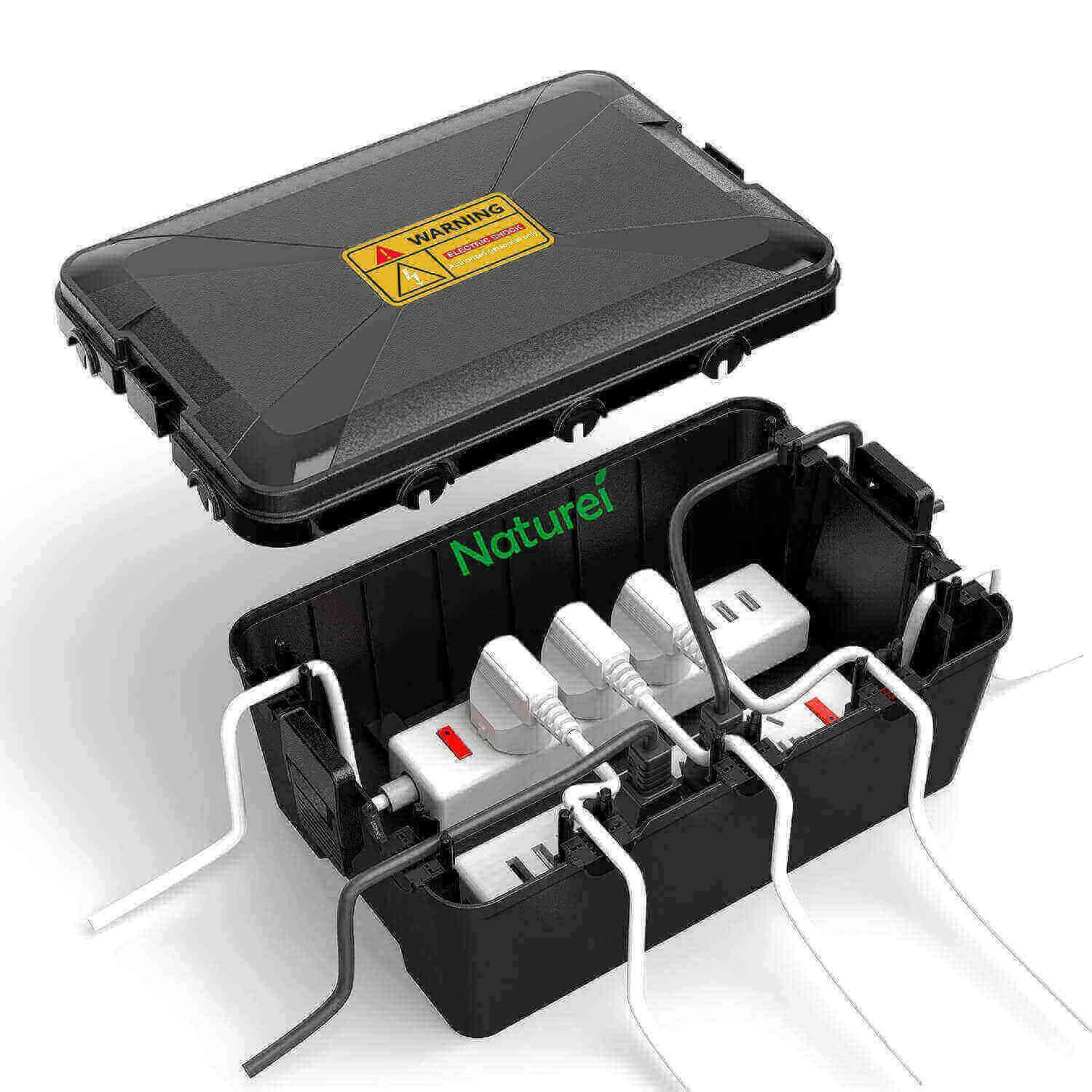
This is the exact scenario that a waterproof extension cord box is designed to prevent. The box’s job isn’t to power devices—it’s to preserve that power flow in spite of the outdoor environment. It shelters the plug from water ingress, shields it from dust, debris, and sand, locks the connection so it doesn’t easily detach, and absorbs minor impacts from feet, wheels, or tools.
It may seem like overkill on dry days, but the moment weather changes—or you camp on unfamiliar terrain—you realize just how central this simple product becomes. In a way, the outdoor extension cord cover box acts like a tent for your power connections: sheltering, stabilizing, and enabling the rest of your gear to do its job.
Design Matters: Why Every Curve, Lock, and Seal Counts
When choosing an outdoor extension cord box, it’s tempting to believe that any box-shaped product with a snap lid will suffice. But in practice, especially in rugged or wet camping environments, the design nuances make all the difference.
Take the shape, for example. Some boxes feature a flat rectangular build—easy to stow but sometimes lacking airflow. Others are rounded and elevated off the ground, helping prevent direct exposure to mud or pooling water. The best models balance stability with elevation, offering drainage channels or textured bottoms to keep water from accumulating.
The material is equally crucial. A high-grade outdoor waterproof extension cord box is usually made from reinforced polycarbonate or UV-treated plastic. These materials resist cracking, even in direct sun or cold mountain air. Soft plastics may deform under pressure, especially when exposed to repeated foot traffic or heat from long-use cords. The box must hold its shape—rain or shine—without becoming brittle over time.
Next comes the locking mechanism. In the field, a lid that “just closes” isn’t good enough. Campers need something that seals. Rubber gaskets, snap locks, double-latch systems, and silicone-lipped closures all play a role in ensuring water stays out—even during downpours. Some of the most reliable models adopt principles from marine-grade technology, using gasketed seals and screw-tight caps at the entry points to keep moisture out.
Cord access is another overlooked feature. Where cords enter and exit the box, there must be compression seals or flexible grommets to allow the box to close tightly around them. Loose or gaping entry points are practically invitations for water to seep in. The highest-performing boxes offer multiple entry points with adjustable openings—allowing you to connect different gauge cords or multiple lines without compromising the seal.
Real-Life Camping Conditions: Where Theory Meets Practice
Let’s say you’ve chosen a well-reviewed extension cord cover box and brought it along for a weekend in the woods. You set up your camp, link your cords, and place the box neatly between your tent and the power station. The forecast looks clear. But that night, an unexpected fog rolls in. By morning, everything is damp. If your box held up—no moisture inside, no shorted lights, no corroded contacts—you’ll barely think about it. That’s the sign of good gear: the kind you forget because it simply works.
But what if you camp near the coast? Salt air is more corrosive than fresh air, and your cords are exposed to mist every evening. Or maybe you're attending a desert festival, where high winds send sand particles flying. Here, the outdoor extension cord cover box isn’t just about waterproofing—it’s about sealing out fine particles, resisting wind stress, and staying put in loose terrain.
In these real-world conditions, the box must perform like a piece of safety equipment. You don’t want to wonder if the plug got wet. You don’t want to open the box only to find condensation inside. The best camping-compatible models are those that survive the elements without needing constant supervision.
Campers who travel regularly to high-humidity regions like the Pacific Northwest often note that traditional rubberized connection covers are no match for three days of mist and puddles. In these cases, multi-lock extension cord boxes—especially those with built-in moisture-trapping pads or drainage vents—are not a luxury, but a necessity.
The Balance Between Portability and Protection
A common challenge in outdoor waterproof extension cord box design is balancing rugged protection with practical portability. After all, campers typically pack light. Bulky gear is often left behind in favor of more essential items.
Manufacturers who understand this trade-off offer modular or foldable box designs. These might collapse into a flat form for easy storage, then expand on-site to enclose multiple cord ends. Others come with integrated handles, clip-on straps, or hanging hooks that allow the box to be suspended off the ground—particularly useful in marshy or insect-prone areas.
Still others emphasize stackability. In camps with multiple electrical stations (e.g., a cooking area, a media tent, and a sleeping space), having uniform-sized boxes that stack neatly means more organization and less mess. Some boxes even include built-in labels or color-coding systems, helping campers track which cords go where.
What’s important is that protection doesn't come at the cost of usability. If a box is too hard to open, too finicky to seal, or so heavy that it discourages use, it defeats the purpose. The best boxes are intuitive, forgiving, and reliable—especially when used under pressure or in the dark.
Why Every Camp Should Include an Extension Cord Cover Box
Some campers see the extension cord cover box as a secondary item—something nice to have but not mission-critical. This view often changes the moment they encounter their first wet connection, popped plug, or scorched wire end.
The truth is, whether you're connecting a single light or running an entire solar-powered cooking system, every power junction outside your tent needs protection. Even short exposure to moisture can cause corrosion. One night of dew can leave a plug buzzing and dangerous. One accidental step on an exposed cord can split the housing, leaving live metal exposed.
A single investment in a well-made outdoor extension cord box can prevent all of that. And not only does it keep people safe, but it extends the life of your cords, protects your electronics, and keeps your campsite orderly.
For families camping with children or pets, the box adds an extra layer of peace of mind. For RV travelers stringing lights from trees or plugging in refrigerators under tarps, it’s indispensable. And for the serious outdoorsperson committed to long-term gear, it's a natural companion to your power system.
Conclusion: A Small Tool with Big Impact
Camping is about connecting with nature—but that connection doesn’t have to come at the cost of comfort, safety, or convenience. As electricity becomes more integrated into outdoor life, the accessories we bring must evolve accordingly. And among those accessories, few are as quietly essential as the outdoor extension cord box.
The next time you head into the woods, along the river, or up the mountainside, think beyond just what needs power. Think about what protects that power. Whether it’s a foggy morning, a sudden storm, or a playful dog running through the site, your gear will thank you for thinking ahead.
So choose your extension cord cover box like you would choose your tent or stove: with an eye for quality, a mind for design, and a respect for the wild.