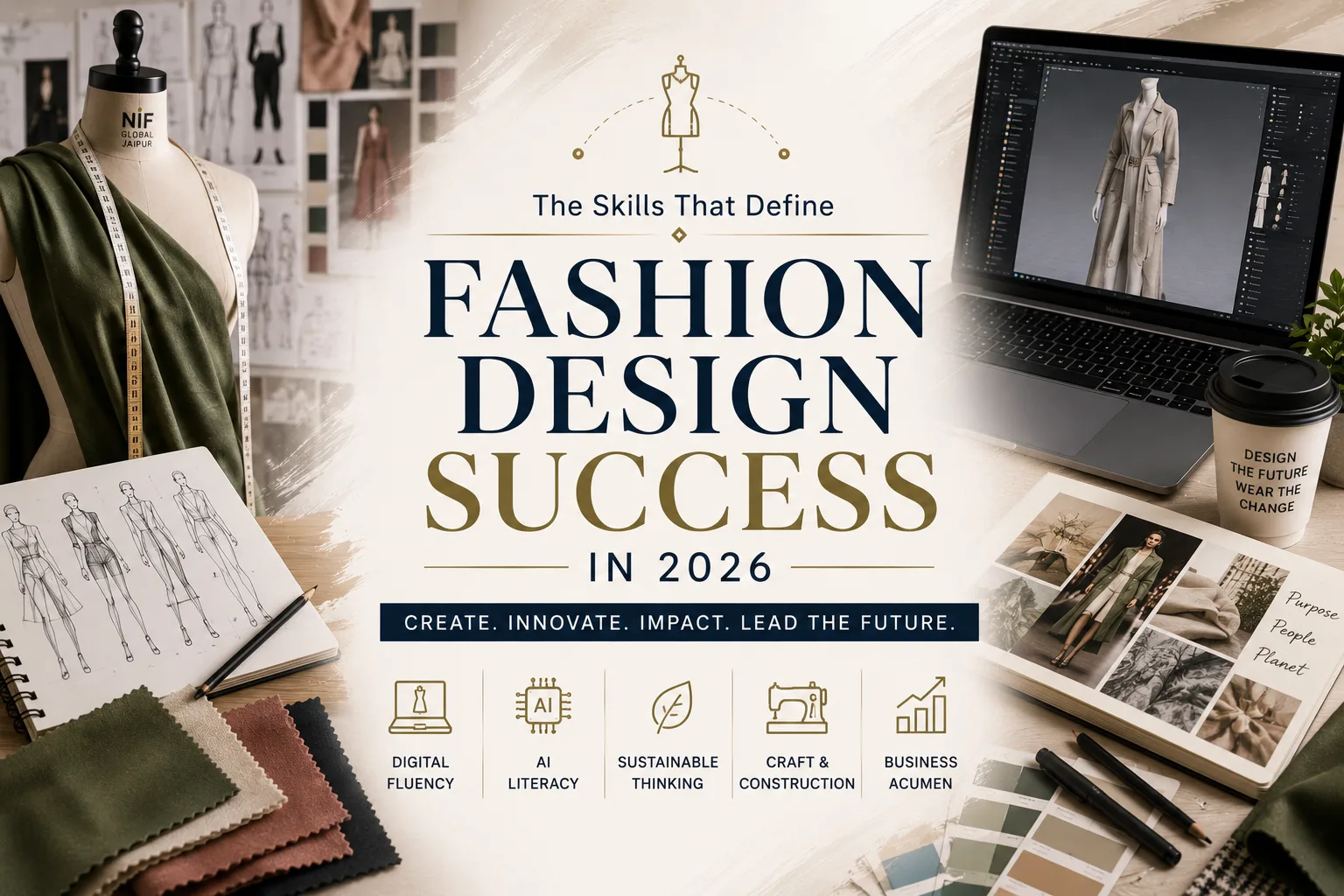
The most valuable fashion design industry skills in 2026 are digital design tools like CLO3D and CAD, AI literacy for concept generation and trend forecasting, sustainability and ethical sourcing knowledge, and strong garment construction fundamentals. Employers now hire for hybrid profiles: creative talent that also understands technology, data, and business. For anyone planning a career in fashion design, this guide by NIF Global Jaipur will help in understanding which fashion design industry skills matter most and are worth building a study and portfolio plan early.
Here is a closer look at each of these fashion design industry skills and why they matter.
Why does digital design software matter so much now?
Among all fashion design industry skills, software fluency has moved fastest from “nice to have” to baseline requirement. Illustrator, Photoshop, and 3D tools like CLO3D lead that list. Recent analysis of over 1,000 fashion job postings across the US, Europe, and South Asia found that Illustrator, Photoshop, CLO3D, CAD, and AI tools are the exact software skills employers screen for. Brands want designers who can move from concept to a portfolio-ready 3D render without depending on a separate technical team.
How is AI changing the fashion designer’s job?
AI literacy is now one of the top skills executives cite as a priority. This includes generative AI for early-stage concepts, AI-assisted trend forecasting, and familiarity with tools like ChatGPT, Claude, Gemini, and Midjourney, which are becoming mainstream across retail and luxury design teams. The expectation is not that designers replace their judgment with AI, but that they use it to move faster from research to first draft, then apply their own eye to refine it.
Do fashion designers still need traditional craft skills?
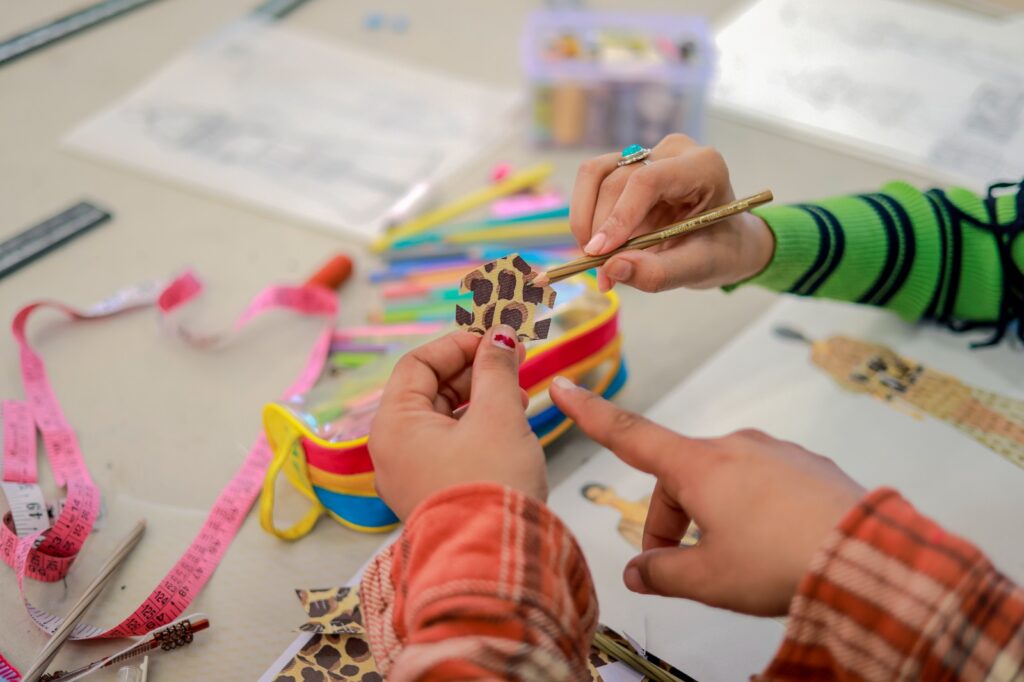
Yes, and they remain non-negotiable. Precision sewing, pattern-making, and draping are still what separate a wearable, production-ready garment from a sketch. Digital tools speed up ideation and communication, but garment construction knowledge is what ensures a design actually works on a body and can be manufactured at scale. Employers are looking for designers who pair traditional craftsmanship with digital fluency, not one or the other.
Why is sustainability knowledge now a core skill, not an add-on?
Ethical sourcing, circular economy practices, and supply chain transparency are increasingly part of what recruiters screen for, driven partly by upcoming regulations on unsold stock and material waste. Fashion employers now treat sustainability awareness as a baseline expectation, alongside tech fluency, even for entry-level roles.
What business and soft skills round out a strong profile?
Communication, market research, and basic commercial awareness now sit alongside creative skill. Designers are expected to analyze competitors and consumer behavior, understand production costs, and present ideas clearly to teams and clients. Recruiters across design, merchandising, and retail roles consistently value organization, attention to detail, and comfort with tools like Excel alongside creative software. A designer who can defend a collection’s commercial viability, not just its aesthetic, is more employable.
The takeaway
Fashion design in 2026 rewards range, not a single specialization. Software fluency, AI literacy, sustainability knowledge, and business awareness are increasingly stacked on top of the same non-negotiables: strong construction skills and a distinctive design eye. The most employable designers won’t be the ones who master one of these fashion design industry skills at the expense of the others but the ones who build a working command of all of them.