Where’s More Mountainous, Greece or Scotland? A Complete Comparison Guide
Introduction: Comparing the Mountains of Greece and Scotland
Greece and Scotland are both incredibly beautiful, diverse and mountainous areas. While Greece has tall mountains, deep gorges and limestone ranges, Scotland has misty peaks, deep glens and wildlands. Both these locations have much to offer the nature lover, but when it comes to comparing Scotland and Greece, it's important to consider mountain height, terrain and what percentage of the country is mountainous.
If you're visiting Scotland on a trip and wish to make the most of your mountain holiday, mountain scenery will add a new dimension to your trip. Traveling into the Scottish Highlands from Glasgow is a treat and a Glasgow Taxi can help organize how you spend your time before setting off for the mountains. But how does Scotland compare as a region to Greece?
Is Greece or Scotland More Mountainous?
Greece has a slight edge on comparison when it comes to the overall mountainous and mountain height in the country. They have many types of mountainous terrain and ranges, including the famous Mount Olympus.
However, Scotland also has it's share of dramatic and distinctively wild peaks and hills which form the Scottish Highlands. While the Scottish Highlands' tallest peaks are shorter than the mountain ranges of Greece, more of Scotland is a wilder land.
How High Are the Highest Mountains in Greece and Scotland?
One simple way to compare the size and height of the mountains in Scotland and Greece would be to look at the highest mountains in both locations.
Mount Olympus: Greece's Highest Mountain
Mount Olympus is known as the tallest and most dramatic mountain in Greece, reaching a height of approximately 2,918 above sea level.
It is famed not only for its beauty, including rocky outcrops, ravines, and ancient flora, but also for its prominence in ancient Greek history and mythology. It was thought of by the ancients to be the home and retreat of the gods; and it continues to be a great attraction point for modern day travelers and nature lovers to the area.
It should also be noted that because of its large height and diverse terrain, it has many different habitats and biomes, from lowland areas of forest to the rocky and barren ground near the summit. It is, therefore, a remarkable landmark and one of the tallest mountains in Southeastern Europe.
Ben Nevis: Scotland's Highest Mountain
Ben Nevis rises to a height of approximately 1,345 above sea level in the Scottish Highlands near Fort William. It is by far the tallest mountain in Scotland, and is also a popular location for visitors to the Highlands. However, while the weather tends to be pleasant year round in Scotland, it can get extremely cold over the higher mountains and the summit is often blanketed with clouds and rain. This means that while the surrounding lowlands may be pleasant, the traveler should be prepared for some very cold weather on the mountain.
The dramatic scenery and nearby valleys and lochs only add to Ben Nevis's attraction and it is definitely a must-see for any visitor to the Scottish Highlands.
What Makes Greece's Mountain Landscapes Unique?
Greece has a very unique set of mountain landscapes. It has many tall, unique mountain ranges, including the famous Pindus range and Mount Olympus. The ranges tend also to be a mixture of steeper-sided rocky peaks, forests and even caves. These mountains are known also to take on different appearances at different elevations and are heavily inhabited by Greek villagers.
The Pindus range, one of the more famous mountain ranges in Greece, is the core of mainland Greece and takes on a vaguely rectangular shape along the northern border of the country. It too has some interesting features and is known in some places to have very narrow valleys with lots of mountainous villages tucked inside them.
Another special feature of the mountain ranges in Greece is that they are often seen rising from the sea. The peaks are sometimes quite dramatic against the backdrop of the blue sea and sandy beaches in places. This gives the mountain ranges a uniqueness that is quite special.
Finally, the different weather that occurs also lends a different feel to the ranges at different elevations and times of year. While many of the lower ranges do get quite hot and dry during the summer months, higher up the ranges are often cool and snowy during the winter months. This allows for a great diversity of plant and animal life to be found in the mountain ranges of Greece.
What Makes Scotland's Mountains Different?
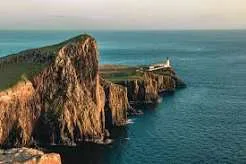
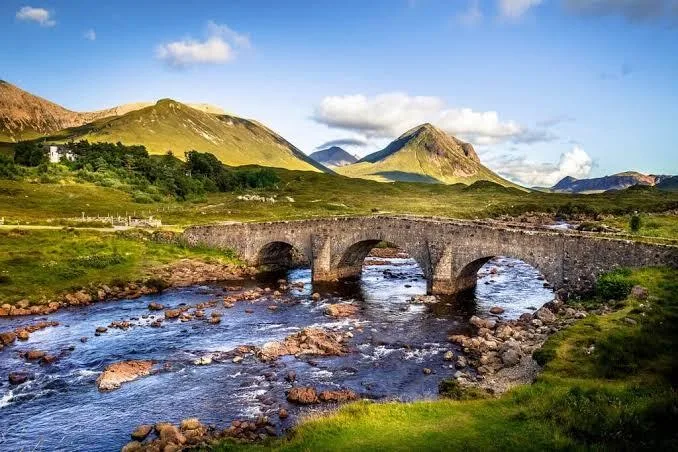
While Scotland's mountains can't reach the dizzying heights of some of the mountain ranges in Greece, they make up for it with their rolling hills, dramatic glens and deep and mysterious valleys and lochs.
The ranges in Scotland tend to take on a more rounded appearance, with some steeper rocky sections and some flatter areas. The mountains tend to roll one into another, making long mountain ridges punctuated by deep valleys and lochs. Places like Glencoe and the Cairngorms are especially noted for this kind of dramatic and rolling mountainous terrain.
Another unique feature of Scotland's mountains is the interesting mix of different colors of vegetation and even snow on the higher peaks during the winter. The heather, for instance, takes on a purple color during certain times of year and adds a nice splash of color against the green valleys and the white snow caps. This change in color is especially noted during the fall, when the mountains take on a more golden color. These changes in color make the Scottish mountains more photogenic and picturesque than the mountains in Greece.
If you plan on seeing multiple mountain areas in the Scottish Highlands, a good option would be to book a Glasgow Chauffeur Hire. Having someone to pick you up and drop you off at the various scenic spots you wish to see is a great way to take in the scenery. Just make sure to factor in travel time and conditions.
Which Country Has More Mountains?
It's hard to tell exactly how many peaks there are in either Scotland or Greece, since it would be near impossible to count every single peak. If you're thinking of traveling to either of the two countries, you will find both have many mountains and mountainous areas to explore. The two countries can't really be compared on the basis that one has absolutely no mountains while the other has plenty. But how else could we compare the two mountainous countries?
Both countries have mountain ranges and uplands, but each range has many individual peaks which can be classed as mountains or even hills. Another way at looking at it would be to use the Scottish Munros as a measuring stick. Munros are Scottish mountains which are over 3,000 feet (approximately 914 meters) in height. There are a total of 282 Munros in the Scottish Munro Table. Using the 3,000 foot standard, however, would not allow us to directly compare the number of mountains in Scotland to that of the mountains in Greece, since that is a purely Scottish standard.
All in all, while Greece might have a few more mountains, Scotland has a great number of them as well. The Scottish Highlands contain many mountains, valleys and lochs. While the mountains might not all qualify as Munros, there is still a great number of mountains that can be explored in Scotland.
Comparing Climate and Mountain Scenery
A big difference between the climate of Scotland and Greece is their weather. While Greece tends to have hot, dry summers, especially in the lower areas, Scotland's weather tends to be more wet and changeable. In Greece, the mountains can offer a cool reprieve from the summer heat, while in Scotland, the mountains tend to offer more precipitation and the chance to see beautiful scenery in a variety of weather conditions.
Both countries have a wide range of climates within their mountainous regions. While many areas in both countries can get very hot and dry during the summer, the higher up you go, the cooler it gets. This trend continues until you reach the snow line, beyond which it gets cold enough for snow to fall and, eventually, for the mountain to be covered in snow all year round.
In Greece, the lower ranges tend to be the hottest during the summer, while in the higher ranges, the snow cover insulates the forest vegetation from the extreme heat, keeping things cooler. During the winter, the lower ranges tend to be quite cold as well, but the snow is often heavier and lasts longer. The higher ranges also tend to have long winters, but some areas in the mountains can actually be quite warm and sunny during the winter months.
The combination of different vegetation and the effect it has on the temperature of the mountain creates a large variety of different micro-climates in the mountainous regions of both countries. In general, though, it's a good idea to bring proper clothing when hiking in the mountains during the colder months.
Which Destination Is Better for Mountain Lovers?
It's hard to say which of the two countries has more mountains. However, it should be noted that while both have many mountains, those in Greece tend to be taller on average than those in Scotland.
In the end though, if you are a lover of mountains, Greece and Scotland both have much to offer. Scotland has more rolling hills whereas the mountains of Greece tend to be dramatic and steep sided. Both of these countries have their own unique brand of mountain scenery that makes them stand out from each other. Either way, traveling through the mountains of either country is sure to be an eye-opening and breathtaking experience for anyone who appreciates natural beauty.
However, if you are a serious hiker and want to take on some of the most challenging and remote mountains in either country, make sure to get a proper gear and be prepared for the weather!
Conclusion: Greece or Scotland — Which Is More Mountainous?
Greece and Scotland both have many mountains, with dramatic differences between the two. While Greece has some truly remarkable peaks, including Mount Olympus, Scotland has many ranges of rolling hills and dramatic valleys and lochs. Overall, however, Greece has a slight edge in terms of which country is more mountainous.
The mountains in Greece tend to be taller on average and the ranges tend to stretch on for long distances. Scotland, on the other hand, has a more dramatic feel to it's mountains while the ranges in Greece tend to be more varied and steep sided. Both countries are worth exploring for their beautiful mountainous landscapes and the wonderful effect they have on the natural vegetation and the local wildlife.