Your car may drive normally today and start pulling to one side tomorrow. A small pothole, kerb impact, or uneven road surface can change how the wheels sit or spin. You may not notice the problem straight away, but your car tyres can start wearing unevenly.
For drivers in Singapore, regular wheel care is important. Your car deals with busy roads, tight car parks, speed humps and frequent stop-and-go driving. Knowing when to check wheel alignment and balancing can help protect your tyres, steering and driving comfort.
What Is Wheel Alignment?
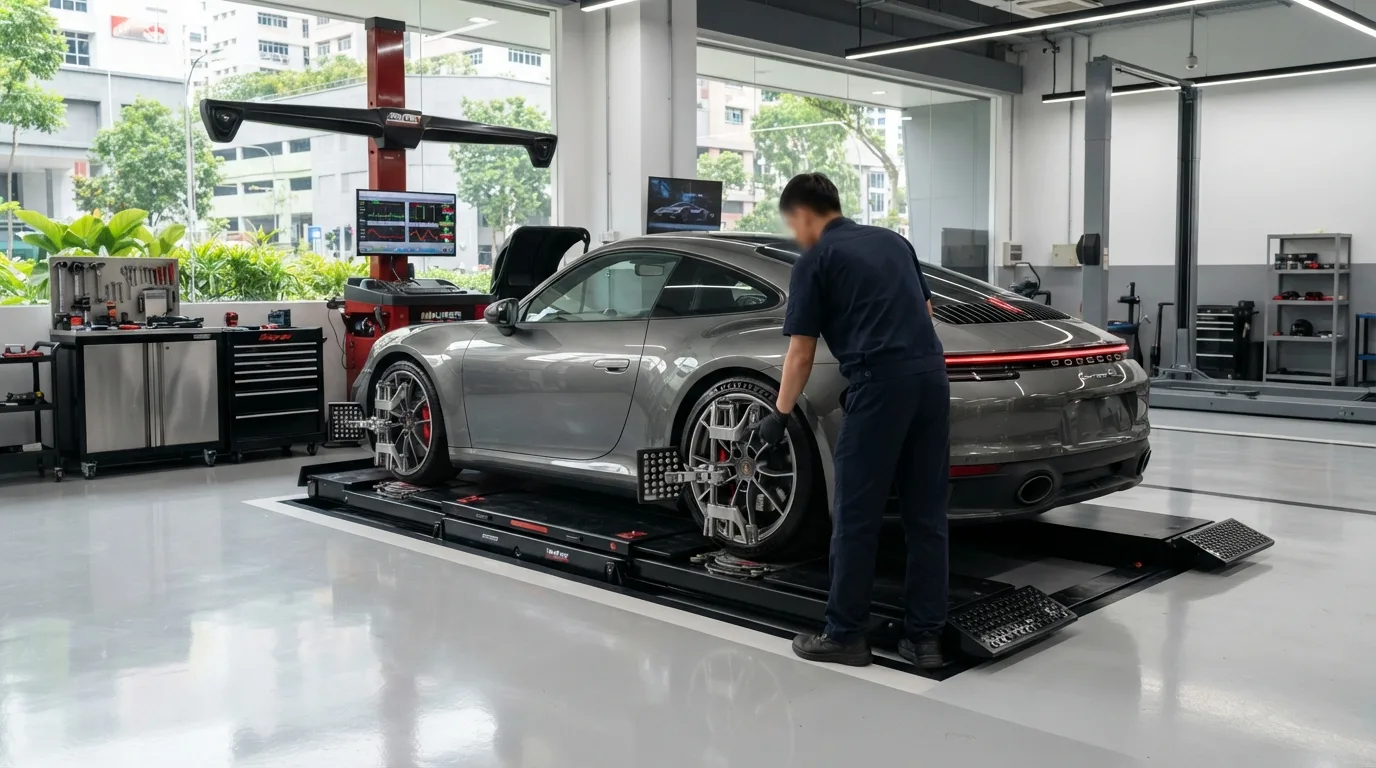
Wheel alignment adjusts the wheel angles to match the vehicle manufacturer's specifications.
The main alignment angles are:
- Camber: The inward or outward angle of the wheel when viewed from the front.
- Toe: The direction the tyres point towards or away from each other when viewed from above.
- Caster: The angle of the steering axis when viewed from the side.
Correct alignment helps the vehicle travel in a straight line and allows the tyres to meet the road properly.
The Land Transport Authority (LTA) also includes wheel alignment as part of the wheel system checked during periodic vehicle inspections.
What Is Wheel Balancing?
Wheel balancing is different from alignment.
A wheel and tyre can have small weight differences around their circumference. During balancing, a technician uses a balancing machine to find the heavier areas and fits small weights to correct the imbalance. A balanced wheel normally spins more smoothly.
Poor wheel balance can cause vibration, especially at higher speeds. It can also make the drive feel less comfortable and may contribute to uneven tyre wear.
When Should You Do Wheel Alignment?
No single mileage suits every car. Your vehicle manufacturer's maintenance schedule should come first. The Automobile Association of Singapore advises checking alignment regularly and gives 16,000 km as a general reference point. You should also consider an alignment check after certain events.
1: After Hitting a Pothole or Kerb
A strong impact can affect the wheel alignment or suspension components.
Singapore drivers may encounter potholes, road repairs and tight kerbs during everyday driving. A noticeable impact followed by changes in steering is a good reason to have the wheels inspected. A damaged wheel bearing can also affect how a wheel performs. Learn more about how to check wheel bearings before assuming alignment is the only issue.
2: When the Car Pulls to One Side
Your car should generally track straight on a suitable, level road without constant steering correction. A vehicle that consistently pulls left or right may have an alignment issue. However, tyre pressure, tyre condition, and road surface can also affect how a car tracks.
For this reason, check your tyre pressure before booking alignment work. This guide explains how to check car tyre pressure and why correct pressure matters.
3: When the Steering Wheel Is Off-Centre
A steering wheel that sits noticeably off-centre while the vehicle travels straight can signal that the wheel alignment needs checking. Don't judge this from one road alone, because road surfaces can naturally slope for drainage.
4: When Tyres Wear Unevenly
Uneven wear across the tread can indicate an alignment or suspension problem. It may also be caused by incorrect tyre pressure or other mechanical issues. The Automobile Association of Singapore recommends regular tread checks and professional attention if you find damage or irregular wear.
When Should You Do Wheel Balancing?
Wheel balancing is commonly needed after fitting new tyres, repairing a tyre or removing and refitting a wheel. It is also worth checking when you notice vibration through the steering wheel or car body.
1: After Installing New Tyres
New tyres should be properly balanced when fitted to the wheels.
This helps the wheel and tyre assembly rotate smoothly.
When buying replacement tyres, the total cost can also depend on the tyre brand, size and vehicle. See this guide to car tyre prices in Singapore to better understand typical costs.
2: After a Tyre Repair
Removing a tyre from the rim can change the tyre's position relative to the wheel. A technician can check the balance before putting the wheel back on the car.
3: When You Feel Vibration
Vibration at certain speeds can signal wheel imbalance. However, vibration doesn't always mean you need balancing. A damaged tyre, bent rim, worn suspension component or other mechanical problem can produce similar symptoms.
Alignment vs Balancing: What Is the Difference?
The two services solve different problems.
Wheel AlignmentWheel BalancingCorrects wheel angles Corrects weight distribution Helps the car track properly Helps the wheel spin smoothly Can affect steering Can affect vibration Often linked to uneven tyre wear Often linked to vibration at speed Checked after impacts or steering changes Checked after tyre fitting or wheel work
For example, a vehicle may have correct alignment but still have an unbalanced wheel. Another vehicle may have balanced wheels but incorrect alignment.
Should You Do Alignment and Balancing Together?
A workshop should inspect the vehicle and identify the actual problem before recommending both services. When new tyres are installed, balancing is normally part of the fitting process. An alignment check may also make sense, especially when the old tyres showed uneven wear or the car has steering symptoms.
Why Wheel Care Matters in Singapore
Singapore has a compact road network with heavy daily traffic and frequent short trips. Cars also regularly use multi-storey car parks and roads with speed humps, tight turns and kerbs.
Small impacts can build up over time.
Keeping your tyres, wheels, steering and suspension in good condition helps maintain predictable handling. LTA states that its vehicle inspection checks the wheel system, including tyres, suspension, shock absorbers, wheel bearings and wheel alignment.
Singapore's LTA also states that replacement tyres should match the width, profile, and diameter recommended by the vehicle manufacturer.
For professional inspection, drivers can visit a reputable Tyre shop in Singapore that provides tyre fitting, wheel balancing and alignment services.
What Should Be Checked During a Wheel Inspection?
A proper inspection should look beyond the alignment machine.
A technician may check:
- Tyre pressure
- Tread condition
- Uneven tyre wear
- Wheel condition
- Suspension components
- Steering components
- Wheel bearings
- Alignment angles
- Wheel balance
This is important because alignment or balancing symptoms can sometimes come from another part of the vehicle.
For example, a worn suspension component can make it difficult to maintain correct wheel geometry. A damaged rim can also cause vibration that balancing alone may not fully solve.
How Often Should You Check Your Wheels?
Follow your vehicle manufacturer's maintenance recommendations first.
As a general guide, consider a wheel alignment check during routine servicing and after a strong pothole or kerb impact. The Automobile Association of Singapore recommends checking alignment regularly and cites 16,000 km as a general reference.
Wheel balancing doesn't necessarily need to be done at the same mileage.
Instead, have the balance checked when:
- New tyres are fitted
- A tyre is repaired
- A wheel is removed and refitted
- You notice vibration
- A technician finds a balance problem
Regular visual checks also matter. The Automobile Association of Singapore recommends checking tyre tread monthly and maintaining correct tyre pressure.
What Happens When You Ignore Alignment or Balancing Problems?
A small wheel problem may become more noticeable over time. Incorrect alignment can contribute to uneven tyre wear and affect steering behaviour. An unbalanced wheel can create vibration and reduce driving comfort. Ignoring these signs can also make it harder to identify the original problem later. That does not mean every vibration or uneven tyre wear is caused by alignment or balancing. A professional inspection is the best way to identify the cause.
Final Thought
Wheel alignment and balancing are two different services, but both play an important role in keeping your car comfortable and predictable on the road. Alignment focuses on the position and angles of the wheels, while balancing corrects uneven weight around the wheel and tyre assembly.
For Singapore drivers, the best approach is simple: check your tyres regularly, follow the manufacturer's service recommendations, inspect the wheels after strong impacts, and watch for changes in steering, tyre wear, or vibration. Early checks can help you spot small problems before they become expensive tyre or suspension repairs.
FAQs
1. Can wheel alignment affect fuel consumption?
Incorrect alignment can increase rolling resistance when the tyres are not tracking correctly. This may affect fuel efficiency, although driving style, tyre pressure, traffic and vehicle condition also have a major effect.
2. Can a damaged rim cause wheel vibration?
Yes. A bent or damaged rim can affect how the wheel rotates and may cause vibration. A technician should inspect the rim rather than assuming that balancing alone will solve the problem.
3. Can low tyre pressure cause a car to pull to one side?
Yes. A significant pressure difference between tyres can affect steering and handling. Check all four tyres against the vehicle manufacturer's recommended pressure before diagnosing an alignment issue.
4. Can wheel alignment fix uneven tyre wear?
Alignment can help correct uneven wear caused by incorrect wheel angles. However, you can't reverse existing tyre damage. Check the underlying cause before fitting replacement tyres.
5. Does changing wheel size affect alignment?
Changing wheel or tyre specifications can affect the vehicle's handling and fitment. Singapore's LTA states that sports-rim sizes should follow the manufacturer's recommendations and the overall rolling radius should remain the same as the original.