A flat tire on a car is a small problem. A flat tire on a loaded transport truck is a very different story. Large vehicles are heavier, harder to move, and much more dangerous to handle if the job is done the wrong way. That is where heavy duty towing comes in.
This guide explains, in simple words, what heavy duty towing is, when you need it, and what to check before you call a company in Mississauga. If you drive or manage a truck, bus, or work vehicle, save this page for the day you need it.
Quick Answer: What Is Heavy Duty Towing?
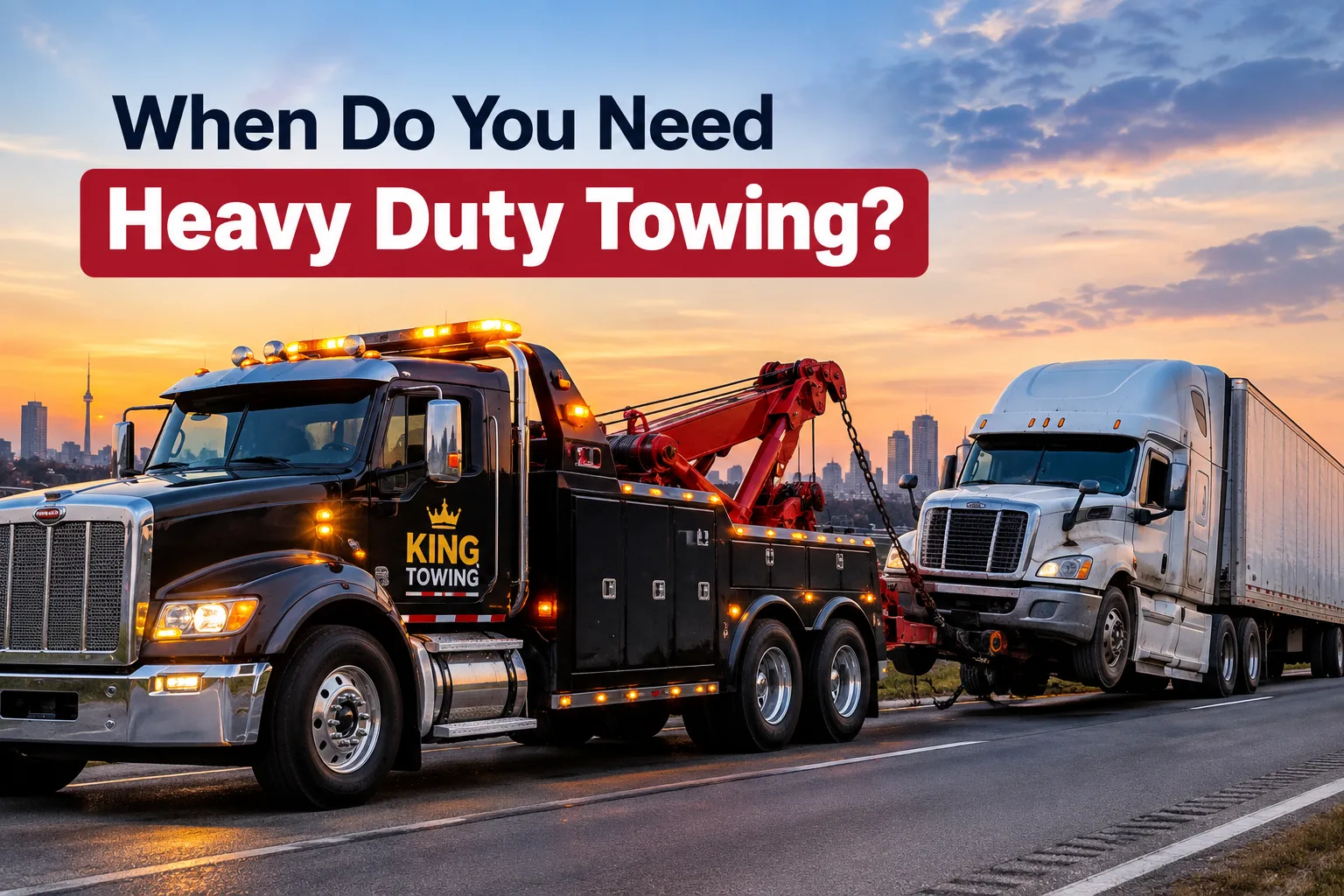
Heavy duty towing is the towing and recovery of large, heavy vehicles that a normal tow truck cannot safely move. It uses bigger trucks, stronger equipment, and drivers who are trained to handle heavy loads.
Vehicles that often need heavy duty towing include:
- Transport and tractor-trailer trucks
- Dump trucks and cement mixers
- Buses and coaches
- Box trucks and delivery trucks
- Large construction and work vehicles
- Motorhomes and RVs
- Large commercial vans with heavy loads
When Do You Need Heavy Duty Towing?
You likely need a heavy duty tow truck in these situations.
1. Your Truck or Bus Breaks DownEngine failure, a broken drive shaft, transmission trouble, or brake problems can leave a large vehicle stuck. These vehicles are too heavy for a regular tow truck, and moving them the wrong way can cause more damage.
2. After an Accident or CollisionA crash involving a large vehicle often leaves it damaged, blocking lanes, or unsafe to drive. Heavy duty recovery clears the road safely and protects the vehicle and the cargo as much as possible.
3. Your Vehicle Is Overturned or JackknifedWhen a truck rolls over, or a trailer swings out of line, it cannot simply be pulled away. It needs careful recovery, special equipment, and a trained team to lift or right the vehicle without making the damage worse.
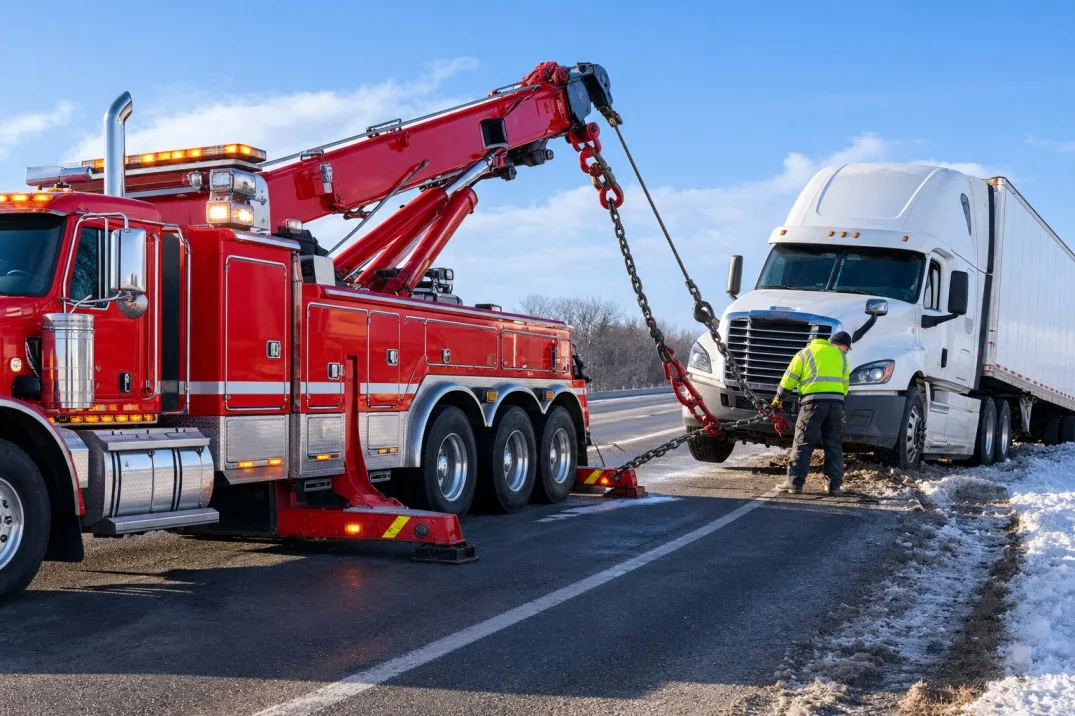
4. Stuck in Mud, Snow, or a DitchLarge vehicles can get stuck in soft ground at construction sites, on rural roads, or after a winter storm. Heavy duty winching and recovery can pull them out safely.
5. Flat Tires or Wheel Problems on a Loaded VehicleA blown tire or damaged axle on a loaded truck cannot be handled with a normal jack. It needs the right tools and enough power to lift and support heavy weight.
6. Moving a Non-Working VehicleSometimes a large vehicle is not in an emergency, but still cannot be driven. Examples are a work truck going to a repair shop, a bus being moved to a depot, or a heavy machine going to a new site. Heavy duty towing can move these safely.
7. Your Trailer Needs to Be MovedA trailer with a broken axle, damaged brakes, or a failed hitch may need a heavy duty truck to move it, with or without the cargo.
8. Roadside Help for Large VehiclesSome problems, such as a dead battery, an air brake issue, or running out of fuel, can be handled at the roadside. A heavy duty service can often fix the problem on the spot, or tell you honestly if a tow is needed.
Why a Regular Tow Truck Is Not Enough
It can be tempting to call the first tow truck you find. But using the wrong truck for a heavy vehicle can lead to serious trouble.
- Weight limits. A regular tow truck is built for cars and light vehicles. A heavy vehicle can exceed its limits and cause an accident.
- Damage to your vehicle. The wrong towing method can harm the frame, axles, brakes, or drivetrain of a large truck.
- Safety risks. Poorly handled heavy loads put the driver, other road users, and the vehicle at risk.
- Legal and insurance problems. Using the wrong equipment can cause problems with your insurance or lead to fines.
Heavy duty towing uses stronger trucks, special rigging, and skilled operators to avoid these problems.
Signs You Should Call a Heavy Duty Tow Truck
Call for heavy duty help if:
- Your vehicle weighs much more than a regular car or SUV
- The engine, transmission, or brakes have failed
- The vehicle is overturned, tilted, or off the road
- The vehicle is carrying cargo that needs to be handled safely
- Your vehicle has air brakes that may be locked
- You are not sure what equipment is needed
When in doubt, call and explain your situation. A good company will tell you what is needed.
What Happens During a Heavy Duty Tow?
Knowing the steps can help you feel more prepared.
- You call and share details. You explain the problem, location, and vehicle type.
- The company plans the job. They choose the right truck and equipment for your vehicle’s size and weight.
- The driver arrives and checks the scene. They look at the vehicle, the surroundings, and any safety risks.
- The vehicle is secured. The driver connects it with the proper rigging, chains, or lifting gear.
- Safe towing or recovery. The vehicle is moved slowly and carefully to your chosen location.
- Unloading and paperwork. The vehicle is delivered, and you receive a clear invoice.
If the vehicle has cargo, ask the company how it will be handled.
What Information to Share When You Call
Clear details help the company send the right truck on the first try. Be ready to share:
- Your exact location and nearest cross street or highway exit
- The type of vehicle, such as a transport truck, bus, or dump truck
- The approximate weight, and whether it is loaded or empty
- What went wrong, such as a breakdown, crash, or stuck vehicle
- Whether the vehicle is on the road, in a lot, or off the road
- Where you want the vehicle taken
- Whether air brakes are locked
What Affects the Cost of Heavy Duty Towing?
Heavy duty towing is usually priced differently from regular towing, because of the equipment and skill involved. Prices depend on:
- The size and weight of the vehicle
- The distance to the drop-off location
- The type of truck and equipment needed
- Whether the job is a simple tow or a recovery
- The time of day and weather
- The number of operators and trucks needed
Always ask for a clear price before the job starts, and ask what is included.
How to Choose a Good Heavy Duty Towing Company in Mississauga
Not every towing company has the right equipment for large vehicles. Check these points before you book:
- The right equipment. Ask if they have trucks that can handle your vehicle’s size and weight.
- Trained operators. Heavy recovery takes skill and experience.
- Proper licence and insurance. This protects you and your cargo if something goes wrong.
- Clear pricing. They should explain the price and any extra fees.
- Quick response. Time matters, especially when a vehicle blocks traffic or a business is losing money.
- Good reviews. Check what other customers say.
- Help when you need it. Ask about nights, weekends, and holidays.
Tips for Fleet Owners and Businesses
If you run a business with trucks or vans, planning ahead can save time and money.
- Save a trusted heavy duty towing number in every driver’s phone.
- Keep vehicle details ready, such as weight, size, and cargo type.
- Service your vehicles regularly to avoid breakdowns on the road.
- Train drivers on what to do after a breakdown or crash.
- Check your insurance to see what towing and recovery it covers.
What to Do While You Wait for a Heavy Duty Tow Truck
- Turn on your hazard lights.
- Move off the road if it is safe to do so.
- Place warning triangles or reflectors behind your vehicle, if you have them and it is safe.
- Stay away from traffic. Wait behind a barrier if you can.
- Do not try to repair or move a heavy vehicle yourself.
- Share your exact location and keep your phone ready.
- Call 911 if anyone is hurt or there is a fire, fuel leak, or road danger.
How King Towing Helps With Heavy Duty Towing in Mississauga
When a large vehicle stops working, the problem is bigger than the vehicle itself. A blocked road, a delayed delivery, or a stranded driver can quickly cost time and money. King Towing is here to help drivers and businesses in Mississauga and nearby areas.
Here is how we help:
- Heavy duty towing. We help move trucks, buses, and other large vehicles safely.
- Recovery services. We help with stuck, overturned, or accident-damaged vehicles.
- Roadside help. For some problems, we can help at the scene so you can get moving again.
- A clear price first. We explain the price before we send a truck, so there are no surprises.
- Honest advice. We tell you what your vehicle needs, so you only pay for what makes sense.
- Help for businesses. We support fleet owners and commercial drivers who need reliable towing.
How to get help from King Towing:
- Call us and tell us where your vehicle is.
- Share the vehicle type, the problem, and where it needs to go.
- Get a clear price and an arrival time.
- Our driver arrives, secures your vehicle safely, and takes it where you choose.
Final Words
Heavy duty towing is for vehicles and situations that are too big or too risky for a regular tow truck. Breakdowns, crashes, rollovers, stuck vehicles, and non-working large vehicles all need the right equipment and skilled operators. Share clear details, ask for a full price, and choose a company you can trust.
When you need heavy duty towing service in Mississauga, King Towing is ready with clear prices, careful drivers, and honest advice. Save our number in your phone today, so you know who to call before the next breakdown.
Frequently Asked Questions (FAQs)
1. What vehicles need heavy duty towing?
Large and heavy vehicles such as transport trucks, buses, dump trucks, box trucks, motorhomes, and large work vehicles usually need heavy duty towing. A regular tow truck is not built for their size and weight.
2. Can a regular tow truck move a large truck or bus?
No, not safely. A regular tow truck can exceed its limits and damage the vehicle. A heavy duty tow truck is made for large loads.
3. What should I do if my truck breaks down on the highway?
Turn on your hazard lights, move to the shoulder if you can, and stay away from traffic. Then call for help, and call 911 if you are in danger or someone is hurt.
4. Can heavy duty towing help if my truck is stuck in mud or snow?
Yes. Heavy duty recovery can pull large vehicles out of soft ground, ditches, and snow using winches and the right equipment.
5. How do I know if I need heavy duty towing or regular towing?
If your vehicle is much heavier than a regular car or SUV, or if it is a truck, bus, or large work vehicle, you likely need heavy duty towing. If you are not sure, call and describe the vehicle.