Data centers run on reliability. Every application, transaction, and digital service depends on servers operating within precise environmental conditions. Even a small fluctuation in temperature can affect performance, reduce hardware lifespan, and in extreme cases lead to costly downtime.
This is why choosing the right data center cooling system is not simply a technical purchase decision. It is a long term operational investment that directly affects efficiency, uptime, and scalability.
With computing loads increasing due to cloud infrastructure, artificial intelligence workloads, and high density server racks, cooling systems must be designed thoughtfully. If you are evaluating options for your facility, here are the key aspects you should carefully assess before investing in a data center cooling system.
9 Things to Look for Data Center Cooling System
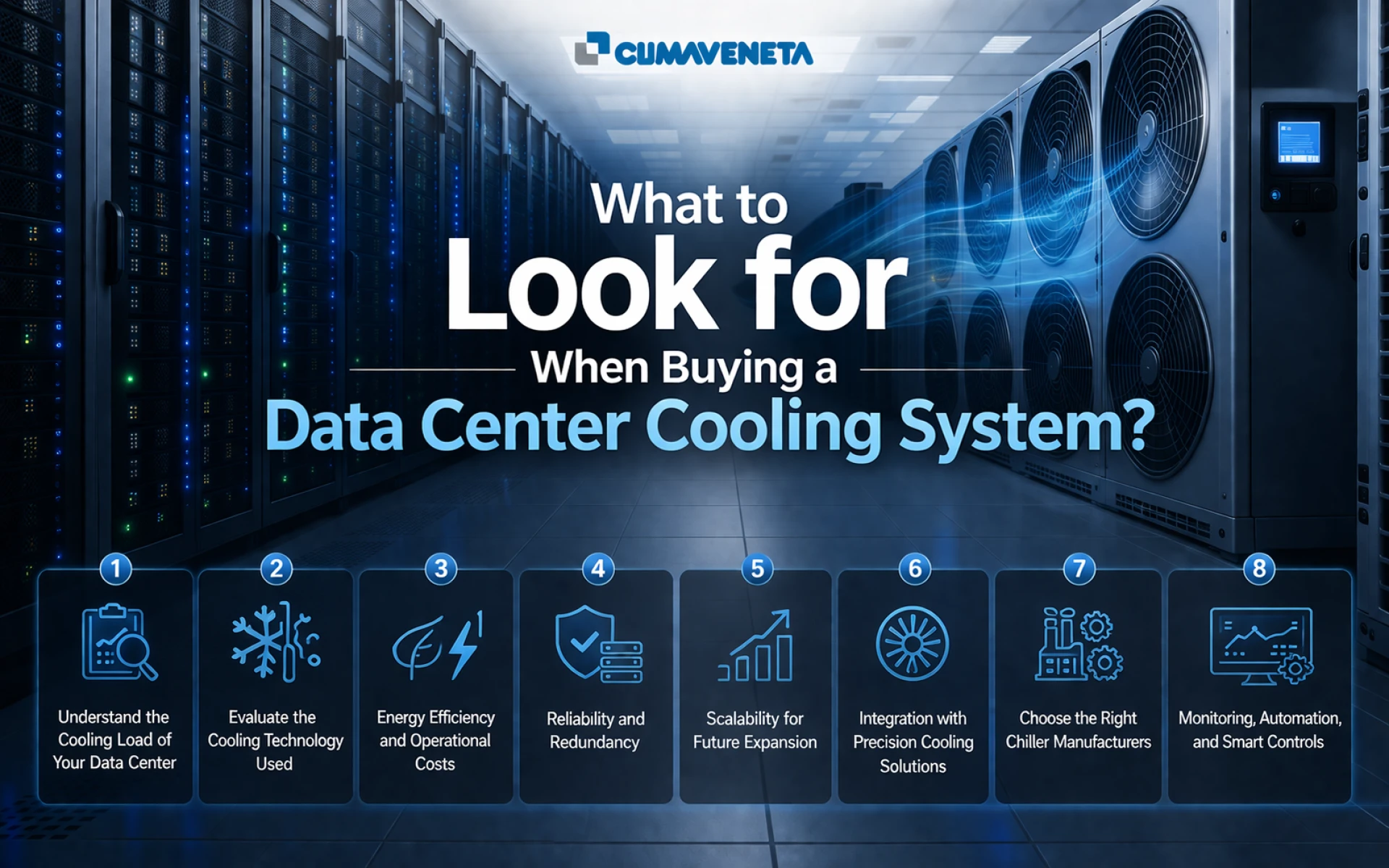
1. Understand the Cooling Load of Your Data Center
The first step to choose the data center cooling system is to determine how much heat your facility actually generates. Data center equipment converts nearly all electrical power it consumes into heat, which means cooling capacity must be designed around the IT load.
Key considerations include:
- Current server density and rack configuration
- Expected future expansion
- Power usage effectiveness targets
- Heat distribution within the data hall
A cooling system that is too small will struggle during peak loads, while an oversized system can lead to inefficiencies and unnecessary energy costs. Proper load analysis ensures the cooling system remains stable under varying operational conditions.
2. Evaluate the Cooling Technology Used
Not all cooling technologies work the same way. The design you choose should align with your facility’s infrastructure, climate conditions, and performance goals.
Some common technologies used in data center cooling system include:
- Air cooled chillers
- Water cooled chillers
- Precision air conditioning units
- In row cooling systems
- Liquid cooling solutions for high density racks
Each approach has its advantages. For example, chilled water systems are widely used in large scale facilities because they provide consistent cooling and support higher loads. Understanding the strengths and limitations of each system will help you make a better long term decision.
3. Energy Efficiency and Operational Costs
Cooling is often the largest contributor to energy consumption in a data center cooling system after the IT equipment itself. Over time, operational costs can exceed the initial purchase cost of the system.
When evaluating a cooling solution, review factors such as:
- Energy efficiency ratings
- Part load performance
- Variable speed compressors and fans
- Free cooling capability in suitable climates
- Intelligent control systems
Efficient cooling systems reduce electricity usage and help maintain a lower Power Usage Effectiveness (PUE), which is a key metric for modern data center performance.
4. Reliability and Redundancy
Downtime is not an option for most data centers. Cooling infrastructure must be designed with redundancy so that operations continue even if one component fails.
A robust cooling setup may include:
- N+1 or 2N redundancy configuration
- Backup cooling units
- Intelligent monitoring systems
- Automatic fault detection and alerts
Reliable data center cooling system ensure continuous temperature control even during maintenance or unexpected equipment failure.
5. Scalability for Future Expansion
Data centers rarely remain static. As workloads increase and more servers are deployed, cooling requirements also grow.
A well designed system should allow for:
- Modular expansion
- Integration with additional cooling units
- Flexible airflow management
- Support for higher rack densities in the future
Planning scalability early prevents the need for expensive infrastructure upgrades later.
6. Integration with Precision Cooling Solutions
In many modern facilities, chillers work alongside precision cooling systems to maintain ideal temperature and humidity levels.
Precision air conditioners are designed specifically for data centers and provide accurate environmental control. These systems help maintain stable conditions within server racks, ensuring consistent performance and preventing overheating.
Combining chilled water systems with precision cooling technologies often creates a balanced and efficient thermal management strategy.
7. Choose the Right Chiller Manufacturers
When chillers are part of the cooling architecture, selecting reliable chiller manufacturers becomes an important consideration.
Established chiller manufacturers typically provide:
- Proven engineering and system reliability
- High efficiency compressor technologies
- Advanced control systems
- Strong after sales service and maintenance support
Since chillers form the backbone of many large scale cooling systems, partnering with experienced chiller manufacturers ensures long term operational stability.
8. Monitoring, Automation, and Smart Controls
Modern data centers rely heavily on monitoring systems to maintain optimal conditions.
Smart cooling infrastructure should offer:
- Real time temperature monitoring
- Predictive maintenance alerts
- Integration with building management systems
- Automated load balancing between cooling units
These capabilities allow operators to respond quickly to changes and maintain consistent environmental conditions without manual intervention.
9. Maintenance and Service Support
Even the most advanced data center cooling systems require regular maintenance. Before finalizing a solution, review the service ecosystem available for the equipment.
Key aspects to evaluate include:
- Availability of trained service teams
- Spare parts accessibility
- Preventive maintenance programs
- Long term service agreements
Reliable support ensures the cooling system performs efficiently throughout its lifecycle.
Conclusion
Selecting a data center cooling system requires careful evaluation of multiple factors including cooling capacity, efficiency, reliability, and long term scalability. The right solution should not only handle current workloads but also support the future growth of your facility.
From choosing the appropriate cooling technology to working with trusted chiller manufacturers, every decision plays a role in maintaining stable operating conditions and ensuring uninterrupted data center performance.
When cooling infrastructure is designed thoughtfully, it becomes an enabler of efficiency, reliability, and sustainable data center operations rather than just a supporting system.
As one of the most trusted chiller manufacturers and data center cooling system providers, Climaveneta India delivers advanced cooling solutions designed for reliability, efficiency, and the demanding performance standards of modern data centers.