Whether it is building an industrial platform scale in a manufacturing hub like Gujarat, upgrading a silo weighing system for a food processing unit in Punjab or designing custom automation machinery in Bengaluru, the choice of the right components is everything. At the heart of these systems is the single ended shear beam load cell.
While they all look relatively similar—a rectangular block of metal bolted down at one end with a load applied to the other—the difference between a cheap imported component and a high-quality, long-lasting load cell comes down to the details. In India's diverse industrial environments, a poor choice quickly leads to drifting measurements, premature failure due to moisture or dust, and frustrating calibration errors.
If you are sourcing a single ended shear beam load cell for the Indian market, here are the non-negotiable factors you need to look for to ensure you are buying a quality product.
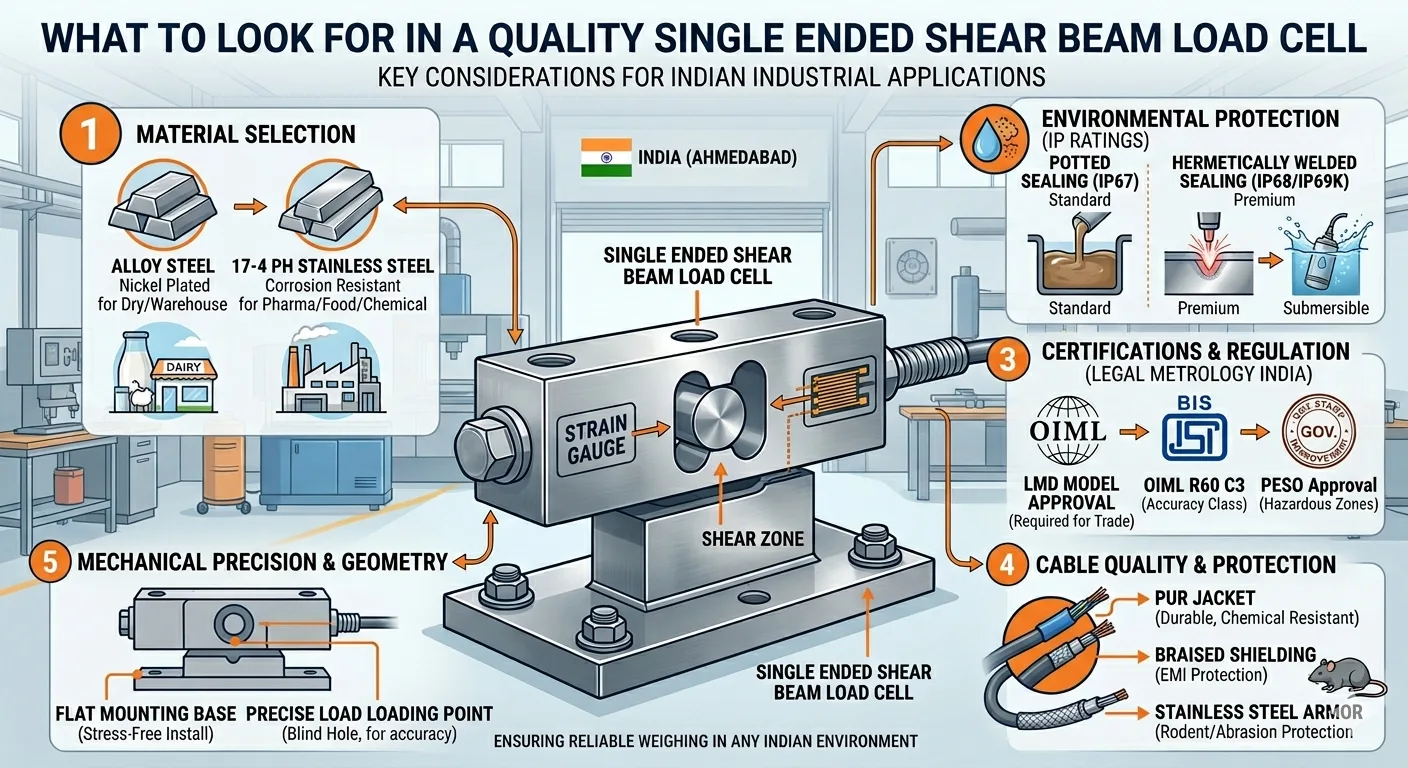
1. Material Selection: Tool Steel vs. Stainless Steel
The environment of your application dictates the material you need. Quality load cells generally come in two flavors:
Nickel-Plated Tool Steel: This is the cost-effective industry standard. High-quality tool steel provides excellent strength and "springiness" (return to zero). It is perfect for dry, indoor environments like standard warehouse platform scales or packaging machinery.
Stainless Steel: If your scale is going into a food processing plant, a chemical facility, or anywhere that requires regular chemical washdowns or faces high humidity, stainless steel is mandatory. It resists corrosion and holds up against harsh cleaning agents.
2. Environmental Protection: IP Ratings & Sealing
A load cell’s internal strain gauges are incredibly sensitive to moisture and dust. How those internals are sealed is the truest indicator of build quality.
Potted/Adhesive Sealing (IP65 to IP67): The internal cavity is filled with a rubber-like chemical compound. This is fine for general dust and occasional splashes, but over time, high humidity or temperature cycling can cause the sealant to pull away, letting moisture in.
Hermetically Welded Sealing (IP68 & IP69K): This is the gold standard. A metal cover is laser-welded over the strain gauge cavity. It creates a truly airtight, permanent seal. If your application involves heavy washdowns, outdoor exposure, or submersion, look for an IP68 or IP69K rating with a hermetic weld.
3. Accuracy Classes and Certifications
Don't just take the manufacturer's word for accuracy. Look for standardized industry certifications. If you plan to sell a scale that is used to trade goods by weight (Legal-for-Trade), these certifications are legally required.
Legal Metrology Department (LMD) Approval: For commercial transactions, verify if the load cell model has a valid Model Approval from the Central Legal Metrology Department in India.
OIML Certifications: India follows OIML (International Organisation of Legal Metrology) standards. Search for load cells rated OIML R60 C3. A “C3” rating means the cell is accurate enough to handle 3,000 divisions, providing excellent accuracy and temperature compensation for standard industrial scales.
Flameproof/Ex Certifications: If you are working in hazardous environments like petroleum refineries, chemical zones or grain silos, make sure the cell has been approved by PESO (Petroleum and Explosives Safety Organisation) or carries international ATEX/IECEx certifications.
4. Cable Quality and Protection
The cable is often the most vulnerable part of a load cell setup. A quality manufacturer won't cut corners on the wiring. Look for:
Polyurethane (PUR) Jackets: PUR cables are a lot more resistant to cuts, abrasions, chemicals and UV damage than cheap PVC cables.
Braided Shielding: Critical to prevent EMI (Electromagnetic Interference) from nearby motors, variable frequency drives (VFDs) or power lines from corrupting your weight readings.
Rodent Protection (SS Armor): Rodent damage is one of the key reasons for scale failure in Indian warehouses and agricultural yards. Try to find something with an SS overbraid or flexible conduit armor to protect the wires.
5. Geometric and Mechanical Precision
The physical machining of the block matters. A quality single ended shear beam will feature precisely machined mounting holes and a perfectly flat base. If the base isn't flat, bolting it down introduces "pre-loading" stress into the metal before you even put weight on it, ruining your accuracy.
Additionally, high-quality cells utilize a precise blind-hole or threaded-hole design where the load is introduced, ensuring the force is always applied purely vertically via a load button or rocker pin.
Summary Checklist for Buyers
Before pulling the trigger on a purchase, run down this quick checklist:
FeatureStandard Quality (Warehouses/Dry Zones)Premium Quality (Pharma/Chemical/Monsoon Conditions)MaterialNickel-Plated Alloy Steel17-4 PH Stainless SteelSealing TypeGlued/Potted CavityLaser Hermetically WeldedIP RatingIP67 (Dust-tight, splash-proof)IP68 / IP69K (Submersible, high-pressure washdown)ComplianceStandard AccuracyOIML C3 / Legal Metrology Model Approved / PESOCable JacketPVCPolyurethane (PUR) with Stainless Steel ArmorThe Bottom Line
Sourcing a quality single ended shear beam load cell comes down to matching the component to your operational environment. If you are operating in a clean, dry warehouse, a tool-steel, potted IP67 cell will serve you beautifully for years. But if you are dealing with moisture, chemicals, or extreme dust, investing upfront in a stainless steel, hermetically welded IP68 cell will save you lakhs in downtime and replacement costs later.