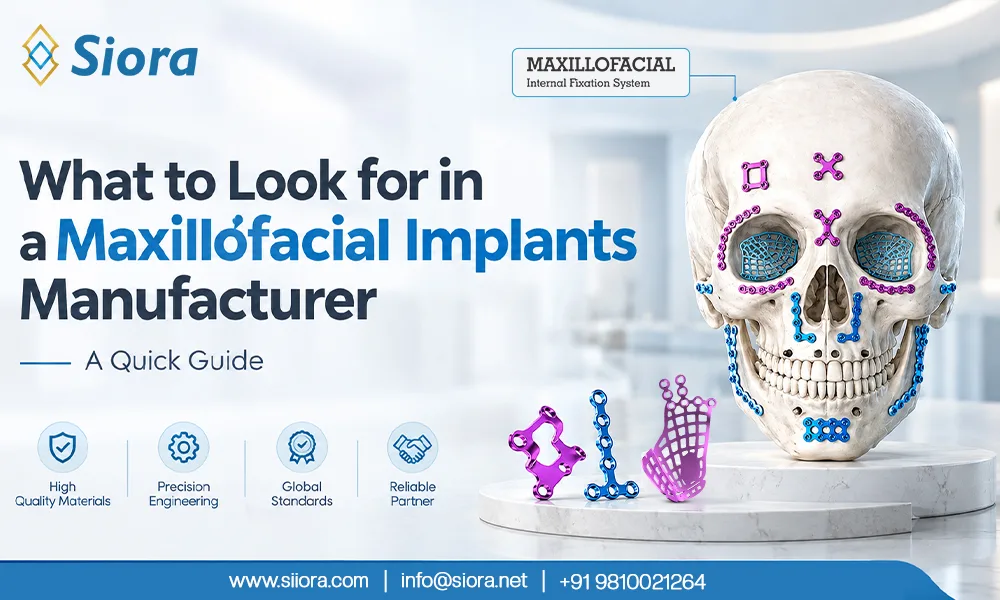
Choosing the right maxillofacial implants manufacturer is an important decision for hospitals, surgeons, distributors, and healthcare companies. The quality of implants can directly influence surgical outcomes, handling during procedures, and long-term patient care. With several manufacturers available in the market, it can be difficult to know which factors deserve the most attention.
Here is a practical guide to help you evaluate a manufacturer before making a decision.
Check Quality Certifications
Quality certifications should be one of the first things you verify. A reliable manufacturer should follow recognized quality management systems and maintain proper documentation throughout the manufacturing process.
For medical device manufacturers, certifications such as ISO 13485 demonstrate that the company follows a structured quality management system specifically designed for medical devices. Depending on the target market, regulatory approvals and certifications such as CE may also be important.
Do not simply look for certification logos. Ask whether the certifications are current and relevant to the products you intend to source.
Examine the Materials Used
Material selection matters considerably when it comes to maxillofacial implants. The manufacturer should clearly specify the materials used for plates, screws, and other implant components.
Titanium and titanium alloys are commonly used because of their favorable mechanical properties, corrosion resistance, and biocompatibility. Stainless steel is another material used for certain orthopedic and maxillofacial applications.
A dependable manufacturer should be able to provide material specifications, relevant standards, and supporting documentation when required.
Look at Product Range and Design Options
A good manufacturer should offer more than a handful of standard products. Maxillofacial surgery can involve different anatomical regions and clinical requirements, so having access to a comprehensive product portfolio can make sourcing easier.
Look for manufacturers offering different plate configurations, thicknesses, screw options, reconstruction plates, and supporting instrumentation. Well-designed implants should provide appropriate anatomical fit while allowing surgeons to work efficiently during procedures.
Evaluate Manufacturing Capabilities
The manufacturing facility tells you a lot about a company's ability to maintain consistent product quality. Look for manufacturers with modern machining, finishing, inspection, cleaning, and packaging capabilities.
Quality control should not happen only at the end of production. Inspection and process controls should be integrated throughout manufacturing. Cleanroom packaging is another useful indicator when evaluating how seriously a company approaches contamination control and product handling.
Consider Customization and OEM Support
Distributors and medical device companies may have requirements that standard products cannot always meet. In such situations, OEM and private-label capabilities can be valuable.
Ask whether the manufacturer can support customized designs, packaging, labeling, documentation, and product configurations. A manufacturer with an experienced technical team can make the development process considerably smoother.
Assess Experience and Global Reach
Experience cannot replace quality systems, but it certainly adds value. Manufacturers with years of experience are often better equipped to understand changing market requirements, documentation needs, and distributor expectations.
If you plan to sell orthopedic implants internationally, check whether the manufacturer already works with customers in different countries. Export experience can make regulatory documentation, logistics, and communication easier.
Don't Ignore Communication and After-Sales Support
Price is important, but it should not be the only deciding factor. Pay attention to how quickly the manufacturer responds to questions, handles documentation requests, resolves quality concerns, and supports customers after an order is delivered.
A manufacturer that communicates clearly from the beginning is more likely to become a dependable long-term partner.
Final Thoughts
Selecting a maxillofacial implants manufacturer requires looking beyond the product catalogue. Certifications, materials, manufacturing capabilities, product design, customization options, experience, and customer support all deserve consideration.
The right partner should offer consistent quality while understanding your clinical, regulatory, and commercial requirements. Taking time to evaluate these factors before placing an order can help you build a stronger and more reliable supply chain.