What to Do If Your Dog Steps on a Goat Head
Your dog suddenly starts limping, licking one paw, or refusing to walk. You take a closer look and find a sharp goat head stuck in the paw. It is a small burr, but those hard spikes can cause a painful puncture.
If your dog steps on a goat head, stay calm and check the paw carefully. You may be able to remove a loose burr with tweezers, but a deeply embedded spine or puncture wound needs veterinary attention. Cleaning the area and watching for signs of infection are also important.
Here is what to do, what to avoid, and how to help prevent another painful encounter.
1. Stop Your Dog From Walking on the Injured Paw
First, move your dog away from the area where the goat heads are growing. Try to keep your dog calm and prevent them from putting more weight on the injured paw.
Walking can push a sharp burr deeper into the skin or make an existing puncture worse. If your dog keeps licking or chewing the paw, gently prevent access to the area while you inspect it.
Remember that a dog in pain may react when you touch an injured foot. Handle the paw carefully and do not force an examination if your dog becomes distressed.
2. Check the Paw for a Goat Head
Find a well-lit area and examine the entire foot. Goat heads can get stuck in places that are easy to miss.
Check these areas:
- Between the toes
- Around the paw pads
- Along the edges of the nails
- Under the paw
- Between the fur and skin
Look for a visible burr, a small puncture, redness, swelling, or bleeding. Your dog may also keep lifting the same paw or licking one particular spot.
Do not assume the burr is gone just because you cannot see it. A sharp piece may have broken off beneath the skin.
3. Remove a Loose Goat Head Carefully
If the goat head is sitting on the surface or is clearly visible and easy to grasp, you may be able to remove it at home.
Follow these steps:
- Wash your hands before touching the injured area.
- Use clean tweezers to grip the visible burr.
- Remove it gently without squeezing or pushing it deeper.
- Stop if it breaks, resists removal, or causes significant pain.
- Check the area again to see whether any visible pieces remain.
Important: Do not dig into your dog's paw with tweezers, needles, or other sharp tools. If a spine is deeply embedded, broken beneath the skin, or difficult to reach, let a veterinarian remove it.
4. Clean the Injured Area
After removing a loose burr, gently rinse the paw with clean water or sterile saline. This helps remove dirt and small particles around the puncture.
Pat the area dry with clean gauze or a soft towel. Avoid scrubbing the wound.
Do not use rubbing alcohol, hydrogen peroxide, or strong household disinfectants unless your veterinarian specifically recommends them. These products can irritate injured tissue.
If the wound looks deep or your dog continues to limp, contact your veterinarian even if you have removed the visible burr.
5. Know When Your Dog Needs a Vet
Some goat head injuries are minor, but others need professional treatment. A sharp spine can penetrate the paw pad, break beneath the skin, or leave material inside the wound.
Contact a veterinarian if you notice:
- A deeply embedded or broken thorn
- Persistent bleeding
- Swelling or increasing redness
- Pus or discharge
- Severe pain or continued limping
- Your dog refusing to put weight on the paw
- A wound that looks deep or keeps reopening
- Symptoms that get worse instead of better
If your dog has a visible object lodged deeply in the paw, do not pull it out. Leave it in place and seek veterinary care promptly.
A vet can examine the injury, remove any remaining material, and decide whether additional treatment is needed. Do not give human pain medication unless your veterinarian tells you to.
6. Watch Your Dog During Recovery
Even after removing a goat head, keep checking the injured paw over the next few days. Look for swelling, redness, discharge, increased licking, or renewed limping. These signs may mean the wound is irritated or infected.
Keep your dog away from areas with goat heads while the paw heals. Follow your veterinarian's instructions about cleaning, medication, and activity. If the injury does not improve or your dog starts limping again, arrange another veterinary check.
How to Prevent Goat Head Injuries in Your Yard
Removing one goat head from your dog's paw solves the immediate problem. However, if your yard has more of these burrs, your dog could step on another one the next time they go outside.
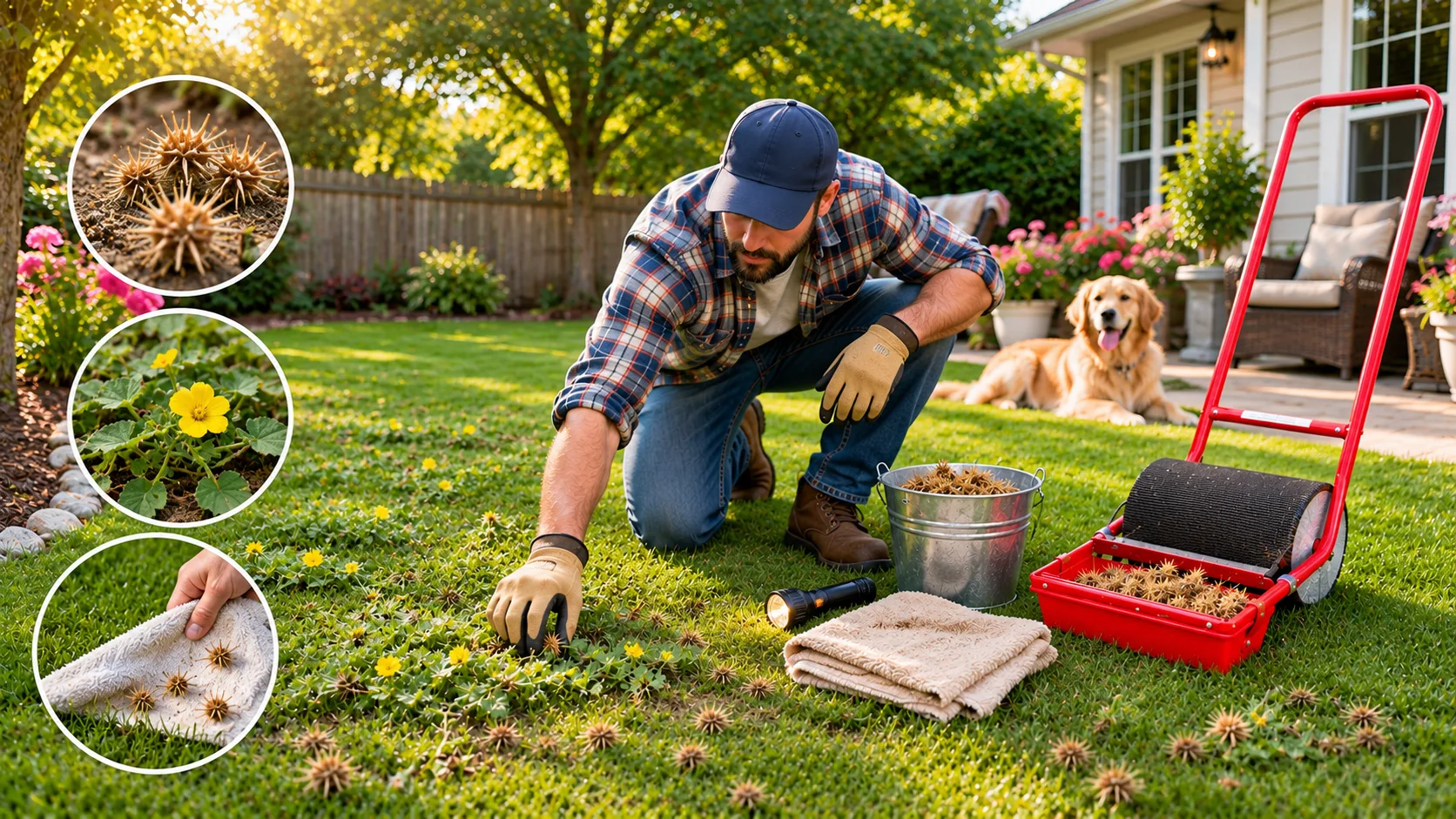
Goat heads come from puncturevine, a low-growing weed that produces hard seedpods with sharp spines. The burrs can remain on the ground after the plant dies, so spraying or removing the living weed does not automatically clear the hazard.
Here are a few practical ways to protect your dog:
- Remove growing puncturevine plants. Pull or remove young plants before they produce mature burrs. Wear thick gloves and avoid spreading the seedpods.
- Clear loose goat heads. Check the lawn, pathways, play areas, and spots where your dog likes to walk or rest. Collect loose burrs before letting your dog use those areas.
- Check your dog's paws after walks. A quick inspection can help you find a burr before it becomes deeply embedded.
- Keep your lawn healthy. Dense grass can help limit open spaces where weeds such as puncturevine may spread.
- Inspect outdoor areas regularly. Goat heads can be easy to miss in dry soil, gravel, and thin patches of grass.
How to Remove Loose Goat Heads From Your Yard
Picking up goat heads one at a time can take a long time, especially when they cover a large part of your yard.
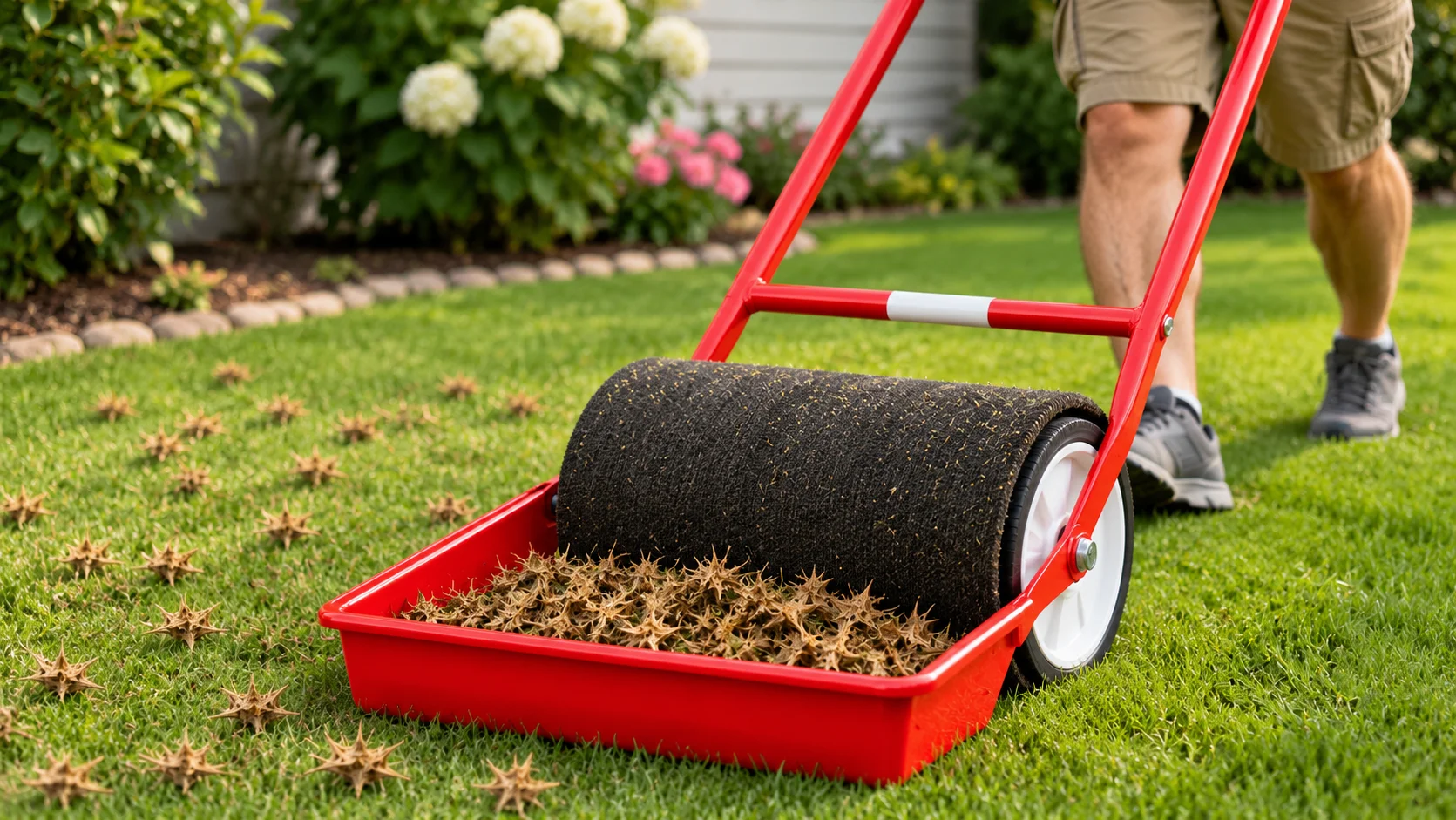
The Sticker Burr Roller is designed to collect loose goat heads, including burrs that have already fallen from puncturevine plants. Its foam roller picks up the burrs, while a conveyor screen transfers them into a collection tray.
It is important to understand how it works. The roller collects loose burrs on the ground. It does not pull out live puncturevine plants or collect green burrs that are still attached to them. Remove or cut the plants first, then use the roller to collect the fallen burrs.
For dog owners, clearing loose goat heads from common play and walking areas can help reduce the chance of another painful paw injury.
You can explore the Sticker Burr Roller collection to find a model for your yard.
Final Thoughts
If your dog steps on a goat head, check the paw, remove only a loose and easily accessible burr, and clean the area gently. If the thorn is deeply embedded, the paw is bleeding, or your dog keeps limping, contact a veterinarian.
Once your dog is comfortable again, take time to check the yard. Removing living puncturevine plants and collecting loose goat heads can help make outdoor spaces safer for your dog.
Frequently Asked Questions
What should I do if my dog steps on a goat head?
Stop your dog from walking on the injured paw and check between the toes and around the pads. Remove a loose burr only if it is easy to grasp. Clean the area with water or saline and contact a veterinarian if the thorn is embedded or your dog continues limping.
Can a goat head get stuck inside a dog's paw?
Yes. Goat head burrs have hard, sharp spines that can puncture the skin and become embedded in a paw pad or between the toes. A broken spine may also remain beneath the skin.
How do I know if my dog has a goat head in its paw?
Common signs include sudden limping, licking or chewing one paw, holding a foot off the ground, and reacting when you touch a certain spot. Check the pads and spaces between the toes for a visible burr or puncture.
Should I take my dog to the vet for a goat head in its paw?
Yes, if the burr is deeply embedded, breaks beneath the skin, causes significant pain, or leaves a deep puncture. You should also contact a vet if bleeding continues, swelling develops, or your dog keeps limping.
Can goat heads still hurt dogs after the plant dies?
Yes. The hard seedpods can remain sharp after the plant dries out or dies. Removing the living plant alone does not clear the burrs already scattered across the ground.
How can I keep goat heads out of my dog's yard?
Remove puncturevine plants before they produce mature burrs, collect loose seedpods, maintain healthy grass, and inspect your dog's outdoor areas regularly. A burr collection tool can also help clear loose goat heads from the ground.