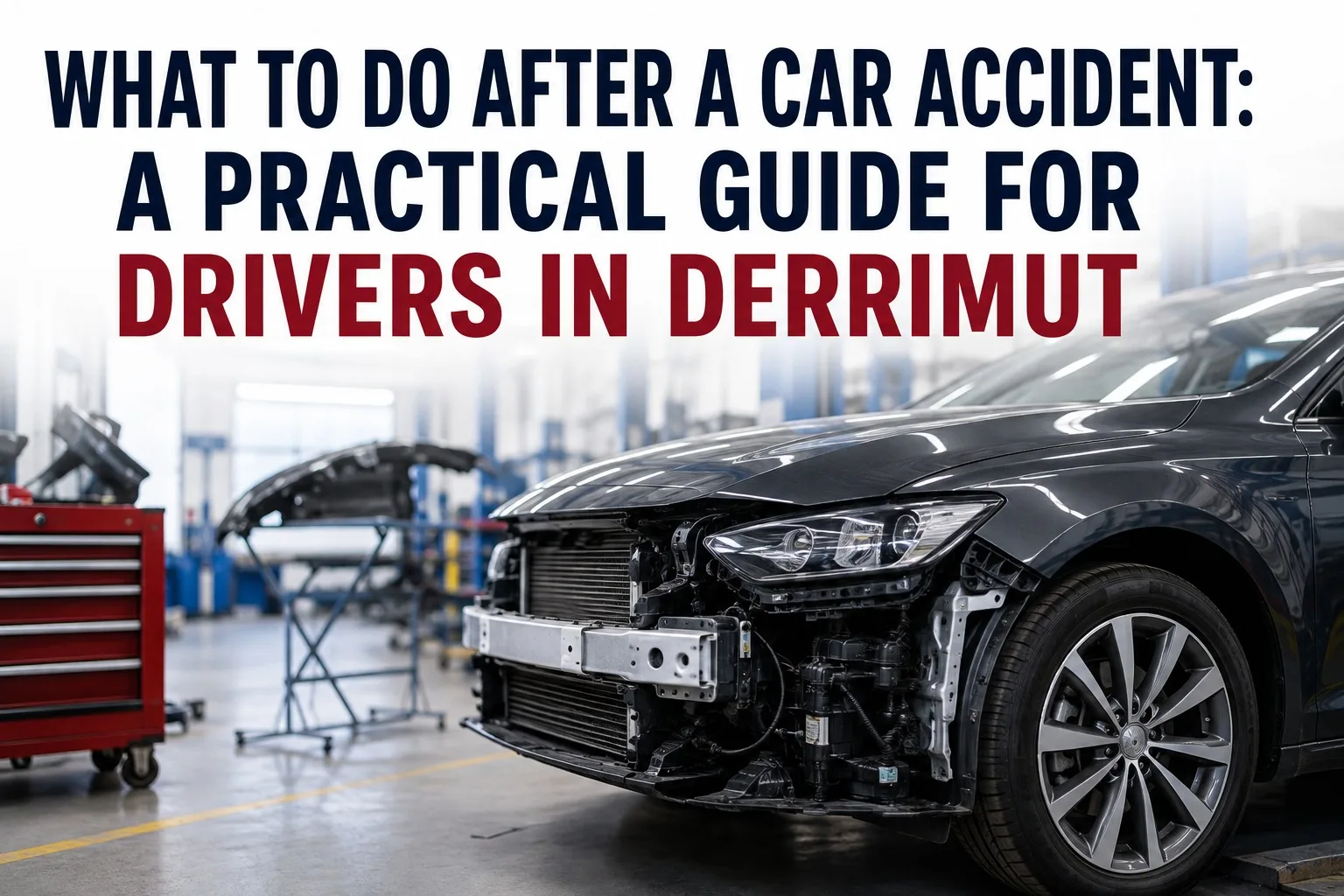
A car accident can be stressful, even when the damage appears to be minor. After dealing with the immediate safety concerns, drivers often need to think about insurance, vehicle damage, towing, repairs and getting back on the road.
Knowing what to do after an accident can make the process more manageable. Taking the right steps at the scene, documenting the damage and choosing an appropriate repairer can help protect your interests and support a smoother repair experience.
For drivers in Derrimut and surrounding western Melbourne suburbs, having a clear plan can be particularly useful when unexpected vehicle damage affects work, family commitments or daily travel.
Stay Calm and Check for Immediate Safety
The first priority after an accident should always be safety.
If possible, move the vehicle to a safe location away from moving traffic. Turn on the hazard lights and check whether anyone involved has been injured.
If medical assistance or emergency services are required, contact the appropriate emergency service immediately. Avoid attempting to move seriously injured people unless there is an immediate danger that requires it.
Once everyone is safe, take a moment to assess the situation before discussing the accident with other drivers.
Exchange Important Information
After an accident, drivers should exchange relevant details with the other parties involved.
This may include:
- Full name
- Contact details
- Driver's licence information
- Vehicle registration
- Vehicle make and model
- Insurance details
- Details of the vehicle owner if different from the driver
If there were witnesses, their contact information may also be useful.
Try to remain polite and factual when speaking with other people at the scene. Avoid making assumptions about who was responsible for the accident before the circumstances have been properly assessed.
Take Photographs of the Damage
Photographs can provide useful documentation of what happened.
If it is safe to do so, take photos of the vehicles from different angles. Capture close-up images of visible damage as well as wider photographs showing the surrounding scene.
You may also want to photograph:
- Damaged panels
- Broken lights
- Scratches and dents
- Windscreens or windows
- Wheel damage
- Number plates
- Road conditions
- Relevant signs or markings
Good-quality photographs can be useful when discussing the incident with your insurer or repairer.
Don't Assume Minor Damage Is Only Cosmetic
Some vehicle damage may not be immediately obvious.
A bumper can appear to have only a small dent while components behind it may have been affected. Similarly, damage around a wheel can potentially involve steering or suspension components.
After a collision, pay attention to changes in how the vehicle drives. Warning signs can include unusual noises, steering problems, fluid leaks, vibrations or dashboard warning lights.
If you are unsure whether the vehicle is safe to drive, have it assessed by a qualified professional rather than taking unnecessary risks.
Contact Your Insurance Provider
If you intend to make an insurance claim, contact your insurer and provide accurate information about the incident.
Your insurer may explain the claims process, advise where the vehicle should be taken and provide information about assessment requirements.
Insurance policies can differ, so it is important to understand your particular policy and any conditions relating to repairs, towing and repairer selection.
Keep copies of relevant photographs, documents and correspondence. Having organised records can make it easier to track the claim and communicate with the parties involved.
Understand the Repair Process
Vehicle repairs can involve several stages.
The damaged vehicle may first need to be assessed to determine the extent of the damage. Depending on the accident, this can involve examining the exterior panels as well as mechanical, electrical and structural components.
Once the damage has been assessed, a repair plan can be developed.
Typical repair work may include panel beating, replacement of damaged components, paint preparation, colour matching, refinishing and reassembly.
The exact process depends on the vehicle and the severity of the damage.
Choosing a Suitable Repairer in Derrimut
Selecting the right repair business is an important part of getting your vehicle back to its pre-accident condition.
Drivers looking for smash repairs in Derrimut should consider the repairer's experience, communication, workmanship and ability to handle the type of damage involved.
It can be useful to ask questions about:
- The assessment process
- Expected repair time
- Replacement parts
- Paint matching
- Warranty on repair work
- Communication during the repair
- Insurance claim procedures
- Whether towing or vehicle collection is available
A professional repairer should be able to explain the process clearly and provide realistic information about what is involved.
Quality Paint Matching Matters
Modern vehicles are available in a wide range of colours and finishes. Matching repaired panels with the surrounding bodywork is therefore an important part of a quality repair.
A poor colour match can make repaired areas noticeably different from the rest of the vehicle.
Professional repair facilities use appropriate preparation and refinishing processes to achieve a consistent result. The quality of the preparation work can be just as important as the final paint application.
If only part of a panel or section of the vehicle has been damaged, ask the repairer how they intend to achieve a consistent finish.
Consider Structural Damage
Not every collision results in obvious structural damage, but more significant accidents can affect areas that are not immediately visible.
The vehicle's structure plays an important role in occupant protection. If a collision has been severe, the vehicle may require more comprehensive assessment before repairs can begin.
This is another reason why accident damage should not be judged solely by appearance.
A qualified repair professional can assess the vehicle and determine what areas require attention.
Keep Communication Clear
Good communication can make the repair experience much easier.
When handing over your vehicle, provide the repairer with relevant information about the accident and explain any concerns you have noticed since the incident.
If the vehicle has developed unusual sounds, warning lights or handling changes, mention them.
During the repair, ask for updates if you need to understand how the work is progressing. If additional damage is discovered, the repairer should explain what has been identified and why further work may be necessary.
Clear communication helps ensure that everyone understands the repair requirements.
Prepare Your Vehicle Before Repairs
Before leaving your vehicle at a repair facility, remove personal belongings where practical.
Check the glovebox, boot, centre console and other storage areas for valuables or important documents.
If you need to provide keys, make sure you understand who will have access to the vehicle and whether additional keys are required.
It can also be useful to record the vehicle's condition before repairs begin, particularly if the repair process will involve significant work.
Think About Your Transport Options
Being without a vehicle can be inconvenient, especially for people who rely on their car for work, school, appointments and family responsibilities.
Before repairs begin, ask whether the repairer or insurer offers any transport assistance, loan vehicle arrangements or other options.
If these services are not available, consider alternative transport in advance. Planning ahead can reduce disruption while the vehicle is being repaired.
Derrimut and Melbourne's western suburbs are served by a range of transport options, but availability can vary depending on your location and schedule.
Inspect the Vehicle Before Collection
When your vehicle is ready, take time to inspect the completed work before leaving.
Check that the repaired areas look consistent with the rest of the vehicle and that doors, boot lids, lights and other components operate correctly.
Take the vehicle for a short drive if appropriate and pay attention to unusual noises, vibrations or handling issues.
If something does not appear right, raise it with the repairer promptly.
Maintain Your Vehicle After Repairs
Once repairs are complete, continue looking after the vehicle with regular maintenance.
Follow the manufacturer's recommended servicing schedule and address new warning signs promptly. Keeping tyres, brakes, fluids and other components in good condition can contribute to safer and more reliable driving.
If repairs involved mechanical or safety-related components, follow any advice provided by the repairer regarding follow-up inspections or maintenance.
Getting Back on the Road With Confidence
An accident can create considerable disruption, but having a clear process can make the experience easier to manage. Prioritising safety, documenting the incident, communicating with your insurer and selecting an experienced repairer are all important steps.
For Derrimut drivers, choosing a repair business that communicates clearly and takes a thorough approach to vehicle restoration can help make the repair process more straightforward.
A properly assessed and carefully repaired vehicle can provide greater confidence when it is time to return to the road. By taking the time to understand the repair process and asking the right questions, motorists can make informed decisions after an accident and focus on getting back to their everyday routines.