The wedding season feels like the perfect chance to dive into traditional Indian fashion, yet still keep a bit of your own vibe. You can go with those elegant, easy silhouettes and also play with intricate embroidery, because ethnic outfits really do give you plenty of ways to look polished at any celebration. Still, picking the right look isn’t always smooth, especially when you’re stuck between an Anarkali dress and a designer lehenga, you know?
Both options have their own charm. Anarkali outfits are usually loved for their flowing shape and that graceful, almost effortless appeal, while lehengas tend to steal attention with their voluminous skirts and detailed, showy designs. Honestly, the best choice often comes down to the event, how comfortable you feel, and the final impression you’re trying to create, whether you want soft elegance or more dramatic presence.
So if you’re building a wedding wardrobe, taking a moment to understand what separates these well-known Indian dresses can help you choose with real confidence.
What Makes an Anarkali Dress a Timeless Wedding Outfit?
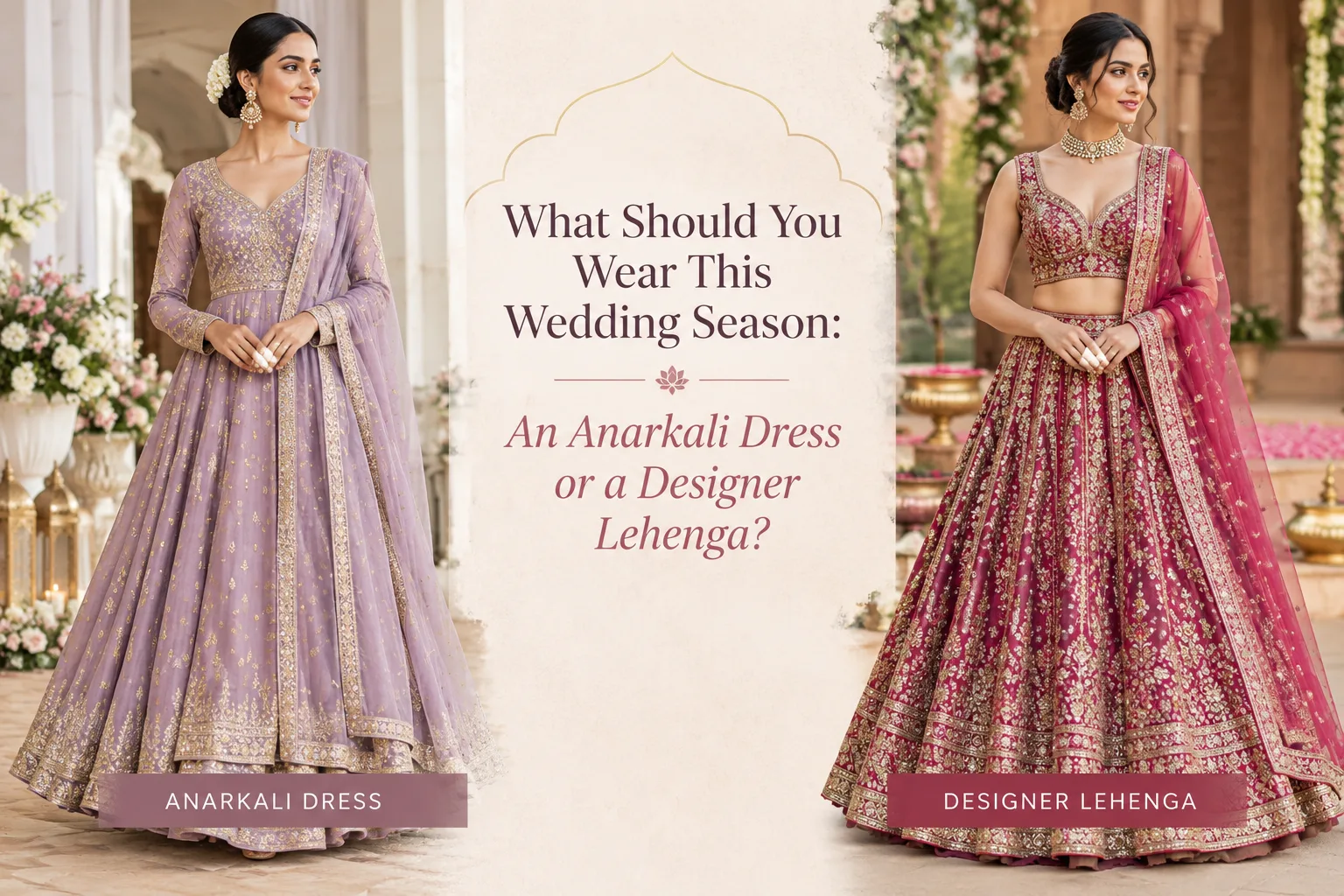
An anarkali dress is one of those choices people make when they want traditional elegance but still like a little modern vibe in it. It’s inspired by classic Indian clothing, and usually it comes with a fitted bodice and a flared shape, so when you walk in it, it just… moves in a really pretty way.
Modern anarkali styles often bring in zari embroidery, sequins, mirror work, delicate thread patterns, and those embellished necklines that catch the light.
One big perk of an anarkali dress is how flexible it feels. For daytime functions, you can go for lighter fabrics, or if it’s an evening celebration, you can pick something richly worked and more dramatic. Add statement earrings, embroidered juttis, and a dupatta that matches, and suddenly you’ve got this polished ethnic look that still feels effortless.
Anarkalis are also a great pick for women who want something rooted in tradition but still comfortable, with room to move and breathe.
Why Are Designer Lehengas a Favorite for the Wedding Season?
Designer lehengas are likely to show up in people’s minds when they think of big celebrations, luxurious fabrics, and careful craftsmanship. A classic lehenga usually includes a flared skirt, a blouse or choli, and a dupatta, so there are also multiple ways to style it without getting boring.
You’ll see everything from heavily embroidered bridal-inspired looks to contemporary pastel sets. They’re made for different wedding moments too. Common highlights are mirror work, floral embroidery, metallic detailing, layered skirts, and those statement blouses that basically steal the scene.
An Indian lehenga can be especially fitting for reception parties, sangeet ceremonies, and grand evening weddings when you want a bolder, more dramatic presence.
And honestly, the styling freedom is part of the appeal. You can play around with blouse necklines, dupatta drape styles, belts, jewelry, and footwear until it feels totally yours.
For anyone who likes ethnic fashion that makes a statement, designer lehengas give you the chance to blend traditional artistry with modern design, all in one look.
Anarkali Dress vs Designer Lehenga: Which One Should You Choose?
Honestly, it really depends on the wedding function you’re attending, how you like the shape of the outfit, and how comfy you need to be while you’re there all day or night.
1. Consider the Wedding Function
For small ceremonies, daytime moments, and family meetups, an anarkali dress can give you a classy look that feels a bit calmer. Usually the embroidery is lighter and the fabrics are more breathable, so you can move around without feeling stuck, or like.
On the other hand, designer lehengas are a great pick for receptions, sangeet evenings, and more formal wedding events. They’re often more structured, with extra detailing, so the whole vibe becomes more dramatic.
2. Prioritise Comfort and Movement
Comfort matters, especially during weddings when you might sit, stand, walk, and dance. Usually, classic anarkali suits are convenient because they come as a one-piece or coordinated setup, so styling and dressing are easier.
Of course, Indian lehengas can still be comfortable, but the weight of the skirt, the blouse fit, and how the dupatta is placed can change everything.
If you’re planning to dance for hours, or you’re attending multiple events in a single day, check the fabric, the lining, the fit, and the overall heaviness before you decide.
3. Choose Colors That Match the Occasion
Color makes a big difference in how the outfit “lands.” For daytime functions, pastel pink, mint green, powder blue, and ivory-inspired shades usually look fresh, depending on what the event expects.
For evening events, jewel tones like emerald green, wine, royal blue, and deep purple can look richer and more intense. Metallic touches and detailed embroidery can level it up even more.
Whether it’s an anarkali or lehenga, choose a shade that works with your preferences and also with the mood of the wedding, plus any dress code mentioned.
4. Think About Styling and Accessories
Even a simple ethnic outfit can look special with the right accessories. Amazing chandbalis, delicate necklaces, embroidered footwear, and dupattas match evergreen anarkali suits and the overall traditional theme.
Bolder styling pairs well with designer lehengas that can handle statement earrings, layered necklaces, embellished clutches, and dupattas that are draped carefully. Still, if your outfit already has heavy embroidery, going extra with accessories can feel crowded, so keep it a bit controlled.
The main idea is that your jewelry, footwear, and hair should support the outfit, not fight with it.
Final Verdict: Anarkali Dress or Designer Lehenga?
Look, both anarkali dresses and designer lehengas really do belong in a well-rounded wedding wardrobe, like, honestly. An Anarkali is a strong pick for women who like free-flowing silhouettes, soft elegant styling, and that practical comfort you don’t have to think about all day. On the other hand, a designer lehenga suits people who want a colorful outfit, more dramatic, more festive, and more “look at me” energy.
In the end, the best Indian dress is the one that makes you feel at ease, self-assured, and styled just right for the occasion. If you look at the event type, fabric feel, fit, shade, and how your accessories are planned, you can pull together a wedding season look that still feels very you while really honoring the beauty of Indian fashion.