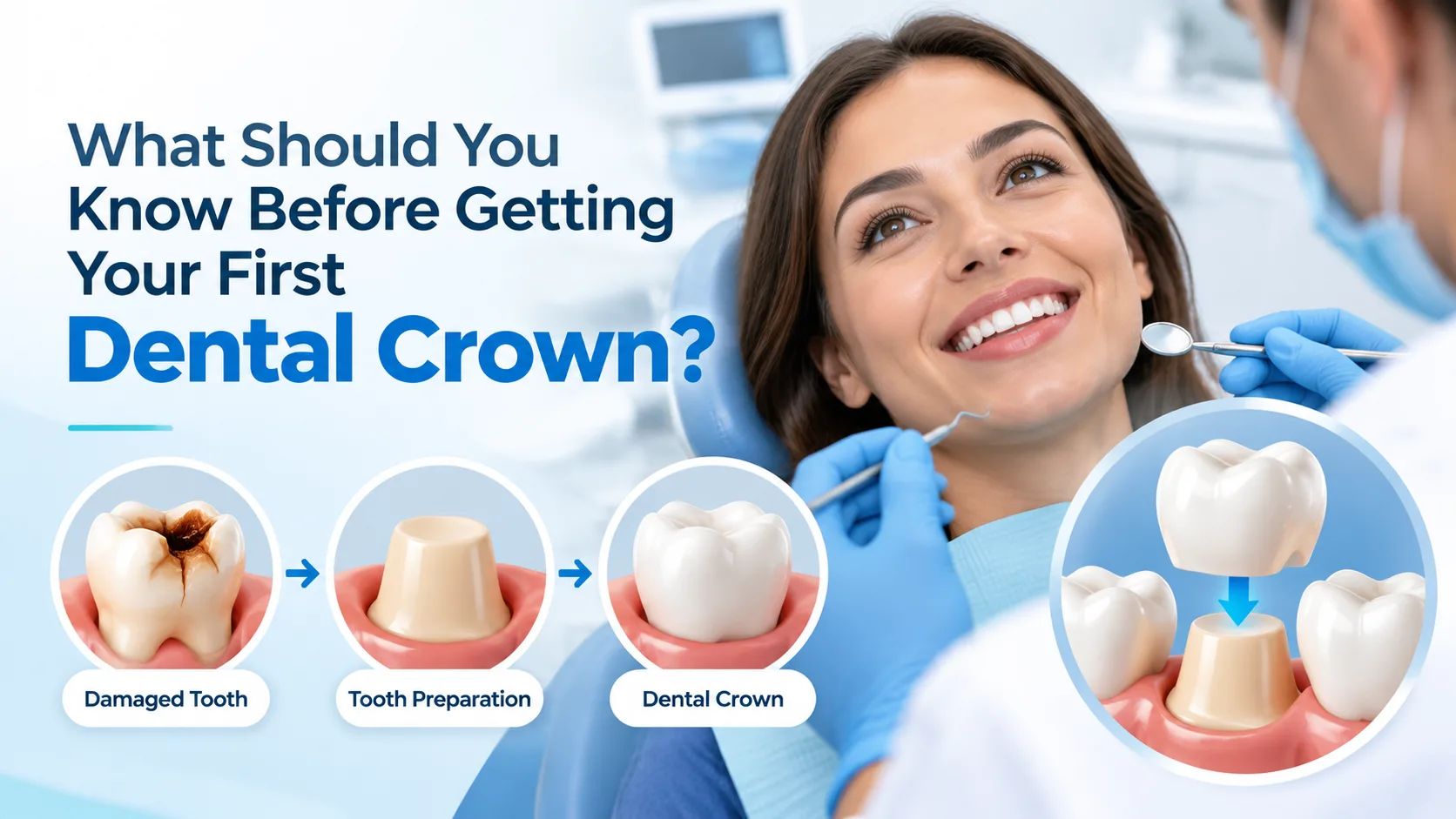
A damaged, weakened, or heavily restored tooth may need additional protection to remain functional. A dental crown is one treatment dentists use to cover a tooth and restore its shape, strength, and appearance. If your dentist has recommended your first crown, understanding the procedure can help you feel more prepared and make informed decisions about your dental care.
From the reasons a crown may be needed to the treatment process and aftercare, there are several important things to consider before moving forward.
What Is a Dental Crown?
A dental crown is a custom-made covering that fits over a tooth to restore its shape, size, strength, and appearance. Crowns may be recommended when a tooth has extensive decay, a large filling, a crack, or damage that cannot be adequately managed with a filling alone. They may also be used after root canal treatment when additional protection is appropriate.
Crowns can be made from different materials, including ceramic, porcelain-based materials, metal, or combinations of materials. The most suitable choice depends on the tooth's location, the forces it must withstand, your preferences, and your dentist's recommendation.
Why Might You Need a Dental Crown?
A dentist may recommend a crown when a tooth has lost significant structure because of decay or damage. A crown can help protect the remaining tooth and restore its ability to function during chewing.
Crowns may also be used to restore worn or fractured teeth, cover certain dental implants, or improve the appearance of a tooth in selected cases. However, a crown is not always necessary for every damaged tooth. Depending on the condition, a filling, an onlay, or another treatment may be more appropriate.
Your dentist will examine the tooth and explain why a particular restoration is being recommended.
What Happens During the Crown Procedure?
The process usually begins with an examination to assess the tooth and determine whether a crown is suitable. X-rays or other diagnostic steps may be needed, depending on the condition of the tooth.
For a conventional crown, the dentist prepares the tooth so the restoration can fit securely. An impression or digital scan is then taken to create a crown that matches the shape and bite of your teeth. A temporary crown may be placed while the permanent restoration is being made.
At a later appointment, the dentist checks the fit, shape, and bite before securing the final crown. The exact process varies depending on the tooth, the material, and the technology available at the dental office.
Are Same-Day Dental Crowns an Option?
Some dental practices offer same-day crowns using digital scanning and in-office equipment to design and produce the restoration during a single visit. This may reduce the need for a temporary crown and a separate appointment.
However, same-day treatment is not appropriate for every case. The condition of the tooth, the complexity of the restoration, and the dentist's assessment all influence whether it is a suitable choice.
If you are interested in same-day dental crowns, ask your dental provider whether this option is available and appropriate for your tooth.
Will Getting a Dental Crown Hurt?
The crown preparation procedure is generally performed with local anesthesia to help manage discomfort. You may feel pressure or vibration during treatment, but you should tell your dentist if you experience pain.
After the procedure, mild sensitivity or gum tenderness may occur temporarily. A newly placed crown can also feel unfamiliar at first. If your bite feels uneven, your tooth remains painful, or sensitivity becomes severe or persistent, contact your dentist for an assessment.
Following the aftercare instructions provided by your dental team can help you manage the recovery period.
How Should You Care for a Dental Crown?
A crowned tooth still needs daily care. Brush twice a day with fluoride toothpaste and clean between your teeth every day to help prevent decay around the crown and maintain healthy gums.
Avoid chewing ice or using your teeth to open packages, as these habits can damage natural teeth and dental restorations. If you grind or clench your teeth, ask your dentist whether a night guard may help protect the crown.
Regular dental checkups allow your dentist to monitor the restoration, examine the surrounding gums, and identify potential problems early. Crowns can last many years, but their lifespan depends on the material, placement, oral hygiene, and biting habits.
What Should You Ask Your Dentist Before Treatment?
Before receiving your first crown, consider asking why the crown is needed, whether alternative treatments are possible, which material is recommended, and how many appointments will be required.
You can also ask about the expected cost, possible sensitivity after treatment, the crown's maintenance requirements, and what to do if it becomes loose or damaged. Understanding these details can help you set realistic expectations and feel more confident about your treatment plan.
Protect Your Tooth with Informed Dental Care
A dental crown can help restore a tooth that has been weakened or damaged, but successful treatment also depends on appropriate planning and ongoing care. Understanding the procedure, choosing a suitable restoration, and maintaining good oral hygiene can help you protect your dental health.
If your dentist has recommended a crown, discuss your questions and treatment options before proceeding so you can make a decision that suits your needs.