
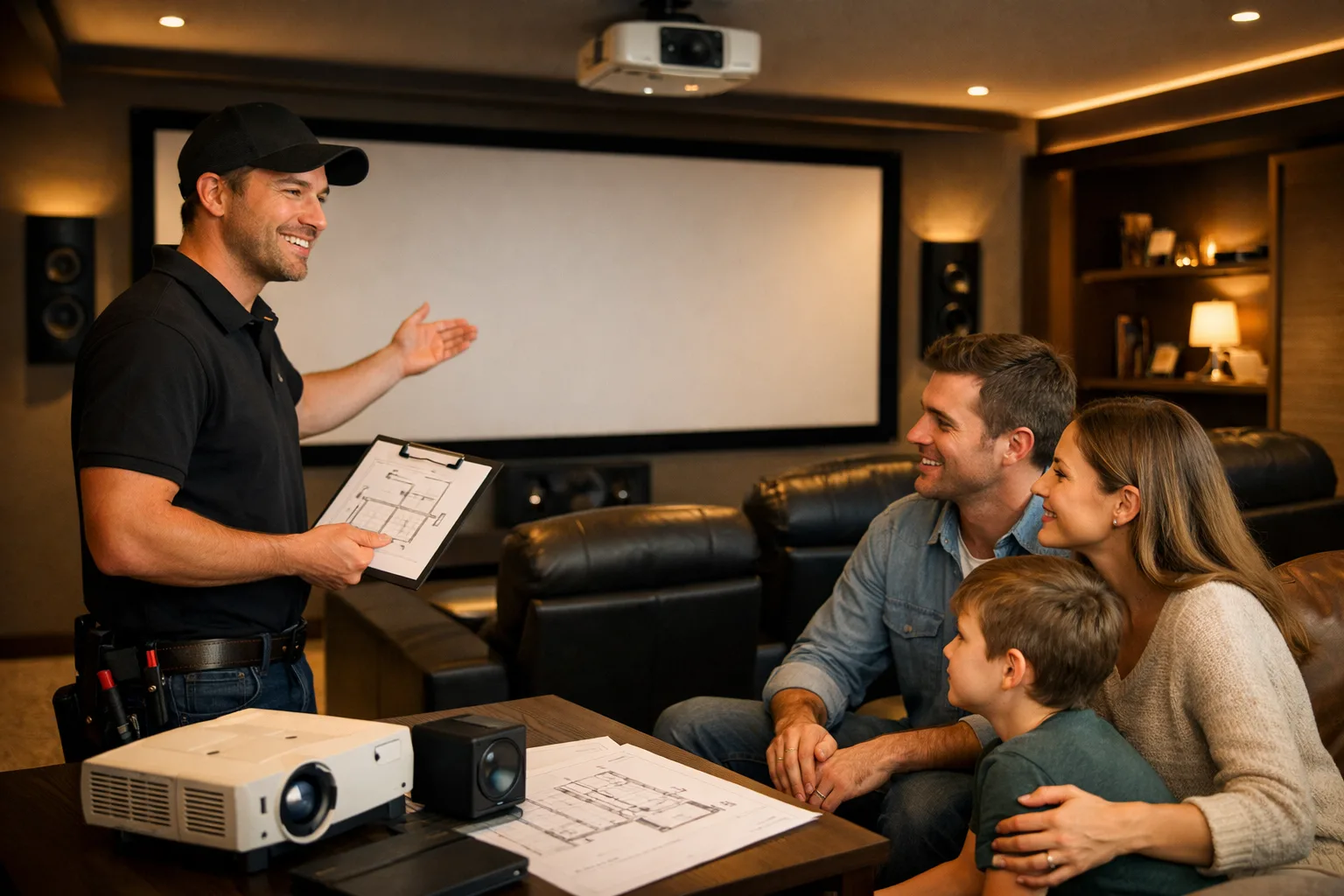
A home cinema can transform the way people enjoy movies, sports, and entertainment at home. However, the final experience depends greatly on proper planning and installation. Before selecting a home cinema installation company, it is important to understand several factors that can affect performance, comfort, and long-term satisfaction. Taking time to review these points can help homeowners make informed decisions and avoid common installation problems.
Understanding Experience and Technical Knowledge
One of the first things to check is the company's experience in home cinema projects. Installing a home cinema involves much more than placing a television and speakers in a room. It requires proper planning for sound, screen placement, wiring, lighting, and seating.
A company with technical knowledge can identify potential challenges before installation begins. Experienced professionals can also recommend practical solutions based on room size, viewing distance, and user requirements. Reviewing previous projects can provide a better understanding of the company's work quality and attention to detail.
Checking Room Assessment and Planning
Every room has different dimensions, wall materials, and acoustic characteristics. A proper room assessment is important before any equipment is selected or installed.
A professional installer should evaluate factors such as ceiling height, room shape, natural light, and available space. These elements influence picture quality and sound performance. Without careful planning, even expensive equipment may not deliver the expected results.
A detailed assessment helps create a balanced setup that matches the room and improves the overall viewing experience.
Reviewing Audio System Design
Sound is one of the most important parts of a home cinema. A good audio system creates an immersive experience and helps viewers enjoy movies as intended.
Before hiring a company, it is useful to understand how they approach speaker placement and sound distribution. Speakers should be positioned correctly to provide balanced audio throughout the room. Poor placement can lead to uneven sound and reduced enjoyment.
The installer should also consider room acoustics and recommend suitable solutions when necessary. Proper sound planning helps create clear dialogue, strong bass, and a more realistic entertainment experience.
Evaluating Display and Screen Recommendations
The display system is another major part of a home cinema setup. Depending on room size and viewing preferences, homeowners may choose a large television or a projector with a screen.
A reliable installer should explain the advantages and limitations of each option. Factors such as screen size, room brightness, viewing distance, and image resolution should be considered before making a decision.
Choosing equipment without understanding these factors can result in a display that feels too small, too large, or unsuitable for the room environment.
Looking at Cable Management and Installation Quality
Many people focus on equipment selection but overlook cable management. Proper cable organization is important for both appearance and safety.
A well-planned installation should keep cables organized and hidden whenever possible. This creates a cleaner look and reduces the risk of accidental damage. Good cable management also makes future maintenance easier.
Before hiring an installer, it is helpful to ask about their approach to wiring and equipment placement. Quality installation work often reflects the overall professionalism of the company.
Understanding Smart Home Integration Options
Modern home cinemas are often connected with smart home systems. This allows users to control lighting, audio, video, and other devices from a single interface.
If smart technology is important, check whether the installer has experience with system integration. A properly integrated setup can simplify operation and improve convenience for family members.
Understanding available integration options before installation helps avoid future upgrades and additional modification costs.
Reviewing Maintenance and Technical Support
Even high-quality systems may require adjustments or technical assistance over time. For this reason, support services are an important factor when choosing an installation company.
Homeowners should understand the type of assistance available after installation. Some companies provide troubleshooting support, software updates, and system optimization services when needed.
Reliable support helps ensure the home cinema continues performing properly and provides a better long-term experience.
Comparing Equipment Compatibility
Home cinema systems often include displays, speakers, receivers, streaming devices, and control systems from different manufacturers. These components must work together smoothly.
Before installation, it is useful to confirm that all selected equipment is compatible. An experienced installer can identify potential issues and recommend suitable combinations.
Proper compatibility improves system stability and reduces the chances of performance problems after installation.
Considering Future Expansion Possibilities
Technology changes quickly, and entertainment needs may evolve over time. A home cinema setup should allow for future improvements when needed.
It is worth discussing upgrade possibilities before installation begins. Additional speakers, improved displays, or enhanced control systems may be added later. Planning for future expansion can save time and reduce modification work in the future.
Thinking ahead helps homeowners build a system that remains useful and adaptable for many years.
When evaluating different service providers, taking time to review experience, planning methods, audio design, equipment compatibility, and support services can make a significant difference. Careful research helps homeowners choose a home cinema installation company that can deliver a well-designed and functional entertainment space tailored to their needs.