
A roof insulation can make a considerable impact on how a property feels over the course of a year. Heat loss through the roof can impact both comfort and energy use. If you’re a homeowner considering roof insulation Ireland, the first thing you need to do is work out what your property actually needs.
The correct solution will depend on the roof design, existing insulation, moisture conditions and the way the attic is used. What works for a simple cold attic may not work for a converted roof area. An accurate assessment prevents paying for services that don't fix the genuine problem.
Start With the Space Above the Ceiling
Take a hard look at how you’re using the attic before you insulate. An attic for storage only is not the same as a room-in-roof or converted area.
Check whether the insulation is between or over the ceiling joists. Look for spots where material is missing, compacted or uneven. Such details can impact how well the insulation operates.
Check for Moisture Before Adding Anything
Never insulate over damp. If you see water staining, mold, moisture or damaged timber this may indicate a roof or ventilation problem that needs treatment first.
Ventilation has a role, too. Insulation should not seal off intended ventilation pathways around the roof structure. The contractor should take moisture flow into account in the assessment.
Look at the Condition of Existing Insulation
Older insulation can compact over time. It could have been disturbed by electrical work, storage or earlier building work.
Existing conditions can identify if the right choice is topping up or replacing or some other means of insulation.
Match the Insulation to the Roof Structure
Not all homes in Ireland are constructed with the same roof. Different approaches may be needed for traditional houses, modern residences, dormer conversions and houses with complicated roof plans.
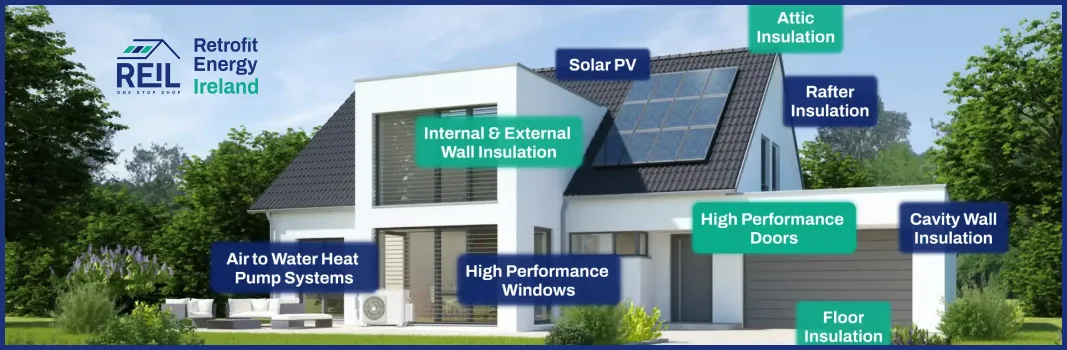
Where the insulation is positioned also matters. Typically, attic insulation is installed on the ceiling. Insulation of rafters is utilised when the slope of the roof itself needs to be insulated. Depending on which portion of the building has to be thermally protected, the suitable choice is made.
Use the Home's BER as a Useful Clue
A Building Energy Rating of the home can assist a homeowner see how insulation fits into the overall energy performance of the property. An existing BER Advisory Report can state the condition of attic or wall insulation.
SEAI also recommends that people look at their BER information when considering insulation. If there is still any doubt, a BER Assessor can give a better informed opinion before work starts.
This may be helpful if you are thinking about a number of improvements. Homeowners may understand how roof repair fits in with the existing energy performance of the home rather than isolating roof work.
Check the Grant Position Before Work Starts
SEAI presently supports attic insulation under its individual energy awards. The current grant amounts vary by property type for qualifying residences. Other types of habitation can attract varied sums, with detached dwellings attracting up to €2,000. Qualifying first-time purchasers and certain homeowners receiving qualifying welfare assistance can get higher amounts.
Do Not Assume Every Insulation Grant Applies
Sometimes homeowners group all the insulating support together. Rules on eligibility for attic, cavity and external wall measures may vary.
For instance a seai cavity wall grant refers to another element of the building fabric. Do not confuse it with attic insulation support . “Check SEAI conditions at time of work to avoid misunderstandings before you commit to work.
Consider What Happens to the Heating System
Roof insulation can be especially essential if homeowners are looking at wider energy improvements. A warmer, better insulated home may be part of a bigger strategy of refurbishment.
This is vital when you are looking at a central heating system for heat pump Ireland projects. The best operation of heat pumps is based on an adequate approach to the heat loss and heat distribution of the house. Insulation is one part of that assessment, not a replacement for good system design.
The same applies when you compare insulation to other measures. A homeowner may require some roof work now but want to do more upgrades later. The sequence should be suitable to the condition and requirements of the property.
Know What to Ask the Contractor
It is also worth wondering what happens if existing insulation is destroyed or moisture is discovered? The more detailed the specified scope. The easier it is to compare quotes and see the differences in the work being suggested.
For bigger remodelling projects homeowners can also collaborate with external insulation specialists Ireland. Who can examine how different portions of the building envelope operate together. The idea is to have the roof evaluated on its own merits before adopting a solution.
Make the Assessment Before Choosing the Material
A good roof insulation starts with knowledge of the building.
For homeowners researching roof insulation Ireland, the strongest starting point is a property-specific assessment. Knowing the real heat-loss and construction problems makes it easier to pick the right job. See what help is available and not do unneeded work.
Fix the odd heating term phraseAdd a checklist for practical evaluation.