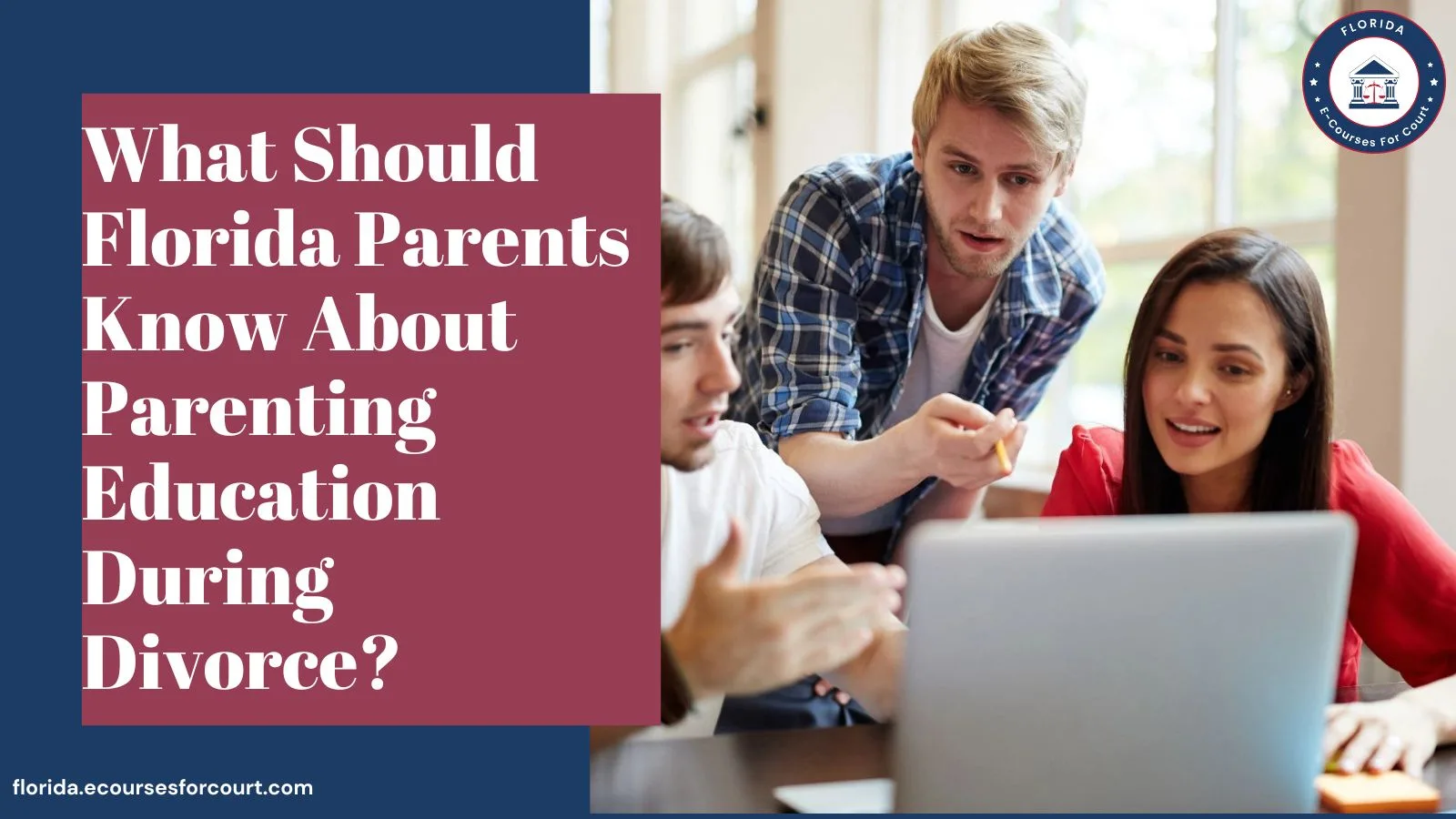
A Florida Parenting Class Online helps parents understand their responsibilities during divorce, separation, and family changes. Under Florida Statutes Section 61.21, parents involved in qualifying cases involving minor children may be required to complete a parenting education course before final judgment.
Key Takeaways
- Florida Statutes Section 61.21 establishes parenting education requirements for certain family court cases.
- Parents involved in qualifying divorce and paternity proceedings must complete the required educational course before final judgment.
- Florida's statutory course has a minimum duration of four hours.
- Parenting education covers child development, family relationships, communication, and financial responsibilities.
- Online learning can offer flexibility, but parents should verify provider eligibility and court requirements before enrolling.
- A certificate of completion may need to be filed with the court as proof of compliance.
Why Is Parenting Education Important During Divorce and Separation?
Divorce and separation can create major changes in family life. Parents may need to adjust living arrangements, financial responsibilities, communication methods, and daily childcare routines. These changes can be difficult for adults, but children may also experience uncertainty, stress, and emotional challenges.
Parenting education helps families understand how these changes can affect children. Instead of focusing only on disagreements between adults, educational programs encourage parents to consider their children's needs and maintain a stable environment.
A Florida Parenting Class Online can introduce parents to important subjects related to family transitions, including communication, shared parenting responsibilities, and child-focused decision-making.
The purpose is not to tell parents how to resolve every personal disagreement. It is to provide general educational information that can help them approach family changes more responsibly.
How Can Divorce Affect Children's Emotional Well-Being?
Children may respond differently when their parents separate. Some may become withdrawn, while others may express frustration, anxiety, sadness, or changes in behavior.
Their reactions can depend on their age, personality, family circumstances, and the level of conflict between parents.
Children may also have questions about where they will live, how often they will see each parent, and whether their everyday routines will change.
Parents can help by providing age-appropriate explanations, maintaining consistent routines, and avoiding arguments in front of their children.
Educational programs explain why children should not be placed in the middle of parental disagreements. They also encourage parents to recognize emotional changes and seek appropriate support when necessary.
Why Should Parents Focus on Their Children's Needs?
During family court proceedings, parents may become focused on legal disagreements, financial concerns, or personal frustrations.
However, children need stability and reassurance throughout these changes.
A parenting education course helps participants understand the importance of putting children's interests first when making decisions about daily care, communication, and family arrangements.
This approach can support healthier family relationships even when parents no longer live together.
What Does Florida Law Say About Parenting Education Requirements?
Florida has a specific statute addressing parenting education in certain family law proceedings.
Under Florida Statutes Section 61.21, the Parent Education and Family Stabilization Course is required for parties involved in a dissolution of marriage proceeding with minor children and certain paternity actions involving parental responsibility.
The law establishes educational requirements intended to help parents understand the consequences of separation and divorce for adults and children.
The statute also addresses course duration, provider approval, completion deadlines, and the consequences of failing to comply.
What Is Florida Statutes Section 61.21?
Section 61.21 of the Florida Statutes is titled "Parenting course authorized; fees; required attendance authorized; contempt."
It establishes the legal framework for the Parent Education and Family Stabilization Course.
The statute provides that the Florida Department of Children and Families (DCF) approves parenting courses. The required course must contain at least four hours of instruction.
Its educational subjects may include:
- Legal procedures involving parental responsibility, time-sharing, and child support.
- Emotional effects of divorce and separation on adults.
- Emotional needs and concerns of children.
- Family relationships and family dynamics.
- Financial responsibilities toward children.
- Issues involving spousal abuse, child abuse, and neglect.
- Relationship and communication skills.
- Educational considerations for children with special needs or emotional concerns.
The course must remain educational in nature. It is not intended to replace individual mental health treatment or provide personalized legal advice.
You can review the complete provision through the official Florida Statutes Section 61.21.
Who Must Complete a Parenting Education Course in Florida?
Florida law identifies specific family court proceedings in which parenting education is required.
These include:
Divorce cases involving minor children: Parties to a dissolution of marriage proceeding involving minor children must complete the Parent Education and Family Stabilization Course before the court enters a final judgment, unless excused for good cause.
Certain paternity proceedings: Parties to a paternity action involving parental responsibility must also complete the required course.
Parenting plan modifications: Under Section 61.21(6), the court may require parents involved in a modification of a final judgment concerning a parenting plan or time-sharing schedule to complete a parenting course before the modification order is entered.
The requirements depend on the type of legal proceeding. Not every parent in Florida is automatically required to take the same course.
When Must Parents Complete the Required Course?
Florida Statutes Section 61.21(5) establishes completion deadlines.
Unless the court excuses a party for good cause:
- In a dissolution of marriage action, the petitioner must complete the course within 45 days after filing the petition.
- Other parties must complete it within 45 days after receiving service of the petition.
- In qualifying paternity proceedings, the petitioner must complete the course within 45 days after filing the petition.
- Other parties have deadlines connected to acknowledgment or adjudication of paternity, or an order granting time-sharing or support.
Each party must file proof of compliance before the final judgment is entered.
Parents should check their case documents and applicable court instructions to understand which deadline applies to them.
What Can Parents Learn From a Florida Parenting Class Online?
A Florida Parenting Class Online can provide structured educational information about the responsibilities parents face during family transitions.
The goal is to help participants understand how their decisions and behavior can affect their children.
How Does Parenting Education Improve Communication?
Communication becomes particularly important when parents maintain separate households.
They may need to discuss school schedules, medical appointments, transportation, extracurricular activities, and financial responsibilities.
Poor communication can create misunderstandings and unnecessary disagreements.
Parenting education introduces communication principles that can help parents exchange information more clearly and respectfully.
For example, parents can learn to:
- Keep conversations focused on children's needs.
- Share important information about school and health.
- Avoid using children to deliver messages.
- Discuss schedule changes respectfully.
- Separate personal disagreements from parenting decisions.
These practices can help reduce avoidable conflict and make everyday parenting arrangements easier to manage.
Why Is Understanding Time-Sharing Important?
Time-sharing refers to the schedule governing when a child spends time with each parent.
Florida family law uses parenting plans to address parental responsibilities and time-sharing arrangements.
Parents may need to understand how schedules work, how responsibilities are shared, and why consistency matters to children.
A parenting education course can introduce general information about time-sharing and related legal procedures.
Parents should remember that educational information does not determine the schedule in an individual case. The court considers the applicable law and circumstances when addressing parenting arrangements.
How Can Parents Support Children During Family Transitions?
Children often benefit from predictable routines and reassurance.
Parents can support them by maintaining regular school schedules, encouraging healthy relationships, and explaining changes in a calm and age-appropriate manner.
They should also avoid discussing court disputes or financial disagreements in ways that place emotional pressure on children.
When children experience significant emotional difficulties, parents may consider consulting qualified professionals for appropriate support.
Why Are Online Parenting Classes a Convenient Learning Option?
Traditional classroom programs may require parents to travel, coordinate schedules, and attend sessions at specific locations.
Online learning provides another way to access educational materials, depending on the course provider and the applicable court requirements.
A Florida Parenting Class Online may be useful for parents who have work commitments, childcare responsibilities, transportation limitations, or different daily schedules.
However, convenience should never be the only factor when selecting a course for a legal requirement.
Can Parents Complete Parenting Education From Home?
Online courses allow participants to access educational materials through an internet-connected device.
Depending on the provider, the learning experience may include reading materials, instructional content, knowledge assessments, and course completion documentation.
Before enrolling, parents should confirm that the online format is acceptable for their particular case.
This is especially important because individual judicial circuits and judges may have additional procedures.
For example, the Twelfth Judicial Circuit publishes instructions indicating that a written request and an order may be required before a party takes an online or correspondence parenting course.
Therefore, parents should not assume that every online course will automatically satisfy their court's requirements.
What Should Parents Check Before Enrolling?
Selecting an appropriate course requires more than checking its price or convenience.
Parents should review the following information:
- Course eligibility: Confirm whether the provider is approved by the Florida Department of Children and Families for the required statutory course.
- Course duration: Verify that the course satisfies the minimum four-hour instruction requirement when Section 61.21 applies.
- Learning format: Check whether the court permits online, correspondence, or classroom instruction.
- Course content: Review whether the curriculum addresses the subjects required by Florida law.
- Completion documentation: Confirm that the provider issues appropriate proof of completion.
- Court deadlines: Make sure the course can be completed within the applicable timeframe.
- Special circumstances: Check whether a course addressing children's special needs or emotional concerns is required.
A Florida Parenting Class Online should be selected only after these details have been considered.
How Can Parents Complete a Court-Required Parenting Course?
Understanding the enrollment and completion process can make the experience more manageable.
Parents can follow several practical steps to avoid unnecessary delays.
What Steps Should Parents Follow Before Starting?
Step 1: Review the court documents.
Read the court order, case instructions, or other relevant documents. Identify the course requirement, deadline, and any restrictions on the learning format.
Step 2: Confirm the applicable course.
Determine whether the requirement is the Parent Education and Family Stabilization Course under Section 61.21 or another educational program specified by the court.
Step 3: Verify the provider.
Check the current DCF provider information and confirm that the provider's course is suitable for the relevant judicial circuit and case.
Step 4: Check online course permission.
If you intend to study online, verify whether your judge or circuit requires advance permission or a separate order.
Step 5: Complete the educational material.
Follow the course instructions, complete the required learning activities, and satisfy any applicable assessments.
Step 6: Obtain completion documentation.
Request the certificate or other proof issued by the provider.
Step 7: File proof with the court.
Follow the clerk's or court's instructions for filing the certificate before the applicable deadline and final judgment.
Following these steps can help parents organize their responsibilities and reduce the possibility of missing an important requirement.
Why Is the Completion Certificate Important?
A completion certificate provides documentation that a participant has finished a course.
In proceedings covered by Section 61.21, each party must file proof of compliance before the court enters the final judgment.
Parents should review the certificate carefully to ensure that their identifying information and course details are correct.
They should also confirm how the certificate must be submitted. Depending on the court's procedures, filing may involve electronic submission, delivery through an attorney, or another accepted method.
Simply completing an online course does not necessarily mean that the court has received or accepted the required documentation.
What Happens If a Parent Does Not Complete the Required Course?
Failing to complete a required parenting course can create difficulties during family court proceedings.
Section 61.21(9) gives the court authority to hold a parent in contempt, deny shared parental responsibility or time-sharing, or impose another appropriate sanction for failure to attend a required course.
The actual outcome depends on the circumstances and the court's decision.
Parents should take course deadlines seriously and contact their attorney or the court if they experience difficulties completing the requirement.
Can a Court Excuse a Parent From Completing the Course?
Yes. Section 61.21(4)(b) allows the court to excuse a party from attending the course or from completing it within the required period for good cause.
However, parents should not assume that personal scheduling difficulties automatically qualify.
They should follow the applicable court procedure and obtain any necessary permission or order rather than simply skipping the course.
Do Both Parents Have to Attend Together?
No. Florida law does not require both parties to attend the parenting course together.
Additionally, Section 61.21(11) allows the court to prohibit joint attendance when there is a history of domestic violence between the parties.
This provision recognizes that joint educational attendance may not be appropriate in every family situation.
Parents should follow any separate attendance instructions issued by their court.
How Should Parents Choose a Suitable Florida Parenting Class Online?
Choosing a course requires careful attention to legal requirements, educational content, and provider qualifications.
Parents should avoid relying only on advertisements or general statements about course completion.
The most important consideration is whether the particular course meets the requirements applicable to their case.
What Makes a Parenting Course Educationally Useful?
A useful parenting education program should explain family transitions in understandable language.
It should help participants recognize how conflict affects children, understand shared responsibilities, and develop practical communication habits.
The curriculum should also address financial obligations, family relationships, and issues involving abuse and neglect where required by the applicable Florida standards.
Parents may also benefit from learning how to maintain predictable routines and respond constructively when family arrangements change.
How Can Parents Find Information About Florida Parenting Classes?
Parents can review official Florida government resources to understand the legal requirements and provider approval framework.
The Florida Department of Children and Families administers the relevant parenting course approval process.
The official Florida Administrative Code, Chapter 65C-32 explains course delivery, required components, provider approval, and related standards.
Parents looking for an online learning option can also review the Florida Parenting Class Online course information.
Before purchasing or beginning any course, confirm its current provider status and whether the format is accepted for your particular court proceeding.
How Can Parenting Education Help Build a More Stable Family Environment?
Parenting education is not a substitute for responsible everyday parenting, but it can provide a useful foundation for handling family changes.
Parents who understand their children's emotional needs may be better prepared to communicate, establish routines, and avoid unnecessary conflict.
Educational programs also remind participants that parenting responsibilities continue even when a marriage or relationship ends.
Why Should Parents Continue Learning After Completing a Course?
Family circumstances change as children grow older and their needs develop.
Parents may face new questions involving education, health, finances, relationships, and communication.
Continuing to develop parenting skills can help adults respond to these changes more thoughtfully.
The lessons introduced through a Florida Parenting Class Online can serve as a starting point for understanding family responsibilities, but applying those lessons consistently is what matters in everyday life.
Ultimately, the purpose of parenting education is to encourage informed decisions, reduce avoidable conflict, and support children's well-being during challenging family transitions.
Frequently Asked Questions
1. Is a Florida Parenting Class Online required during divorce?
Yes. Florida law requires the statutory course in qualifying divorce cases involving minor children.
2. How long is the Florida parenting course?
At least four hours under Florida Statutes Section 61.21.
3. Can I take a Florida Parenting Class Online?
Yes, but confirm online-course eligibility and court permission before enrolling.
4. Who must complete parenting education in Florida?
Parties in qualifying divorce and paternity proceedings involving children.
5. What happens if I miss the parenting course deadline?
The court may impose sanctions or hold a parent in contempt.
6. Do both parents have to attend together?
No. Florida law does not require joint attendance.
7. Do I need to file a parenting course certificate?
Yes. Proof of completion must be filed in qualifying proceedings before final judgment.