When people search for ivermectin, they often have several questions. What is ivermectin used for? What are its advantages? Is it suitable for scabies? Can everyone take it?
Ivermectin is an antiparasitic medicine with specific medical uses. It is not a general-purpose treatment for infections, and its suitability depends on the condition being treated and the individual patient.
For UK patients, understanding where ivermectin has an established role is more useful than relying on broad claims about its benefits online.
What is ivermectin?
Ivermectin is a medicine that works against certain parasites. UK-authorised ivermectin tablets have specific indications, including some parasitic infections and human sarcoptic scabies. The medicine's product information states that scabies should be clinically or parasitologically diagnosed before treatment is given.
This is important because itching alone does not establish that someone has scabies. Eczema, dermatitis and several other skin conditions can cause similar symptoms.
For suspected scabies, the NHS advises speaking with a pharmacist, who can recommend an appropriate treatment. In many uncomplicated cases, treatment involves a cream or lotion applied to the skin.
What are the main advantages of ivermectin?
The potential advantages of ivermectin relate to its established antiparasitic action.
It targets certain parasites
Ivermectin is specifically designed to act against susceptible parasites. This makes it useful when a healthcare professional has identified a condition for which ivermectin is an appropriate treatment.
It should not, however, be viewed as a medicine that treats every infection or unexplained symptom.
It can be considered for certain cases of scabies
Oral ivermectin can have a role in managing scabies in selected patients. NHS prescribing guidance in different areas commonly places it after topical treatment or reserves it for difficult, resistant or crusted cases.
This means that one of its practical advantages is the availability of an oral option when a clinician considers tablets appropriate.
It does not mean tablets are automatically better than topical treatment.
Dosing can be adjusted according to body weight
For scabies, the UK product information specifies a weight-based dose of 200 micrograms per kilogram. The number of tablets therefore varies according to the patient's weight rather than being identical for everyone.
This is one reason why patients should not select their own dose from information found on an online shop or social media post.
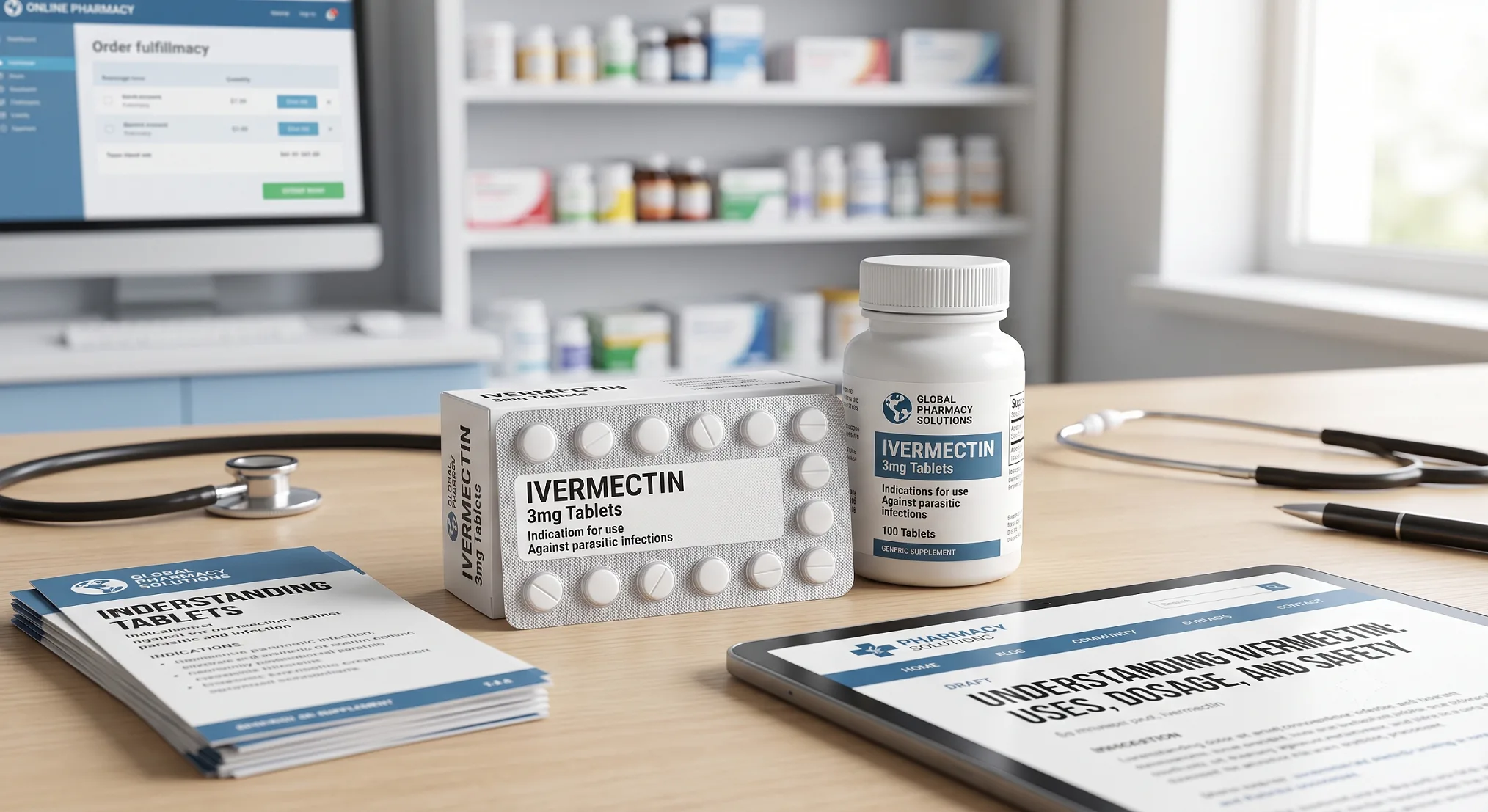
What are ivermectin 3mg tablets?
Each ivermectin 3mg tablet contains 3mg of ivermectin. The 3mg strength is used in weight-based dosing, meaning that several tablets may sometimes be required to provide the calculated dose.
Patients researching ivermectin 3mg tablets should therefore look beyond the tablet strength itself. The important question is whether ivermectin has been recommended for the particular condition and whether the prescribed dose is appropriate.
The medicine's product information also states that safety has not been established in children weighing less than 15kg.
What about higher strengths such as ivermectin 12mg tablets?
People may also encounter ivermectin 12mg tablets when searching online.
A higher tablet strength does not mean that the medicine is more effective or more suitable. Ivermectin treatment is based on the required dose, the condition being treated and patient-specific factors.
Patients should never choose a higher-strength tablet simply because they believe it will work faster.
For scabies in particular, authorised UK product information uses weight-based dosing rather than a standard dose for every adult.
Is ivermectin always the first treatment for scabies?
No.
NHS advice recommends pharmacy treatment with a suitable cream or lotion for many cases of scabies. The treatment normally needs to be repeated after seven days, and household members should generally be treated at the same time.
Some NHS formularies describe oral ivermectin as a second or later option when topical treatment is unsuitable, unavailable or has not worked. Local prescribing arrangements can differ.
This is why a GP, pharmacist or other appropriate healthcare professional should determine whether oral ivermectin is suitable.
What should patients know about safety?
Like other medicines, ivermectin can cause unwanted effects.
UK clinical guidance notes possible dizziness, drowsiness, vertigo and tremor. Temporary worsening of itching can also occur when ivermectin is used for scabies. Severe hepatic impairment is a contraindication in the cited clinical guidance.
The medicine can also interact with other treatments. For example, UK clinical guidance notes anecdotal evidence that ivermectin may increase the anticoagulant effect of warfarin.
Tell your healthcare professional about medicines you already take and any significant medical conditions before treatment.
Does continued itching mean ivermectin has not worked?
Not necessarily.
The NHS explains that itching can continue for several weeks after scabies treatment because the skin can remain irritated after the mites have been eliminated.
The product information for ivermectin also states that persistent itching or lesions do not automatically justify another treatment shortly after the initial dose.
If new burrows or characteristic lesions develop, or symptoms continue beyond the expected period, speak with a healthcare professional rather than taking an additional dose yourself.
Is buying ivermectin online a good idea?
Patients should be careful when searching for medicines online. A website selling a medicine does not automatically mean that the product or supplier is appropriate for a particular patient.
Before obtaining ivermectin, check that the supplier is legitimate and that you understand whether the medicine requires professional assessment.
Avoid websites that encourage you to choose your own dose, promise guaranteed results or suggest ivermectin can treat a wide range of unrelated illnesses.
The bottom line
Ivermectin has genuine medical uses and can be a useful antiparasitic medicine when it is prescribed for an appropriate condition.
For selected cases of scabies, oral ivermectin can provide an alternative to topical treatment. However, it is not automatically the first choice, and the correct dose depends on factors such as body weight and the clinical situation.
The safest approach for UK patients is to confirm the diagnosis, discuss treatment with a pharmacist or GP and follow the instructions provided by the prescriber.